JSTOR Global Plants Home
  • Home
  • Browse
  • About
  • Access
  • Account
    • Saved Items
    • Profile
  • Log in

Global Plants

Skip to Main Content
  • JSTOR Global Plants Home
  • Global Plants

    • Browse
    • About
    • Access
    • Account
      • Saved Items
      • Profile
Log in
  • Browse
  • About
  • Access
  • Account
    • Saved Items
    • Profile
Advanced Search

Compilation
Cerastium brachypodum

12 Images see all

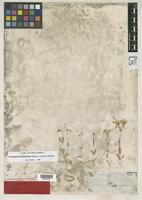
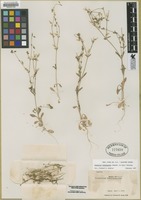
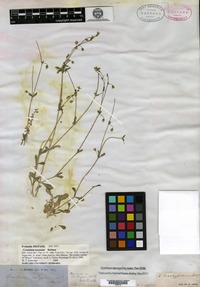
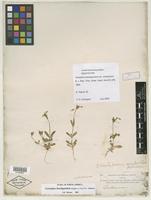
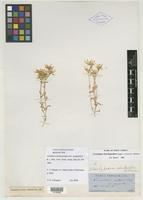
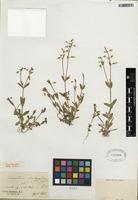
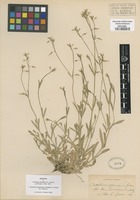
Syntype of Cerastium brachypodum var. compactum Robinson, B.L. 1894 [family CARYOPHYLLACEAE]
Filed as Cerastium brachypodum (Engelm. ex Gray) B.L. Robins. [family CARYOPHYLLACEAE]
Isotype of Cerastium texanum Britton [family CARYOPHYLLACEAE]
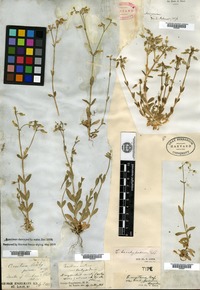
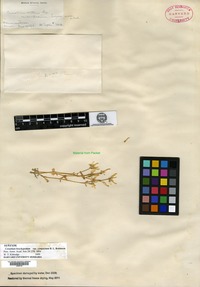
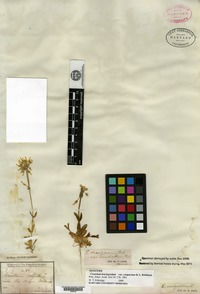
Isosyntype of Cerastium brachypodum var. compactum B. L. Rob. [family CARYOPHYLLACEAE]
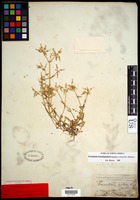
Original material of Cerastium adsurgens Greene [family CARYOPHYLLACEAE]
Type of Cerastium brachypodum (Engelm. ex A. Gray) B.L. Rob. [family CARYOPHYLLACEAE]
Isosyntype of Cerastium brachypodum var. compactum B. L. Rob. [family CARYOPHYLLACEAE]
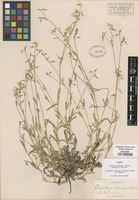
Type? of Cerastium nutans Rafinesque var. brachypodum Engelmann ex A. Gray [family CARYOPHYLLACEAE]
Cerastium brachypodum (Engelm. ex A. Gray) B.L. Rob. [family CARYOPHYLLACEAE]
Original material of Cerastium adsurgens Greene [family CARYOPHYLLACEAE]
Syntype of Cerastium brachypodum (Engelmann ex A. Gray) B. L. Robinson var. compactum B. L. Robinson [family CARYOPHYLLACEAE]
Previous
Next

Name

Identification
Cerastium brachypodum (Engelmann ex A. Gray) B. L. Robinson [family CARYOPHYLLACEAE ] (stored under name); Verified by Not on Sheet, Cerastium brachypodum (Engelmann ex A. Gray) B. L. Robinson [family CARYOPHYLLACEAE ] Verified by B. L. Rob., 1894 Cerastium vulgatum Linnaeus [family CARYOPHYLLACEAE ] Verified by Not on Sheet, Cerastium brachypodum (Engelmann ex A. Gray) B. L. Robinson [family CARYOPHYLLACEAE ] Verified by B. L. Robinson,
Related name
  • Cerastium brachypodum
  • Cerastium vulgatum
  • Cerastium texanum
  • Cerastium nutans
Common name
  • Short-stalked mouse-ear chickweed, Flora of North America Vol. 5

Flora

Entry for Cerastium brachypodum (Engelmann ex A. Gray) B. L. Robinson [family CARYOPHYLLACEAE]
Herbarium
Flora of North America (FNA)
Collection
Flora of North America
Resource Type
Reference Sources
Entry From
Flora of North America, Vol 5,
Names
Cerastium brachypodum (Engelmann ex A. Gray) B. L. Robinson [family CARYOPHYLLACEAE], Proc. Amer. Acad. Arts, 29: 277. 1894
Cerastium nutans Rafinesque var. brachypodum Engelmann ex A. Gray [family CARYOPHYLLACEAE], Manual ed., 5, 94. 1867
Cerastium adsurgens Greene [family CARYOPHYLLACEAE]
Cerastium brachypodum var. compactum B. L. Robinson [family CARYOPHYLLACEAE]
Treatment Author(s)
John K. Morton
Information
Plants annual, with filiform tap-root. Stems erect, simple or sever-al from branched caudex, 5–20 cm, glandular-pubescent, nodes without long, wooly hairs; small axillary tufts of leaves absent. Leaves sessile, not marcescent, usually confined to proximal 1/2 of plant; mid-stem leaves with blade lanceolate to narrowly elliptic or oblanceolate, 5–30 × 2–8 mm, apex ± acute, usually rather sparsely, softly pubescent; proximal leaves sometimes forming loose rosette, blade ovate to obovate or spatulate, apex ± obtuse. Inflorescences compact to open, dichotomous, 3–30-flowered cymes, confined to distal portion of stem; bracts herbaceous, lanceolate, glandular-puberulent. Pedicels often becoming deflexed at base, 3–10(–12) mm, 0.5–1.25 times as long as sepals in flower, elongating to equaling capsule, glandular-pubescent. Flowers: sepals broadly lanceolate, 3–4.5 mm, apex subacute, glandular-puberulent to glabrate, hairs shorter than sepal tip, outer sepals herbaceous or with narrow margins, inner with broad margins; petals ovate-elliptic, 3–4 mm, equaling or shorter than sepals, apex 2-fid; stamens 10; styles 5. Capsules cylindric, curved, 6–12 mm, 2–2.25 times as long as sepals; teeth 10, erect, margins convolute. Seeds golden brown, 0.4–0.7 mm diam., tuberculate, especially around edge; testa not inflated. 2n = 34.
Phenology
mar-may (spring), early summer
Altitude range
100–2700 m;
Distribution
Mexico.USA Ala.USA Ariz.USA Ark.USA Colo.USA Ga.USA IdahoUSA Ill.USA Ind.USA IowaUSA Kans.USA La.USA Mich.USA Mo.USA Mont.USA Nebr.USA Nev.USA N.Mex.USA N.Dak.USA Okla.USA Oreg.USA S.C.USA S.Dak.USA Tenn.USA Tex.USA UtahUSA Va.USA Wis.USA Wyo.Canada Alta.Canada Man.Canada Ont.Canada Sask.
Discussion
Cerastium brachypodum differs from C. nutans in its smaller size; its short pedicels, which often become deflexed at the base instead of near the capsule; and its pubescence, which is usually sparser and lacks any long, lanate hairs. However, some specimens from the arid region of the southwest have a dense gray pubescence. Plants from the Arizona desert, which have particularly long and narrow capsules, are the basis for the erroneous report of C. gracile Dufour from that region.
Cerastium fastigiatum can be very similar to C. brachypodum but differs in its longer pedicels, narrowly acute leaves, glandular pubescence on the stems, and much more branched (fastigiate) habit.

Related Materials

  • Terms and Conditions
  • Privacy Policy
  • Cookie Policy
  • Cookie Settings
  • Accessibility
  • Help
  • Contact Us
  • Facebook
  • Twitter
ITHAKA

JSTOR is part of ITHAKA, a not-for-profit organization helping the academic community use digital technologies to preserve the scholarly record and to advance research and teaching in sustainable ways.

©2000-2026 ITHAKA. All Rights Reserved. JSTOR®, the JSTOR logo, JPASS®, Aluka®, and ITHAKA® are registered trademarks of ITHAKA.

╳