JSTOR Global Plants Home
  • Home
  • Browse
  • About
  • Access
  • Account
    • Saved Items
    • Profile
  • Log in

Global Plants

Skip to Main Content
  • JSTOR Global Plants Home
  • Global Plants

    • Browse
    • About
    • Access
    • Account
      • Saved Items
      • Profile
Log in
  • Browse
  • About
  • Access
  • Account
    • Saved Items
    • Profile
Advanced Search

Compilation
Cerastium arcticum

12 Images see all

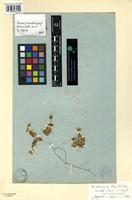
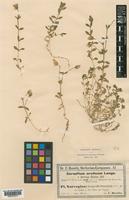
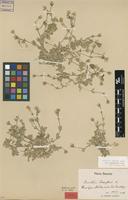
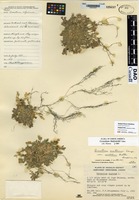
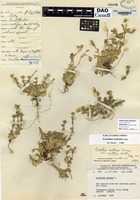
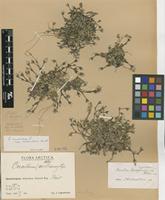
Type of Cerastium arcticum Lange var. alpinopilosum Hultén [family CARYOPHYLLACEAE]
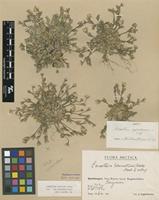
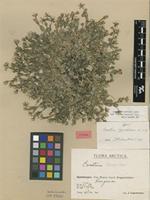
Paratype of Cerastium arcticum Lange variety sordidum Hulten [family CARYOPHYLLACEAE]
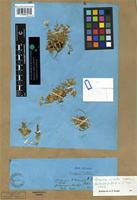
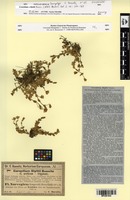
Paratype of not on sheet [family NOT ON SHEET]
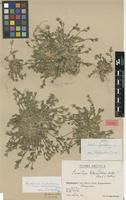
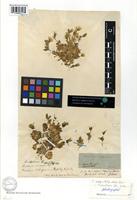
Type of Cerastium hyperboreum Tolm. [family CARYOPHYLLACEAE]
Cerastium arcticum Lange [family CARYOPHYLLACEAE]
Type of Cerastium hyperboreum Tolm. [family CARYOPHYLLACEAE]
Isosyntype of Cerastium x blyttii Baen. [family CARYOPHYLLACEAE]
Syntype of Cerastium arcticum Lange [family CARYOPHYLLACEAE]
Type of Cerastium arcticum Lange var. sordidum Hultén [family CARYOPHYLLACEAE]
Syntype of Cerastium arcticum Lange [family CARYOPHYLLACEAE]
Type of Cerastium hyperboreum Tolm. [family CARYOPHYLLACEAE]
Syntype of Cerastium arcticum Lange [family CARYOPHYLLACEAE]
Previous
Next

Name

Identification
Cerastium arcticum Lange [family CARYOPHYLLACEAE ] (stored under name); Verified by Not on Sheet,
Related name
  • Cerastium edmonstonii
  • Cerastium latifolium
  • Cerastium alpinum
  • Cerastium hyperboreum
  • Cerastium arcticum
Common name
  • céraiste arctique, Flora of North America Vol. 5
  • Bialynick’s mouse-ear chickweed, Flora of North America Vol. 5
  • Arctic mouse-ear chickweed, Flora of North America Vol. 5

Flora

Entry for Cerastium arcticum Lange [family CARYOPHYLLACEAE]
Herbarium
Flora of North America (FNA)
Collection
Flora of North America
Resource Type
Reference Sources
Entry From
Flora of North America, Vol 5,
Names
Cerastium arcticum Lange [family CARYOPHYLLACEAE], in G. C. Oeder et al., Fl. Dan., 17(50): 7, plate 2863. 1880
Cerastium alpinum Linnaeus var. procerum Lange [family CARYOPHYLLACEAE]
Cerastium alpinum var. uniflorum Durand [family CARYOPHYLLACEAE]
Cerastium arcticum subsp. hyperboreum (Tolmatchew) Böcher [family CARYOPHYLLACEAE]
Cerastium arcticum subsp. procerum (Lange) Böcher [family CARYOPHYLLACEAE]
Cerastium arcticum var. procerum (Lange) Hultén [family CARYOPHYLLACEAE]
Cerastium arcticum var. vestitum Hultén [family CARYOPHYLLACEAE]
Cerastium hyperboreum Tolmatchew [family CARYOPHYLLACEAE]
Cerastium nigrescens (H. C. Watson) Edmondston ex H. C. Watson subsp. arcticum (Lange) P. S. Lusby [family CARYOPHYLLACEAE]
Treatment Author(s)
John K. Morton
Information
Plants perennial, loosely mat-forming but not pulvinate, rhizomatous. Stems erect, from decumbent base, 5–30 cm, sparsely to densely pubescent, hairs spreading, straight, often glandular; small axillary tufts of leaves usually absent. Leaves subsessile; blade broadly elliptic to obovate or rotund, larger blades in mid-stem region, 5–22 × 2–8 mm, apex round and obtuse, rarely broadly acute, pubescence ciliate and strigose, hairs long and eglandular, mixed with shorter eglandular hairs, colorless to somewhat fuscous; proximal leaves not strongly marcescent, blade oblanceolate, often broadly so, spatulate. Inflorescences 1–3-flowered, lax cymes, with patent, multicellular, long, glandular hairs; proximal bracts broadly lanceolate, pubescence as leaves; distal bracts narrowly lanceolate, margins narrow, scarious, glandular-pubescent. Pedicels ± straight or somewhat curved at apex, 5–45 mm, 1–4 times as long as sepals (rarely longer), pubescence long and glandular. Flowers: sepals narrowly lanceolate, 8–11 mm, margins narrow, apex acuminate, hairs ascending, long, glandular and eglandular; petals 12–18 mm, 1–2 times as long as sepals, apex 2-fid; stamens 10; styles 5. Capsules broadly conic, straight or almost so, 14–18 mm, 1.5–2 times as long as sepals, teeth 10, ± erect, margins convolute. Seeds red-brown, 1.1–1.3 mm diam., tuberculate; tubercles acute; testa not inflated, closely enclosing seed. 2n = (54) 108.
Phenology
jun-aug (summer)
Altitude range
0–400 m;
Distribution
Greenlandn Europe (Franz Joseph Land).n Europe (Novaya Zemlya).n Europe (Svalbard).Canada Nfld. and Labr. (Labr.)Canada N.W.T.Canada NunavutCanada Que.
Discussion
Cerastium arcticum has been a much confused and misunderstood species, recently separated from C. nigrescens Edmonston ex H. C. Watson on seed characters. The latter has large seeds with loose, inflated testae, whereas C. arcticum has seeds that are smaller and have tight testae that cannot easily be removed (A. K. Brysting and R. Elven 2000). Much of the North American material previously placed in C. arcticum is now considered to belong to a distinct species, C. bialynickii Tolmatchew (see comments under that species). Cerastium alpinum differs from C. arcticum in having very long, flexuous, translucent hairs which often mat together. In C. arcticum and other members of the complex, the hairs are usually straight, yellowish, and not flexuous. Cerastium arcticum may on occasion have some pubescence like that of C. alpinum; such plants have been named C. arcticum var. vestitum. Whether they represent introgression of C. alpinum into C. arcticum, as suggested by E. Hultén (1956), is uncertain.

Related Materials

  • Terms and Conditions
  • Privacy Policy
  • Cookie Policy
  • Cookie Settings
  • Accessibility
  • Help
  • Contact Us
  • Facebook
  • Twitter
ITHAKA

JSTOR is part of ITHAKA, a not-for-profit organization helping the academic community use digital technologies to preserve the scholarly record and to advance research and teaching in sustainable ways.

©2000-2026 ITHAKA. All Rights Reserved. JSTOR®, the JSTOR logo, JPASS®, Aluka®, and ITHAKA® are registered trademarks of ITHAKA.

╳