JSTOR Global Plants Home
  • Home
  • Browse
  • About
  • Access
  • Account
    • Saved Items
    • Profile
  • Log in

Global Plants

Skip to Main Content
  • JSTOR Global Plants Home
  • Global Plants

    • Browse
    • About
    • Access
    • Account
      • Saved Items
      • Profile
Log in
  • Browse
  • About
  • Access
  • Account
    • Saved Items
    • Profile
Advanced Search

Compilation
Centella obtriangularis

3 Images see all

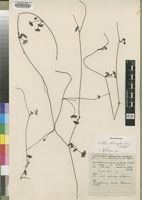
Isotype of Centella obtriangularis Cannon [family APIACEAE]
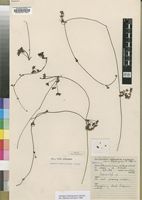
Holotype of Centella obtriangularis Cannon [family APIACEAE]
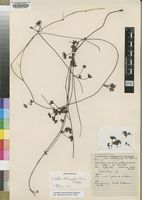
Isotype of Centella obtriangularis Cannon [family APIACEAE]
Previous
Next

Name

Identification
Isotype of Centella obtriangularis Cannon [family APIACEAE ] (stored under name); Verified by Cannon,J.F.M.,
Related name
  • Centella obtriangularis

Flora

Entry for Centella obtriangularis Cannon [family UMBELLIFERAE]
Herbarium
Royal Botanic Gardens, Kew (K)
Collection
Flora Zambesiaca
Resource Type
Reference Sources
Entry From
FZ, Vol 4, Part 0, page 553, (1978) Author: M. L. Gonçalves
Names
Centella obtriangularis Cannon [family UMBELLIFERAE], in Kirkia 4: 145 (1964). Type: Mozambique, Chimanimani Mts., Wild 2893 (BM, holotype).
Information
Glabrous creeping herb, rooting at the nodes; internodes often elongate, up to 19 cm. long. Leaves in groups of 3–10, often on short lateral shoots. Petioles 1–3·5 cm. long; lamina 3–11 × 4–20 mm., very shallowly obtriangular, tending to become transversely elliptic with age, very broadly cuneate at the base, the apex deeply cleft into 3–7 triangular teeth. Umbels sessile, with fine rays c. 7 mm. long. Flowers hermaphrodite or male; petals white. Fruit c. 2·5 × 2 mm., approximately twice as long as the adjacent bract.
Habitat
Wet grassy slopes or banks.
Range
Apparently endemic to the Chimanimani Mts., but probably related to C. calliodus (Cham. & Schlecht.) Drude, a species from S. Africa
Distribution
Mozambique MS Chimanimani Mts., fl. & fr. 8.vii.1949, Wild 2955 (BM; SRGH).

Related Materials

  • Terms and Conditions
  • Privacy Policy
  • Cookie Policy
  • Cookie Settings
  • Accessibility
  • Help
  • Contact Us
  • Facebook
  • Twitter
ITHAKA

JSTOR is part of ITHAKA, a not-for-profit organization helping the academic community use digital technologies to preserve the scholarly record and to advance research and teaching in sustainable ways.

©2000-2026 ITHAKA. All Rights Reserved. JSTOR®, the JSTOR logo, JPASS®, Aluka®, and ITHAKA® are registered trademarks of ITHAKA.

╳