JSTOR Global Plants Home
  • Home
  • Browse
  • About
  • Access
  • Account
    • Saved Items
    • Profile
  • Log in

Global Plants

Skip to Main Content
  • JSTOR Global Plants Home
  • Global Plants

    • Browse
    • About
    • Access
    • Account
      • Saved Items
      • Profile
Log in
  • Browse
  • About
  • Access
  • Account
    • Saved Items
    • Profile
Advanced Search

Compilation
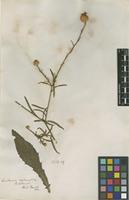
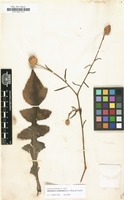
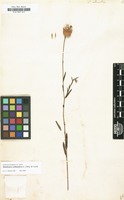
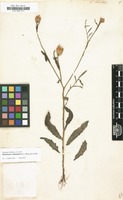
Centaurea salmantica

10 Images see all

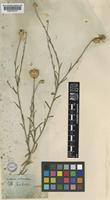
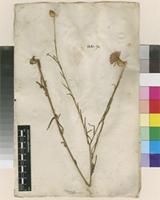
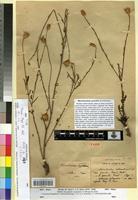
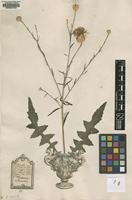
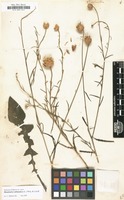
Filed as Centaurea salmantica L. [family ASTERACEAE]
Filed as Centaurea salmantica [family COMPOSITAE]
Type of Centaurea salmantica L. [family COMPOSITAE]
Filed as Centaurea salmantica L. [family ASTERACEAE]
Type of Microlonchus gracilis Pomel [family ASTERACEAE]
Original material of Centaurea salmantica L. [family ASTERACEAE]
Filed as Centaurea salmantica [family COMPOSITAE]
Centaurea salmantica L.
Previous
Next

Name

Identification
Centaurea salmantica L. [family ASTERACEAE ]
Related name
  • Centaurea salmantica
Common name
  • Dagger-flower, Flora of North America Vol. 19

Flora

Entry for Mantisalca salmantica (Linnaeus) Briquet & Cavillier [family COMPOSITAE]
Herbarium
Flora of North America (FNA)
Collection
Flora of North America
Resource Type
Reference Sources
Entry From
Flora of North America, Vol 19,
Names
Mantisalca salmantica (Linnaeus) Briquet & Cavillier [family COMPOSITAE], Biblioth. Universelle Rev. Suisse, pér., 5, 5: 111. 1930
Centaurea salmantica Linnaeus [family COMPOSITAE], Sp. Pl., 2: 918. 1753
Treatment Author(s)
David J. Keil
Information
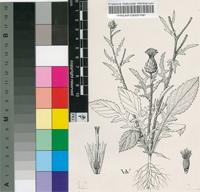
Herbage cobwebby-tomentose proximally, glabrous distally. Stems usually 1, leafless distally. Leaves: basal blades oblong, 10–25 cm, margins pinnately lobed; cauline linear to lanceolate, smaller distally, dentate to pinnately dissected. Heads long-pedunculate. Involucres ovoid, distally narrowed. Phyllaries greenish or stramineous, apically blackish, spine tips deciduous, spreading or reflexed, 1–3 mm. Corollas ± purple (rarely white). Cypselae dark brown, 3–4 mm; pappus bristles brownish white or reddish, 2–3 mm. 2n = 18 (Italy), 20 (North Africa), 22 (Europe).
Phenology
mar-may (spring), jun-aug (summer)
Altitude range
0–1700 m;
Distribution
Europen Africa.USA Ariz.USA Calif.
Discussion
Mantisalca salmantica is native to the Mediterranean region. It is considered an uncommon introduction into disturbed sites.
Native/Introduced
introduced;

Related Materials

  • Terms and Conditions
  • Privacy Policy
  • Cookie Policy
  • Cookie Settings
  • Accessibility
  • Help
  • Contact Us
  • Facebook
  • Twitter
ITHAKA

JSTOR is part of ITHAKA, a not-for-profit organization helping the academic community use digital technologies to preserve the scholarly record and to advance research and teaching in sustainable ways.

©2000-2026 ITHAKA. All Rights Reserved. JSTOR®, the JSTOR logo, JPASS®, Aluka®, and ITHAKA® are registered trademarks of ITHAKA.

╳