JSTOR Global Plants Home
  • Home
  • Browse
  • About
  • Access
  • Account
    • Saved Items
    • Profile
  • Log in

Global Plants

Skip to Main Content
  • JSTOR Global Plants Home
  • Global Plants

    • Browse
    • About
    • Access
    • Account
      • Saved Items
      • Profile
Log in
  • Browse
  • About
  • Access
  • Account
    • Saved Items
    • Profile
Advanced Search

Compilation
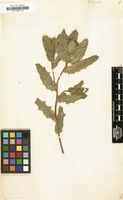
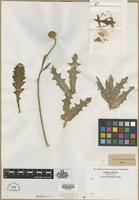
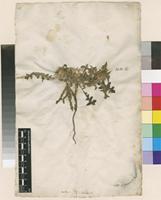
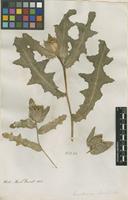
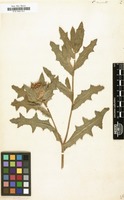
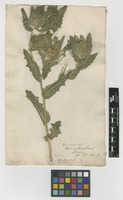
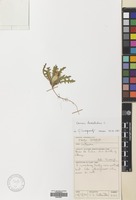
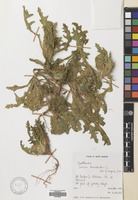
Centaurea benedicta

8 Images see all

Filed as Centaurea benedicta (L.) L. [family ASTERACEAE]
Filed as Centaurea benedicta [family COMPOSITAE]
Filed as Cnicus benedictus L. [family ASTERACEAE]
Filed as Cnicus benedicta (L.) L. [family COMPOSITAE]
Filed as Centaurea benedicta (L.) L. [family ASTERACEAE]
Filed as Cnicus benedicta (L.) L. [family COMPOSITAE]
Filed as Centaurea benedicta [family COMPOSITAE]
Filed as Centaurea benedicta (L.) L. [family ASTERACEAE]
Previous
Next

Name

Identification
Centaurea benedicta (L.) L. [family ASTERACEAE ] (stored under name); Verified by Not on sheet,
Related name
  • Centaurea benedicta
Common name
  • chardon bénit, Flora of North America Vol. 19
  • Blessed thistle, Flora of North America Vol. 19

Flora

Entry for Centaurea benedicta (Linnaeus) Linnaeus [family COMPOSITAE]
Herbarium
Flora of North America (FNA)
Collection
Flora of North America
Resource Type
Reference Sources
Entry From
Flora of North America, Vol 19,
Names
Centaurea benedicta (Linnaeus) Linnaeus [family COMPOSITAE], Sp. Pl. ed., 2, 2: 1296. 1763
Cnicus benedictus Linnaeus [family COMPOSITAE], Sp. Pl., 2: 826. 1753
Treatment Author(s)
David J. Keil
Jörg Ochsmann
Information
Annuals, to 60 cm. Stems often spreading or prostrate, usually branched throughout, usually reddish, ± loosely tomentose. Leaves mostly cauline, sessile and often short-decurrent or proximal tapering to winged petioles, blades lanceolate to oblanceolate, 6–25 cm, margins coarsely dentate or pinnately lobed, lobes and teeth armed with short, weak spines, faces sparsely to densely hairy with jointed multicellular hairs and slender cobwebby hairs, resin-gland-dotted. Heads disciform, borne singly, sessile, each subtended by involucre-like cluster of leaf-like bracts. Involucres ± spheric, 20–40 mm. Phyllaries in several series, tightly overlapping, outer ovate with tightly appressed bases and spreading spine tips, inner lanceolate, tipped by pinnately divided spines more than 5 mm. Florets many; corollas yellow, those of sterile florets linear, 3-lobed, not exceeding disc corollas, very slender, those of disc florets 19–24 mm. Cypselae cylindric, slightly curved, 8–11 mm, with 20 prominent ribs, tipped by a 10-dentate rim, glabrous, attachment scars lateral; pappi of 2 series of awns, outer 9–10 mm, smooth or ± roughened, inner 2–5 mm, roughened with short spreading hairs. 2n = 22.
Phenology
mar-may (spring), jun-aug (summer)
Altitude range
0–1300 introduced;
Distribution
EuropeAsiawidely introduced worldwide.USA Ala.USA Ariz.USA Ark. Calif.USA Conn.USA Fla.USA Ga.USA Ill.USA Md.USA N.J.USA N.Y.USA N.C.USA Oreg.USA S.C.USA Tenn.USA Tex.USA UtahUSA Va.USA Wash.USA Wis.Canada N.B.Canada N.S.Canada Ont.
Discussion
Centaurea benedicta is native to the Mediterranean region and Asia Minor. F. K. Kupicha (1975) recognized two varieties of Cnicus benedictus: var. benedictus and var. kotschyi Boissier. A combination apparently has not been made for var. kotschyi in Centaurea. I have not determined whether one or both races are represented in North American plants of Centaurea benedicta.
Blessed thistle is cultivated in many areas of the world as a medicinal herb. The leaves, stems, and flowers are all used in herbal preparations for digestive and liver ailments.

Related Materials

  • Terms and Conditions
  • Privacy Policy
  • Cookie Policy
  • Cookie Settings
  • Accessibility
  • Help
  • Contact Us
  • Facebook
  • Twitter
ITHAKA

JSTOR is part of ITHAKA, a not-for-profit organization helping the academic community use digital technologies to preserve the scholarly record and to advance research and teaching in sustainable ways.

©2000-2026 ITHAKA. All Rights Reserved. JSTOR®, the JSTOR logo, JPASS®, Aluka®, and ITHAKA® are registered trademarks of ITHAKA.

╳