JSTOR Global Plants Home
  • Home
  • Browse
  • About
  • Access
  • Account
    • Saved Items
    • Profile
  • Log in

Global Plants

Skip to Main Content
  • JSTOR Global Plants Home
  • Global Plants

    • Browse
    • About
    • Access
    • Account
      • Saved Items
      • Profile
Log in
  • Browse
  • About
  • Access
  • Account
    • Saved Items
    • Profile
Advanced Search

Compilation
Cenchrus brevisetus

4 Images see all

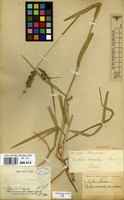
Isotype of Cenchrus brevisetus E.Fourn. [family GRAMINEAE]
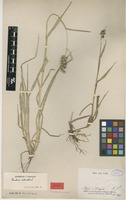
Isolectotype of Cenchrus brevisetus E.Fourn. [family POACEAE]
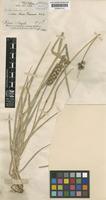
Cenchrus echinatus L. [family POACEAE]
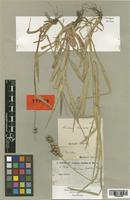
Type of Cenchrus brevisetus E. Fourn. [family GRAMINEAE]
Previous
Next

Name

Identification
Cenchrus brevisetus E. Fourn. [family GRAMINEAE ] (stored under name); Verified by Data not digitized, Cenchrus brevisetus E. Fourn. [family GRAMINEAE ] Verified by Data not digitized,
Related name
  • Cenchrus echinatus
  • Cenchrus brevisetus

Flora

Entry for CENCHRUS echinatus Linn. [family POACEAE]
Herbarium
Royal Botanic Gardens, Kew (K)
Collection
Flora of Tropical Africa
Resource Type
Reference Sources
Entry From
Flora of Tropical Africa, Vol 9, page 1, (1917) Author: (By O. STAPF.)
Names
CENCHRUS echinatus Linn. [family POACEAE], Sp. Pl. ed. 1, 1050 (1753). —Baker, Fl. Maurit. 440; Doell in Mart. Fl. Bras. ii. II. 310, t. 43; Scribner in U.S. Dept. Agric. Div. Agrost. Bull. no. 17, 111, fig. 407; Chase in Contrib. U.S. Nat. Herb. xxii. 60, fig. 12.
CENCHRUS pungens H. B. & K. [family POACEAE], Nov. Gen. & Sp. i. 115 (1816).
CENCHRUS macrocarpus Ledeb. ex Steud. [family POACEAE], Nomencl. Bot. ed. 2, i. 317 (1840), name only.
CENCHRUS quinquevalvis Ham. ex Wall. [family POACEAE], Cat. 8654 C, name only.
CENCHRUS brevisetus Fourn. [family POACEAE], Mex. Pl. ii. 50 (1886).
CENCHRUS echinatus Scribn. ex Millsp. var. brevisetus [family POACEAE], in Field Mus., Bot. Ser. ii. 26 (1900).
Information
Annual. Culms ascending from a geniculate or decumbent base, sometimes rooting at the lower nodes, 3/4–3 ft. long, slender to somewhat stout, branched, the erect portion 3–4-noded, scabrid towards the inflorescence, the remainder glabrous and smooth. Leaf-sheaths compressed and keeled, the intermediate and upper at length shorter than the internodes, glabrous or pilose along the margins, rarely all over; ligule reduced to a densely ciliate rim; blade lanceolate-linear, rounded at the base, and tapering upwards to an involute pungent tip, 2 1/2–10 in. long, 1 1/2–6 lin. wide, flat, usually rather stiff, glabrous and smooth on the lower surface except for the scabrid tip, scabrid and sparsely pilose above especially towards the base. False spike loose to rather dense, 1 1/4–4 in. long, 5–7 lin. wide, at length pale brown or tinged with green or purple; rhachis angular, flexuous, scabrid along the angles; involucres subsessile or minutely stalked, spreading, 2–3 1/2 lin. long and wide, very hard and rigid; bristles connate, retrorsely scabrid, the basal very slender, erect, up to 2 lin. long, the intermediate more rigid, spine-like and spreading, the inner (8–10) fused for half their length, pubescent, ciliolate on the margins, rigid and flattened, widened at the base, the free portion erect or with some lobes inflexed, with 1–2 green nerves on the back. Spikelets in clusters of 2–6, sessile, 2 1/4–3 lin. long, ovate, acuminate. Glumes thinly membranous, ovate, acute or obtuse; lower 1–2 lin. long, 1-nerved; upper 1 1/2–2 3/4 lin. long, 3–5-nerved, puberulous. Lower floret barren or rarely ♂: valve similar to the upper glume but 5-nerved and up to 1 1/2 lin. long; valvule linear-lanceolate, obtuse, about as long as the valve, puberulous, keels scabrid. Upper floret hermaphrodite, ovate, acuminate: valve when flattened broadly ovate, obtuse, as long as the spikelet, coriaceous, 5-nerved; valvule as long as the valve. Grain broadly elliptic, truncate, 1 1/2 lin. long.
Range
Also throughout tropical and subtropical America; introduced into the Mascarene Islands, Polynesia, and Northern Australia.
Distribution
Angola Lower Guinea Mossamedes; common in the pasture of the fazenda “Bon Vista,” Gossweiler, 44!

Related Materials

  • Terms and Conditions
  • Privacy Policy
  • Cookie Policy
  • Cookie Settings
  • Accessibility
  • Help
  • Contact Us
  • Facebook
  • Twitter
ITHAKA

JSTOR is part of ITHAKA, a not-for-profit organization helping the academic community use digital technologies to preserve the scholarly record and to advance research and teaching in sustainable ways.

©2000-2026 ITHAKA. All Rights Reserved. JSTOR®, the JSTOR logo, JPASS®, Aluka®, and ITHAKA® are registered trademarks of ITHAKA.

╳