JSTOR Global Plants Home
  • Home
  • Browse
  • About
  • Access
  • Account
    • Saved Items
    • Profile
  • Log in

Global Plants

Skip to Main Content
  • JSTOR Global Plants Home
  • Global Plants

    • Browse
    • About
    • Access
    • Account
      • Saved Items
      • Profile
Log in
  • Browse
  • About
  • Access
  • Account
    • Saved Items
    • Profile
Advanced Search

Compilation
Celtis stuhlmannii

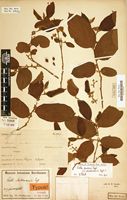
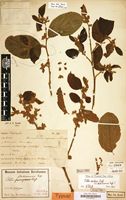
2 Images see all

Type of Celtis stuhlmannii Engl. [family ULMACEAE]
Previous
Next

Name

Identification
Celtis stuhlmannii Engl. [family ULMACEAE ] Verified by Not on sheet., Celtis zenkeri Not on sheet. [family ULMACEAE ] (stored under name); Verified by Not on sheet.,
Related name
  • Celtis stuhlmannii
  • Celtis zenkeri

Flora

Entry for CELTIS zenkeri Engl. [family ULMACEAE]
Herbarium
Royal Botanic Gardens, Kew (K)
Collection
Flora of Tropical East Africa
Resource Type
Reference Sources
Entry From
Flora of Tropical East Africa, page 1, (1966) Author: R. M. Polhill
Names
CELTIS zenkeri Engl. [family ULMACEAE], in N.B.G.B. 3: 22 (1900) & V.E. 3(1): 12 (1915); Rendle in F.T.A. 6(2): 6 (1916); Hauman in F.C.B. 1: 45 (1948); F.P.N.A. 1: 44 (1948); T.T.C.L.: 625 (1949); I.T.U., ed. 2: 435, fig. 91a (1952); F.P.S. 2: 251 (1952); F.W.T.A., ed. 2, 1: 592 (1958); Polhill in K.B. 19: 141 (1964). Type: Cameroun, Yaounde, Zenker & Staudt 9 (K, iso.!)
CELTIS stuhlmannii Eng. [family ULMACEAE], in N.B.G.B. 3: 23 (1900) & in Z.A.E.: 181 (1911) & V.E. 3(1): 12, fig. 6B, C (1915); F.D.O.-A. 2: 64 (1932). Type: Tanganyika, Uluguru Mts., Stuhlmann 8703 (B, lecto.!, K, isolecto.!)
CELTIS soyauxii Engl. [family ULMACEAE], in N.B.G.B. 3: 23 (1900), sensu stricto; Hiern, Welw. Cat. Afr. Pl. 4: 1028 (1900), pro parte. Types: République du Congo, Loango, Soyaux 202 (K, isosyn.!) & Angola, Cuanza Norte, Welwitsch 6285 (BM, K, isosyn.!)
Information
Much branched deciduous monoecious tree, up to 10–30 m. tall, buttressed at the base; bark smooth, grey. Twigs tawny pubescent to tomentose. Leaf-blades chartaceous, oblong-elliptic to ovate, 7.5–14 cm. long, 4–7.8 cm. wide, shortly acuminate, broadly cuneate to rounded at the base, unequal-sided, entire or more rarely toothed in the upper half, glabrous above when mature, usually hairy beneath at least on the veins, 3-nerved from the base, with the basal lateral nerves extending a little way into the upper half and the upper prominent lateral nerves 2–4 on each side of the midrib; petiole 5–8 mm. long. Stipules lanceolate, (5–)7–10 mm. long, pubescent, scarious. Cymes 1–2 cm. long in flower, up to 3 cm. in fruit, axillary or at the nodes below; lower ones with many clustered ♂ flowers, often with 1–2 ♀ or hermaphroditeflowers at the top; upper ones with several longer pedicelled hermaphroditeflowers. Sepals 4–6, 1.5–2.5 mm. long, pubescent. Ovary densely tawny pubescent; styles 1–2-branched, 2.5–4 mm. long. Fruits on 3–5 mm. long pedicels, subglobose or ovoid, 7–8 mm. long, 6–6.5 mm. across, red, pubescent or subglabrous.
Range
DISTR. U2, 4; T2, 3, 6 Sudan and Congo Republics, also Angola to West Africa
Altitude range
250–1200 m.
Distribution
TANGANYIKA Mbulu District Lake Manyara National Park, Mto wa Ukindu, 22 Nov. 1963, Greenway & Kirrika 11184 !TANGANYIKA Tanga District 11 km. E. of Korogwe, Magunga Estate, 26 June 1953, Drummond & Hemsley 3016!TANGANYIKA Morogoro District Turiani, 29 Dec. 1947, Wigg in F.H. 2213 !UGANDA Bunyoro District Budongo Forest, Apr. 1933, Eggeling 1190 in F.H. 1292! & Dec. 1934, Eggeling 1566 in F.H. 1480!UGANDA Mengo District Mabira Forest, Oct. 1904, Dawe 173 !
Notes
A single leaf from the forest floor on the Nyambeni Hills, Meru District, Kenya (Verdcourt & Polhill 2977A) appears to be this species and if so extends considerably the known range in East Africa.

Related Materials

  • Terms and Conditions
  • Privacy Policy
  • Cookie Policy
  • Cookie Settings
  • Accessibility
  • Help
  • Contact Us
  • Facebook
  • Twitter
ITHAKA

JSTOR is part of ITHAKA, a not-for-profit organization helping the academic community use digital technologies to preserve the scholarly record and to advance research and teaching in sustainable ways.

©2000-2026 ITHAKA. All Rights Reserved. JSTOR®, the JSTOR logo, JPASS®, Aluka®, and ITHAKA® are registered trademarks of ITHAKA.

╳