JSTOR Global Plants Home
  • Home
  • Browse
  • About
  • Access
  • Account
    • Saved Items
    • Profile
  • Log in

Global Plants

Skip to Main Content
  • JSTOR Global Plants Home
  • Global Plants

    • Browse
    • About
    • Access
    • Account
      • Saved Items
      • Profile
Log in
  • Browse
  • About
  • Access
  • Account
    • Saved Items
    • Profile
Advanced Search

Compilation
Celtis insularis

10 Images see all

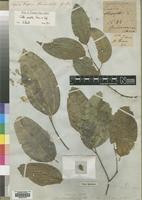
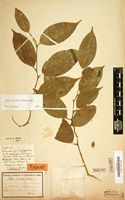
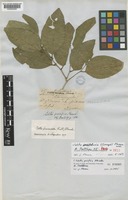
Type of Celtis insularis Rendle [family ULMACEAE]
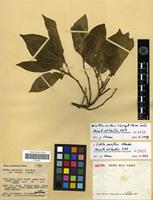
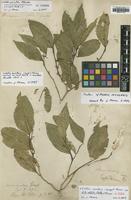
Isotype of Celtis paniculata Planch. var. viridis F.Brown [family ULMACEAE]
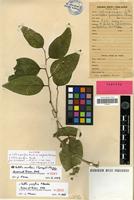
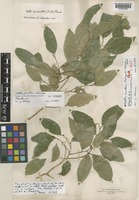
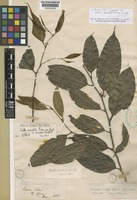
Celtis pacifica Planch. [family CANNABACEAE]
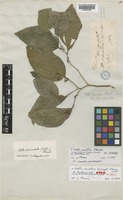
Isotype of Celtis pacifica Planch. var. subglabra F.B.H.Brown [family ULMACEAE]
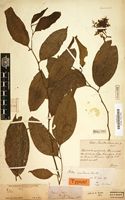
Type of Celtis prantlii Priemer ex Engl. [family ULMACEAE]
Type of Celtis insularis Rendle [family ULMACEAE]
Lectotype of Morus insularis Spreng. [family MORACEAE]
Isotype of Celtis insularis Spreng. (J.Florence) [family CANNABACEAE]
Syntype of Celtis prantlii Priemer ex Engl. [family ULMACEAE]
Previous
Next

Name

Identification
Celtis prantlii Priemer ex Engl. [family ULMACEAE ] Verified by Not on sheet., Celtis insularis Rendle [family ULMACEAE ] (stored under name); Verified by Not on sheet.,
Related name
  • Morus insularis
  • Celtis prantlii
  • Celtis insularis
  • Celtis paniculata
  • Celtis pacifica

Flora

Entry for Celtis philippensis Blanco [family ULMACEAE]
Herbarium
Royal Botanic Gardens, Kew (K)
Collection
Flora Zambesiaca
Resource Type
Reference Sources
Entry From
FZ, Vol 9, Part 6, page 1, (1991) Author: C. M. Wilmot-Dear
Names
Celtis rendleana G. Tayl. [family ULMACEAE], in Exell, Cat. Vase. Pl. S. Tomé: 302 (1944). Type from Angola.
Celtis scotellioides A. Chev. [family ULMACEAE], in Bull. Soc. Bot. Fr. 61, Mém. 8e: 299 (1917). Type from Ivory Coast.
Celtis insularis Rendle [family ULMACEAE], in Journ. Bot. 53: 297 (1915), nom. illegit. Type as for C. prantlii.
Celtis brownii Rendle [family ULMACEAE], in Journ. Bot. 53: 298 (1915); in F.T.A. 6, 2: 10 (1916).—Keay in F.W.T.A. ed. 2, 1: 592 (1958). Type from Uganda.
Celtis prantlii Engl. [family ULMACEAE], in Not. Bot. Gart. Mus. Berl. 3: 23 (1900); in Mildbr. Wiss. Ergebn. Deutsch. Zentral-Afr.-Exped. 1907–1908, 2: 179 (1911).—Engl., Pflanzenw. Afr.: 12 (1915).—Rendle in F.T.A. 6, 2: 8 (1916).—Hutch., Dalz. & Moss in F.W.T.A. 1: 423 (1928).—Hauman in F.C.B. 1: 43 (1948).—Robyns, Fl. Sperm. Parc Nat. Alb. 1: 44 (1948). Type from W. Africa.
Celtis mauritiana Planch. [family ULMACEAE], in Ann. Sci. Nat., Bot., sér. 3, 10: 307 (1848).—Engl., Pflanzenw. Ost-Afr. C: 160 (1895).—Rendle in F.T.A. 6, 2: 9 (1916).—Peter in Fedde, Repert., Beih. 40, 2: 64 (1932).—Brenan, Check-list For. Trees Shrubs Tang. Terr. 5, 2: 624 (1949). Type from Mauritius.
Celtis wightii Planch. [family ULMACEAE], in Ann. Sci. Nat., Bot., sér. 3, 10: 307 (1848).—Polhill in Kew Bull. 19: 141 (1964); in F.T.E.A., Ulmaceae: 9 (1966). Types from India & Sri Lanka.
Celtis philippensis Blanco [family ULMACEAE], Fl. Filip.: 197 (1837).—Leroy in Fl. Madag., fam. 54: 3, t. 3 fig. 1–4 (1952).—Berhaut, Fl. Seneg.: 144 (1954).—Letouzey in Fl. Cameroun 8: 26–32, tabs. 2, figs. 1–2; t. 4, fig. 1. Type from Philippines.
Information
Evergreen much-branched tree 5–20 m. tall, monoecious; bole often with short buttresses, bark smooth grey, wood white; young stems and branches very sparsely white-pubescent, glabrescent. Leaves (5)6.5–12(17.5) x 2.5–4.5(8) cm., elliptic to elliptic-ovate or elliptic-oblong; apex with a wide (usually short) acumen and mucronate tip; base slightly asymmetrical and broadly cuneate to rounded or subcordate; margin entire or (rarely in Flora Zambesiaca region) coarsely dentate in the upper half; lamina thinly coriaceous, pale green, punctate but smooth and ± shiny above, glabrous; 3-nerved from the base, the basal lateral nerves extending almost to the apex, as strongly prominent beneath as the midrib, upper lateral nerves 1–2(3) on each side of the midrib, rather fine and inconspicuous; secondary venation fairly closely parallel, ± horizontal between the midrib and basal lateral nerves. Petiole 4–10(16) mm. long; stipules 3–7 mm. long, lanceolate, shortly produced below the point of attachment, ± pubescent. Inflorescence in leaf axils towards the ends of branches; lower inflorescences 5–30 mm. long, containing many crowded male (lowers, these sessile or with pedicels to 2 mm. long, and a few female and bisexual flowers at apices of branches of these inflorescences, their pedicels usually longer; upper inflorescences usually short with several bisexual flowers. Sepals 1.5–2.5 mm. long, pubescent. Ovary ± glabrous, with a basal ring of long hairs; styles very shortly bifid, (1)1.5–2(3.5) mm. long. fruits red, 9–12 x 7–10 mm., ovoid, glabrous; pedicels 3–7 mm. long.
Habitat
In low altitude evergreen forest, swamps and riverine forest
Range
Recorded from West Africa to Ethiopia, and south to east tropical Africa and Angolafrom tropical Asia to Australia
Altitude range
c. 300 m.
300
300
Distribution
Mozambique MS Condué R., 18°05'S, 35°02'E, fr. 11.x.1961, Gomes e Sousa 4709 (COI; K); Siluva (Silura) Hills, fr. 1924, Honey 663a (K).
Distribution (external)
Madagascar
Mascarene Is.

Related Materials

  • Terms and Conditions
  • Privacy Policy
  • Cookie Policy
  • Cookie Settings
  • Accessibility
  • Help
  • Contact Us
  • Facebook
  • Twitter
ITHAKA

JSTOR is part of ITHAKA, a not-for-profit organization helping the academic community use digital technologies to preserve the scholarly record and to advance research and teaching in sustainable ways.

©2000-2026 ITHAKA. All Rights Reserved. JSTOR®, the JSTOR logo, JPASS®, Aluka®, and ITHAKA® are registered trademarks of ITHAKA.

╳