JSTOR Global Plants Home
  • Home
  • Browse
  • About
  • Access
  • Account
    • Saved Items
    • Profile
  • Log in

Global Plants

Skip to Main Content
  • JSTOR Global Plants Home
  • Global Plants

    • Browse
    • About
    • Access
    • Account
      • Saved Items
      • Profile
Log in
  • Browse
  • About
  • Access
  • Account
    • Saved Items
    • Profile
Advanced Search

Compilation
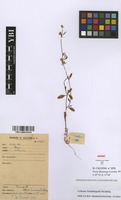
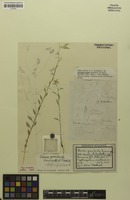
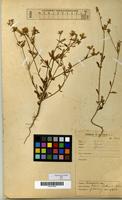
Celosia vanderystii

7 Images see all

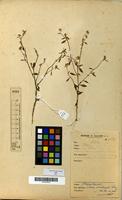
Filed as Celosia vanderystii Schinz [family AMARANTHACEAE]
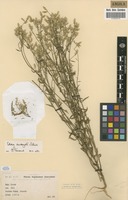
Type of Celosia vanderystii Schinz [family AMARANTHACEAE]
Filed as Celosia vanderystii Schinz [family AMARANTHACEAE]
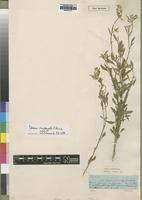
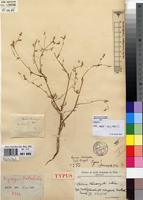
Isotype of Celosia gracilenta Suess. & Overkott [family AMARANTHACEAE]
Filed as Celosia vanderystii Schinz [family AMARANTHACEAE]
Previous
Next

Name

Identification
Celosia vanderystii Schinz [family AMARANTHACEAE ] (stored under name); Verified by Townsend,C.C.,
Related name
  • Celosia vanderystii

Flora

Entry for Celosia vanderystii Schinz [family AMARANTHACEAE]
Herbarium
Royal Botanic Gardens, Kew (K)
Collection
Flora Zambesiaca
Resource Type
Reference Sources
Entry From
FZ, Vol 9, Part 1, page 28, (1988) Author: C. C. Townsend
Names
Celosia vanderystii Schinz [family AMARANTHACEAE], in Viert. Nat. Ges. Zürich 76: 135 (1931).—Hauman in F.C.B. 2: 25 (1951).—Townsend in Hook. Ic. Pl. 38, 2: 107, t. 3748 (1975). Type from Zaire.
Information
Erect annual herb, 10–40 cm. tall, simple or with a few to numerous long, ascending branches; stem and branches slender, striate, glabrous or with short, asperulous hairs especially towards the base. Leaves elliptic or sometimes narrowly oblanceolate, 6–27 × 2–7 mm., glabrous or sometimes asperulous along the 2–5 mm. long petiole. Inflorescence creamy, stramineous or pale yellowish tinged with pink, densely spicate, 5–20 × 4–5 mm., solitary, geminate or clustered at the apices of the stem and branches, usually subtended at the base by one or more reduced leaves. Bracts and bracteoles persistent after fruit-fall, 1.25–1.5 mm. long, lanceolate, acute or shortly acuminate, membranaceous, more or less serrulate at the apex, very shortly mucronate with the excurrent midrib. Tepals 1.75–2.25 mm. long, glabrous, oblong, acute, distinctly denticulate in the apical third with the teeth commonly divergent or even recurved, less distinctly so below, very shortly mucronate with the excurrent midrib. Filaments with the free apex subequalling the basal cup; no intermediate teeth present. Ovary biovulate; stigmas 2, erect, very short, shorter than the c. 0.25 mm. long style. Capsule subglobose, c. 1.5 mm. long, not exceeding the perianth. Seeds lenticular, black, shiny, c. 1.25 mm. in diam., reticulate centrally with convex areolae, almost smooth marginally.
Habitat
Apparently always in light sandy or loamy soil, along roads and tracks, in open Miombo woodland, near streams.
Range
The author and Miss S. S. Hooper found it to be a common species in the Mwinilunga region from Kalene Hill southward in 1975
Altitude range
c. 1350–1400 m.
1400
1350
Distribution
Zambia C Serenje, 18.ii.1955, Fanshawe 2090 (K; NDO).Zambia W Kalene Hill, 23.ii.1975, Hooper & Townsend 342 (K).Zambia N Kasama-Mpika Rd., near Chambeshi pontoon, 1260 m., 29.iv.1962, Richards 16384 (K).Zambia B 40 km. W. of Kaoma, 5.iv.1966, Robinson 6911 (K).
Distribution (external)
Zaire
Angola

Related Materials

  • Terms and Conditions
  • Privacy Policy
  • Cookie Policy
  • Cookie Settings
  • Accessibility
  • Help
  • Contact Us
  • Facebook
  • Twitter
ITHAKA

JSTOR is part of ITHAKA, a not-for-profit organization helping the academic community use digital technologies to preserve the scholarly record and to advance research and teaching in sustainable ways.

©2000-2026 ITHAKA. All Rights Reserved. JSTOR®, the JSTOR logo, JPASS®, Aluka®, and ITHAKA® are registered trademarks of ITHAKA.

╳