JSTOR Global Plants Home
  • Home
  • Browse
  • About
  • Access
  • Account
    • Saved Items
    • Profile
  • Log in

Global Plants

Skip to Main Content
  • JSTOR Global Plants Home
  • Global Plants

    • Browse
    • About
    • Access
    • Account
      • Saved Items
      • Profile
Log in
  • Browse
  • About
  • Access
  • Account
    • Saved Items
    • Profile
Advanced Search

Compilation
Celosia palmeri

12 Images see all

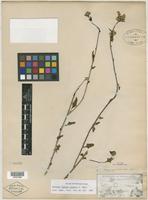
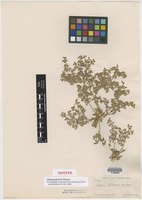
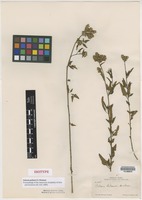
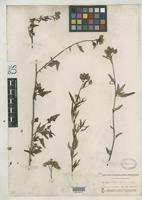
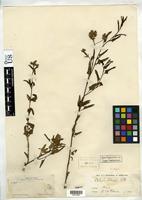
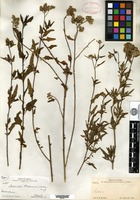
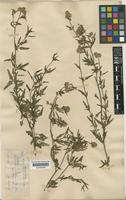
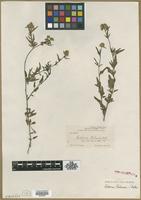
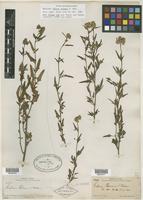
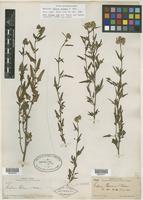
Syntype of Celosia palmeri S. Watson [family AMARANTHACEAE]
Isotype of Celosia palmeri S.Watson [family AMARANTHACEAE]
Syntype of Celosia palmeri Watson, S. 1883 [family AMARANTHACEAE]
Type of Celosia palmeri S. Watson [family AMARANTHACEAE]
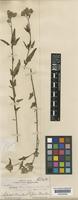
Celosia palmeri S.Watson [family AMARANTHACEAE]
Type? of Celosia palmeri S.Watson [family AMARANTHACEAE]
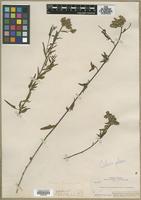
Syntype of Celosia palmeri S. Watson [family AMARANTHACEAE]
Celosia palmeri S.Watson [family AMARANTHACEAE]
Type? of Celosia palmeri S.Watson [family AMARANTHACEAE]
Previous
Next

Name

Identification
Celosia palmeri S.Watson [family AMARANTHACEAE ] (stored under name);
Related name
  • Celosia palmeri
  • Celosia sp.
Common name
  • Palmer’s cockscomb, Flora of North America Vol. 4

Flora

Entry for Celosia palmeri S. Watson [family AMARANTHACEAE]
Herbarium
Flora of North America (FNA)
Collection
Flora of North America
Resource Type
Reference Sources
Entry From
Flora of North America, Vol 4,
Names
Celosia palmeri S. Watson [family AMARANTHACEAE], Proc. Amer. Acad. Arts, 18: 143. 1883
Treatment Author(s)
Kenneth R. Robertson
Information
Shrubs, perennial, ± 0.3–1 m; rootstock stout. Stems erect or clambering, much-branched from rootstock, mostly glabrous. Leaves: petiole 0.5–2 cm; blade somewhat hastately lobed, lanceolate to ovate-lanceolate, 2–4.5 × 0.5–1.7 cm, base long-tapering, apex acute to acuminate or rounded-mucronate. Inflorescences compact panicles of few terminal or axillary spikes near the tips, becoming more open in fruit, units less than 10 mm diam. Flowers: tepals whitish with reddish base, striate, drying tan, darker in middle, ± equal, 4–5 mm, rather rigid, glabrous or occasionally sparsely villous; style 1 mm; stigmas 2. Utricles 4–6 mm. Seeds 3–5, 0.8–1.3 mm diam., faintly reticulate or smooth.
Phenology
dec-feb (winter), jun-aug (summer), sep-nov (fall)
Altitude range
0–30 m;
Distribution
Mexico (Coahuila).Mexico (Nuevo León).Mexico (San Luis Potosí).USA Tex.
Discussion
In the original description, S. Watson indicated that Celosia palmeri occurs in “western Texas and northeastern Mexico.” Celosia palmeri has been reported from Cameron County, Texas (C. F. Reed 1969b) and the trans-Pecos region of Texas (C. F. Reed 1970). We have been able to confirm its occurrence only in the south Texas plains region. Herbarium specimens of C. palmeri are typically paler green than those of C. nitida.

Related Materials

  • Terms and Conditions
  • Privacy Policy
  • Cookie Policy
  • Cookie Settings
  • Accessibility
  • Help
  • Contact Us
  • Facebook
  • Twitter
ITHAKA

JSTOR is part of ITHAKA, a not-for-profit organization helping the academic community use digital technologies to preserve the scholarly record and to advance research and teaching in sustainable ways.

©2000-2026 ITHAKA. All Rights Reserved. JSTOR®, the JSTOR logo, JPASS®, Aluka®, and ITHAKA® are registered trademarks of ITHAKA.

╳