JSTOR Global Plants Home
  • Home
  • Browse
  • About
  • Access
  • Account
    • Saved Items
    • Profile
  • Log in

Global Plants

Skip to Main Content
  • JSTOR Global Plants Home
  • Global Plants

    • Browse
    • About
    • Access
    • Account
      • Saved Items
      • Profile
Log in
  • Browse
  • About
  • Access
  • Account
    • Saved Items
    • Profile
Advanced Search

Compilation
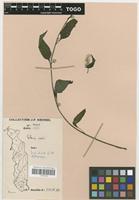
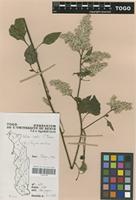
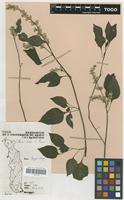
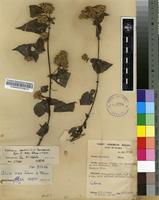
Celosia isertii

8 Images see all

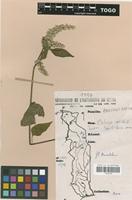
Filed as Celosia isertii C.C.Towns. [family AMARANTHACEAE]
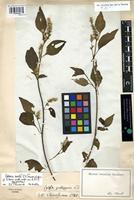
Holotype of Celosia isertii C.C. Townsend [family AMARANTHACEAE]
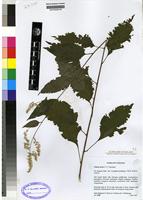
Isotype of Celosia isertii C.C. Townsend [family AMARANTHACEAE]
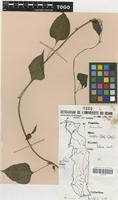
Filed as Celosia isertii C.C.Towns. [family AMARANTHACEAE]
Previous
Next

Name

Identification
Celosia isertii C.C. Townsend [family AMARANTHACEAE ] (stored under name); Verified by C.C. Townsend, 1972
Related name
  • Celosia isertii
Common name
  • bokan gida (JMD) nànnáfaá (JMD; ZOG) nànnàhoó (JMD; ZOG) (NIGERIA, HAUSA), Burkill, H.M. 1985. The useful plants of west tropical Africa, Vol. 1
  • nanafo (JMD) (NIGERIA, FULFULDE (Nigeria)), Burkill, H.M. 1985. The useful plants of west tropical Africa, Vol. 1
  • gimbui (FCD) tεgσ (def.-i) (FCD; D G Thomas) (SIERRA LEONE, MENDE), Burkill, H.M. 1985. The useful plants of west tropical Africa, Vol. 1
  • furayŋamo = death grass (Hayes) (THE GAMBIA, MANDING-MANDINKA), Burkill, H.M. 1985. The useful plants of west tropical Africa, Vol. 1
  • àjẹ fáwo, àjẹ fọ́wo = eat and break plate, from jẹ: to eat; fọ́: to break; áwo: a plate, meaning something good to eat (JMD) ajítàn from jí: to awake: tàn: to shine, meaning unknown (Millson) (NIGERIA, YORUBA), Burkill, H.M. 1985. The useful plants of west tropical Africa, Vol. 1
  • a-kσkσrσ-a-ro-pet (FCD) (SIERRA LEONE, TEMNE), Burkill, H.M. 1985. The useful plants of west tropical Africa, Vol. 1
  • jarfundu (JMD) (NIGERIA, FULA-FULFULDE (Adamawa)), Burkill, H.M. 1985. The useful plants of west tropical Africa, Vol. 1

Flora

Entry for Celosia isertii Townsend [family AMARANTHACEAE]
Herbarium
Royal Botanic Gardens, Kew (K)
Collection
Flora Zambesiaca
Resource Type
Reference Sources
Entry From
FZ, Vol 9, Part 1, page 28, (1988) Author: C. C. Townsend
Names
Celosia isertii Townsend [family AMARANTHACEAE], in Hook. Ic. Pl. 38, 2: 57, t. 3736 (1975). Type from Ghana.
Celosia laxa [family AMARANTHACEAE], sensu Engl. in Pflanzenw. Ost-Afr. C: 172 (1895).—Baker & Clarke in F.T.A. 6. 1: 18 (1909).—Schinz in Engl. & Prantl Pflanzenfam. ed. 2. 16 C: 29 (1834).—Hauman in F.C.B. 2: 20 (1951).—Cavaco in Mém. Mus. Hist. Nat. Paris Sér. B, 13: 43 (1962) non Schum. & Thonn.
Celosia laxa var. pilosa Schinz [family AMARANTHACEAE], in Bull. Herb. Boiss. Sér. 2, 3: 9 (1903). Type from Cameroon.
Information
A weak-stemmed perennial herb, often woody below, variable in habit from lax and prostrate, supported by other plants or scrambling to 4 m. (or probably more). Stem and branches glabrous or thinly to rather densely furnished with brownish multicellular hairs. Leaves lanceolate-ovate to broadly or deltoid-ovate, acuminate, glabrous or with multicellular hairs below (especially along the nerves), or rarely also the superior surface; larger leaves 3.5–10 × 2.5–5 cm., shortly cuneate to truncate or subcordate at the base, attenuate along a slender petiole; superior and branch leaves smaller, often narrower and more attenuate at the base. Inflorescences white, axillary and terminal, densely or more rarely laxly thyrsoid, the upper usually more or less congested to become spiciform or lobed and subpaniculate; partial inflorescences condensed or with unequal branches, approximate or slightly separated occasionally more distant), up to c. 1.5 cm. long; inflorescence axis glabrous or with multicellular hairs, often concealed by the densely set flowers; peduncle up to 9 cm. long but generally shorter. Bracts and bracteoles 2–3 mm. long, broadly deltoid-ovate, membranous, glabrous or marginally ciliate, mucronate with the shortly excurrent midrib, which is furnished with multicellular hairs on its dorsal surface. Tepals elliptic-oblong, (3) 3.5–5 mm. long, obtuse or subacute, whitish-membranous with (at least in the dry state) a darker central vitta; midrib shortly excurrent, subtended on each side at the base by one or two pairs of lateral nerves which are evanescent at or a little above the centre of the tepal. Filaments with the free apices longer than the basal cup. Ovary with numerous ovules (usually c. 13–25); stigmas (2) 3 (4), more or less reflexed, slightly longer than the c. 1–1.5 mm. long style. Capsule ovoid, 2–4 mm. long, not exceeding the tepals. Seeds black, shiny, lenticular, c. 1 mm., sulcate-punctate with the marginal areolae longer, narrower and more concentric.
Habitat
Characteristically scrambling at forest edges, along water-courses and roadsides with thick undergrowth; also as a weed of plantations or abandoned cultivation and other disturbed ground;
Range
Widespread in W. and C. tropical Africa to Uganda and bordering NW. Tanzania
Altitude range
1490–1800 m.
1800
1490
Distribution
Zambia N Samfya, 5.v.1958. Fanshawe 4399 (K; LISC; NDO).

Related Materials

  • Terms and Conditions
  • Privacy Policy
  • Cookie Policy
  • Cookie Settings
  • Accessibility
  • Help
  • Contact Us
  • Facebook
  • Twitter
ITHAKA

JSTOR is part of ITHAKA, a not-for-profit organization helping the academic community use digital technologies to preserve the scholarly record and to advance research and teaching in sustainable ways.

©2000-2026 ITHAKA. All Rights Reserved. JSTOR®, the JSTOR logo, JPASS®, Aluka®, and ITHAKA® are registered trademarks of ITHAKA.

╳