JSTOR Global Plants Home
  • Home
  • Browse
  • About
  • Access
  • Account
    • Saved Items
    • Profile
  • Log in

Global Plants

Skip to Main Content
  • JSTOR Global Plants Home
  • Global Plants

    • Browse
    • About
    • Access
    • Account
      • Saved Items
      • Profile
Log in
  • Browse
  • About
  • Access
  • Account
    • Saved Items
    • Profile
Advanced Search

Compilation
Ceanothus asiaticus

13 Images see all

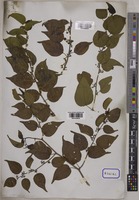
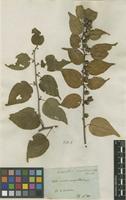
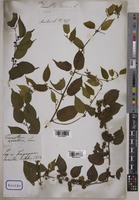
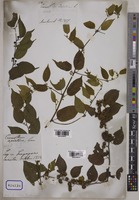
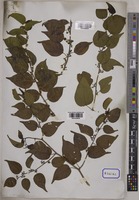
Ceanothus asiaticus L. [family RHAMNACEAE]
Filed as Ceanothus asiaticus L. [family RHAMNACEAE]
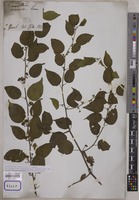
Ceanothus asiaticus L. [family RHAMNACEAE]
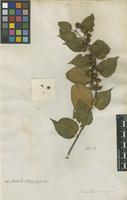
Original material of Ceanothus asiaticus L. [family RHAMNACEAE]
Filed as Ceanothus asiaticus L. [family RHAMNACEAE]
Ceanothus asiaticus L. [family RHAMNACEAE]
Original material of Ceanothus asiaticus L. [family RHAMNACEAE]
Filed as Ceanothus asiaticus L. [family RHAMNACEAE]
Ceanothus asiaticus L. [family RHAMNACEAE]
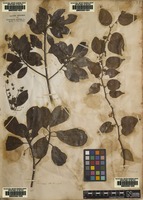
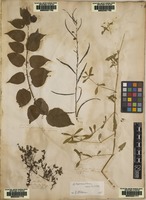
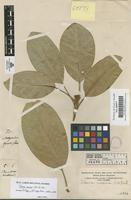
Filed as Talauma mexicana (DC.) G. Don [family MAGNOLIACEAE]
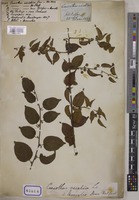
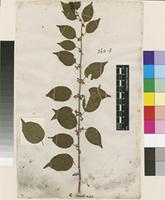
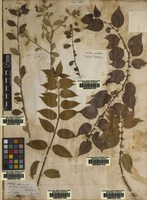
Lectotype of Ceanothus asiaticus L. [family RHAMNACEAE]
Ceanothus asiaticus L. [family RHAMNACEAE]
Previous
Next

Name

Identification
Ceanothus asiaticus L. [family RHAMNACEAE ] (stored under name); Colubrina asiatica (L.) Brongn. [family RHAMNACEAE ] Verified by Henry Trimen,
Related name
  • Colubrina asiatica
  • Talauma mexicana
  • Ceanothus asiaticus

Flora

Entry for Colubrina asiatica var. asiatica [family RHAMNACEAE]
Herbarium
Royal Botanic Gardens, Kew (K)
Collection
Flora of Tropical East Africa
Resource Type
Reference Sources
Entry From
Flora of Tropical East Africa, page 1, (1972) Author: MARSHALL C. JOHNSTON (University of Texas Herbarium)
Names
Colubrina asiatica var. asiatica [family RHAMNACEAE]
Ceanothus asiaticus L. [family RHAMNACEAE], Sp. Pl.: 196 (1753)
Information
Younger internodes with sparse antrorse appressed golden silky hairs; leaf-blades usually 1.3–2 times as long as broad, at base broadly rounded, beneath with scattered antrorse appressed golden silky hairs, slightly more pubescent near the veins or often glabrate; seeds 4.5–5 mm. long. Fig. 1.
Range
DISTR. K7; T3, 6, 8; Z; P tropical coasts, Kenya to Mozambique; Madagascar, Seychelles, SE. Asia, Queensland, and oceanic islands as far as 140° E. longitude in the S. Pacific; also Hawaii; also adventive to West Indies and Florida during the last century. The other variety is not littoral and occurs in Burma, Thailand, Laos, Cambodia, Vietnam, Yunnan and Java.
Distribution
KENYA Kwale District 20 km. S. of Mombasa, Twiga, 22 Jan. 1964, Verdcourt 3963 !KENYA Mombasa District Likoni, Dec. 1957, Ossent 239!;KENYA Kilifi District 32 km. N. of Mombasa, Vipingo, 16 Dec. 1953, Verdcourt 1073 !TANGANYIKA Tanga, 4 Nov. 1929, Greenway 1834!;TANGANYIKA Rufiji District Mafia I., Kanga, 15 Aug. 1937, Greenway 5116 !TANGANYIKA Lindi, 23 Mar. 1943, Gillman 1225 !ZANZIBAR Zanzibar I. , Massazine, 13 Dec. 1959, Faulkner 2430!ZANZIBAR Pemba I. , Mkoani, 7 Sept. 1929, Vaughan 639 !
Notes
According to H. B. Guppy, “Observations of a Naturalist in the Pacific 1896–99” 2, Plant Dispersal (1906), the seeds float in sea-water; see also S. Carlquist in Brittonia 18: 310–335 (1966).

Related Materials

  • Terms and Conditions
  • Privacy Policy
  • Cookie Policy
  • Cookie Settings
  • Accessibility
  • Help
  • Contact Us
  • Facebook
  • Twitter
ITHAKA

JSTOR is part of ITHAKA, a not-for-profit organization helping the academic community use digital technologies to preserve the scholarly record and to advance research and teaching in sustainable ways.

©2000-2026 ITHAKA. All Rights Reserved. JSTOR®, the JSTOR logo, JPASS®, Aluka®, and ITHAKA® are registered trademarks of ITHAKA.

╳