JSTOR Global Plants Home
  • Home
  • Browse
  • About
  • Access
  • Account
    • Saved Items
    • Profile
  • Log in

Global Plants

Skip to Main Content
  • JSTOR Global Plants Home
  • Global Plants

    • Browse
    • About
    • Access
    • Account
      • Saved Items
      • Profile
Log in
  • Browse
  • About
  • Access
  • Account
    • Saved Items
    • Profile
Advanced Search

Compilation
Cassia petersiana

9 Images see all

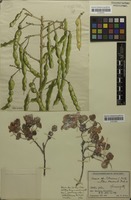
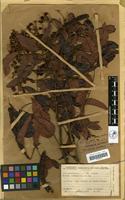
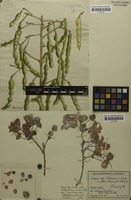
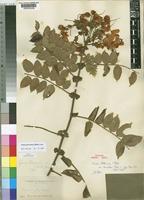
Filed as Cassia petersiana Bolle [family FABACEAE]
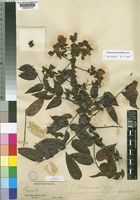
Cassia petersiana Bolle [family LEGUMINOSAE-CAESALPINIOIDEAE]
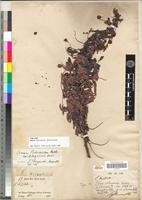
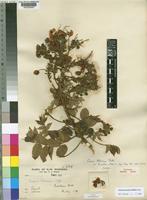
Type of Cassia delagoensis Harvey [family FABACEAE-CAESALPINIOIDEAE]
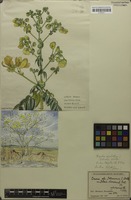
Filed as Cassia petersiana Bolle [family FABACEAE]
Filed as Cassia petersiana Bolle [family LEGUMINOSAE-CAESALPINIOIDEAE]
Filed as Cassia petersiana Bolle [family FABACEAE]
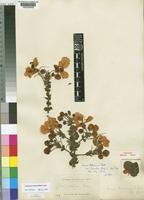
Syntype of Cassia petersiana Bolle var. tomentosa Baker f. [family LEGUMINOSAE-CAESALPINIOIDEAE]
Previous
Next

Name

Identification
Cassia petersiana Bolle [family LEGUMINOSAE-CAESALPINIOIDEAE ] (stored under name); Verified by Not on sheet,
Related name
  • Cassia petersiana
  • Cassia unrecorded
  • Senna petersiana
  • Cassia delagoensis
  • Cassia goratensis

Flora

Entry for Cassia petersiana [family FABACEAE]
Herbarium
South African National Biodiversity Institute, Compton Herbarium, Cape Town (SAM)
Collection
Flora of Southern Africa
Resource Type
Reference Sources
Entry From
Flora of South Africa, (2003) Author: Dr J.P. Roux
Names
Cassia petersiana [family FABACEAE]
Common names
C. delagoensis Harv. in F.C. 2 : 272 (1862); Bews, Fl. Natal & Zululand 114 (1921); Forbes in S. Afr. J. Sci. 18 : 343 (1922); Burtt Davy, Fl. Transv. 2 : 324 (1927). Syntypes: Delagoa Bay, Forbes (K); "Port Natal", Hewittson (K).
Information
Small tree or sparingly to multibranched, slender to rounded shrub l-4(-7) m high. Stems when young longitudinally ridged and furrowed, villous with long curved ± appressed white hairs interspersed with short straight patent hairs and numerous reddish-brown, finger-like, slender glands, becoming woody, ± terete and sparingly villous to pubescent with age. Leaves when young, cano-sericeous especially abaxially, with many yellowish-red glands interspersed among the hairs: when mature petiole and rhachis 7-22 cm long; stipules conspicuous, leafy, semi-cordate to reniform, with one end attenuate-caudate, up to 1,5 cm long excluding apex of 1-1,2 cm long, 0,7-0,8 cm wide, eventually deciduous; petiole 2-4 cm long including basal pulvinus, petiolar gland lacking; rhachis channelled adaxially with 1 large ± stalked, clavate to finger-like, reddish to dark brown, projecting gland between all, or most, of the (4-)7-12 leaflet pairs (glands readily break away); leaflets ovate, lanceolate or elliptic or a combination of these, variable in size, especially in width, (l,5-)3-4(-6,5) cm long, 0,8-l,6(-2,3) cm wide, uppermost pair usually not largest, bases slightly asymmetric, broadly cuneate to round, apices acute to acuminate, margins thickened, yellowish, ± villous, surfaces sparsely villous, dark green adaxially, ± densely villous, ± glandular and paler-green abaxially. Inflorescences 10-15-flowered corymbose racemes in axils of upper leaves and aggregated into ± rounded panicles 10-20 cm long terminating branches; peduncles at flowering and fruiting 2-5 cm long; bracts variable often in the same inflorescence, from cordate through rhom­boid to ovate, green, pubescent and glandular, each with two stipitate, conical glands in the position of stipules; pedicels, at flowering and fruiting 2-3 cm long, pubescent, glandular except with extreme age. Sepals obtuse, villous abaxially. Petals unequal, elliptic to obovate, stalked, largest 2-2,5 cm long, 1,3-1,5 cm wide, deep yellow, brown-veined. Stamens 10: 3 staminodal (adaxial), flattened ± cordate, ± 3 mm long including short filament, 7 functional (4 lateral medium, 3 abaxial large, filaments 7-9 mm long, dorsifixed), dehiscence porose. Ovaries densely cano-sericeous; style straight, glabrous; stigma hollow, fringed with short white hairs. Pods flattened, straight or slightly curved, 10-25 cm long, 1-1,5 cm wide, transversely septate, apex often beaked, valves dark brown to black, ± soft and succulent, glabrous, sutures thickened, lighter coloured, indehiscent, but 1- or more-seeded portions shed from between the sutures which hang suspended from the plant before breaking up. Seeds slightly dorsally com­pressed, ± 4-angled, ovate to suborbicular in outline, 4-5 mm in length and breadth; testa dark dull brown, smooth or faintly dotted with a dark line from hilum; areole on each lateral face (i.e. on shoulder or margin), narrowly elliptic, ± 3 mm long, ± 1 mm wide, paler, faintly transversely cracked. Fig. 16 : 14; 18 : 14; 19 : 14/1, 14/2; 20 : 14.
Habitat
Brenan, in Fl. Trop. E. Afr. Legum.-Caesalp : 72 (1967), commented on its variability and recognized three principal variants, all tropical African, that he did not name. He stated that further south (the Flora area and Mozambique) intermediates among these, as well as other perplexing, narrow-leaved forms occurred. Other workers have noted this variation before (C. delagoensis Harvey, 1862, for plants with smaller, narrower, more numerous leaflets with less prominent venation). In the Flora area leaflet size varies from 3 X 0,8 cm (Rogers 12988) to 6,5 x 2 cm (Gerstner 5407) and number of leaflet pairs from 4-12, but this does not seem to represent anything more than a range usual for a tree or shrub, with perhaps a slight tendency for the leaves of plants towards the southern limit of the distribution range to be many-jugate with the leaflets narrow.
Use
14. Cassia petersiana Bolle in Peters, Reise Mossamb. Bot. 1 : 13 (1861); Oliv. in F.T.A. 2 : 272 (1871); Bak. f., Leg. Trop. Afr. 3 : 633 (1930); Henkel, Woody PI. Natal 220 (1934); Steyaert in F.C.B. 3 : 508 (1952); F. White, For. Fl. N. Rhod. 119 (1962); Compton, J.S.Afr. Bot, Suppl. 6 : 46 (1966); Brenan in F.T.E.A. Legum-Caesalp. : 72 (1967); Palmer & Pitman, Trees S.Afr. 2 : 881 (1973). Type: "Mozambique, Querimba I. and Mozambique", Peters (B, holo.).
Range
This tropical species is widespread in eastern Africa, extending from Ethiopia and the Sudan Republic, southwards to Rhodesia, Mozambique and South Africa. It is also found in Madagascar. West­wards it reaches the Cameroun and the Central African Republics. In the Flora area it occurs in the Transvaal, Swaziland and northernmost Natal.

Related Materials

  • Terms and Conditions
  • Privacy Policy
  • Cookie Policy
  • Cookie Settings
  • Accessibility
  • Help
  • Contact Us
  • Facebook
  • Twitter
ITHAKA

JSTOR is part of ITHAKA, a not-for-profit organization helping the academic community use digital technologies to preserve the scholarly record and to advance research and teaching in sustainable ways.

©2000-2026 ITHAKA. All Rights Reserved. JSTOR®, the JSTOR logo, JPASS®, Aluka®, and ITHAKA® are registered trademarks of ITHAKA.

╳