JSTOR Global Plants Home
  • Home
  • Browse
  • About
  • Access
  • Account
    • Saved Items
    • Profile
  • Log in

Global Plants

Skip to Main Content
  • JSTOR Global Plants Home
  • Global Plants

    • Browse
    • About
    • Access
    • Account
      • Saved Items
      • Profile
Log in
  • Browse
  • About
  • Access
  • Account
    • Saved Items
    • Profile
Advanced Search

Compilation
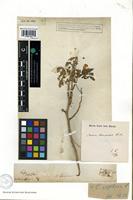
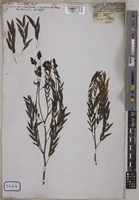
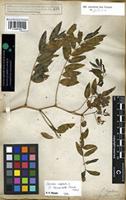
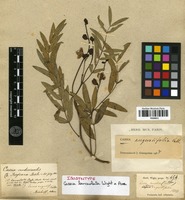
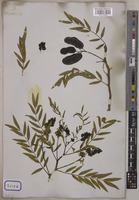
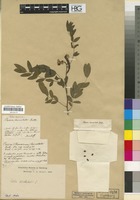
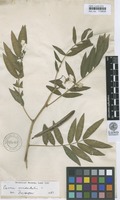
Cassia lanceolata

11 Images see all

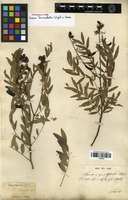
Filed as Cassia sophera L. [family FABACEAE]
Isosyntype of Cassia lanceolata Forssk. [family FABACEAE]
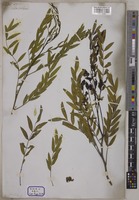
Cassia lanceolata Forssk. [family LEGUMINOSAE-CAESALPINIOIDEAE]
Syntype of Cassia lanceolata Forssk. [family FABACEAE]
Isosyntype of Cassia lanceolata Forssk. [family FABACEAE]
Syntype of Cassia lanceolata Forssk. [family FABACEAE]
Cassia lanceolata Forssk. [family LEGUMINOSAE-CAESALPINIOIDEAE]
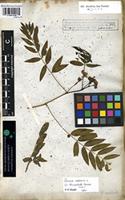
Filed as Cassia occidentalis L. [family LEGUMINOSAE/FABACEAE]
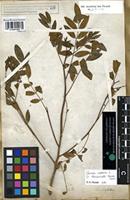
Cassia ligustrina L. [family FABACEAE]
Previous
Next

Name

Identification
Cassia lanceolata Forssk. [family FABACEAE ] Verified by Not on Sheet, Cassia sophera L. [family FABACEAE ] (stored under name); Verified by F.N. Hepper, 1984
Related name
  • Cassia sophera
  • Cassia lanceolata

Flora

Entry for Cassia angustifolia Vahl [family LEGUMINOSAE-CAESALPINIOIDEAE]
Herbarium
Royal Botanic Gardens, Kew (K)
Collection
Flora of Tropical Africa
Resource Type
Reference Sources
Entry From
Flora of Tropical Africa, Vol 2, page 1, (1871) Author: Papilionaceae by Mr. J. G. Baker; Caesalpinieae and Mimoseae by Prof. Oliver)
Names
Cassia angustifolia Vahl [family LEGUMINOSAE-CAESALPINIOIDEAE], Symb. Bot. i. 29. Batka, Monog. Senna; t. ii.
Cassia lanceolata Wight et Arn. [family LEGUMINOSAE-CAESALPINIOIDEAE], Prod. Fl. Pen. Ind. Or. 288. For synonymy, see the same work.
Information
Very nearly allied to the preceding, the general description of which will apply, differing in the narrower oval-lanceolate leaflets which are wholly glabrous or the pubescence all but imperceptible, 1–2 in. long, and usually in 5 to 8 pairs, as well as in the narrower legumes which are usually 7–8 lines in breadth.
Range
Extending eastward to the desert tracts of N. Western and Peninsular India.
Distribution
Mozamb. Dist. Near Tette, “growing in the streets and on the rubbish-heaps,” Dr. Kirk!
Notes
Doubtfully indigenous in Tropical Africa. A fragment is in the Kew Herbarium, from Dr. Livingstone, labelled from Central Africa, without precise locality.

Related Materials

  • Terms and Conditions
  • Privacy Policy
  • Cookie Policy
  • Cookie Settings
  • Accessibility
  • Help
  • Contact Us
  • Facebook
  • Twitter
ITHAKA

JSTOR is part of ITHAKA, a not-for-profit organization helping the academic community use digital technologies to preserve the scholarly record and to advance research and teaching in sustainable ways.

©2000-2026 ITHAKA. All Rights Reserved. JSTOR®, the JSTOR logo, JPASS®, Aluka®, and ITHAKA® are registered trademarks of ITHAKA.

╳