JSTOR Global Plants Home
  • Home
  • Browse
  • About
  • Access
  • Account
    • Saved Items
    • Profile
  • Log in

Global Plants

Skip to Main Content
  • JSTOR Global Plants Home
  • Global Plants

    • Browse
    • About
    • Access
    • Account
      • Saved Items
      • Profile
Log in
  • Browse
  • About
  • Access
  • Account
    • Saved Items
    • Profile
Advanced Search

Compilation
Cassia hochstetteri

16 Images see all

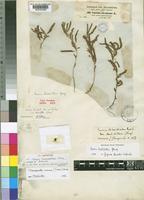
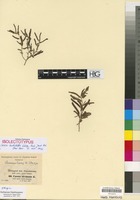
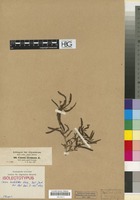
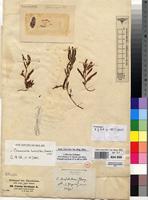
Isolectotype of Cassia hochstetteri Ghesq. [family LEGUMINOSAE-CAESALPINIOIDEAE]
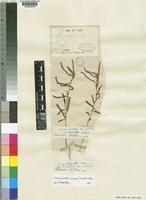
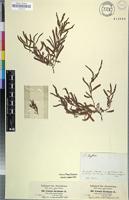
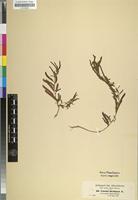
Chamaecrista nomane (Sieber) Ohashi [family LEGUMINOSAE-CAESALPINIOIDEAE]
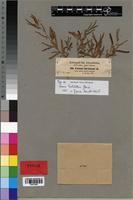
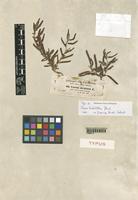
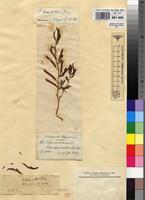
Type of Cassia hochstetteri Ghesq. [family CAESALPINIACEAE]
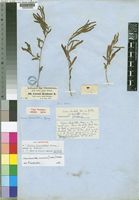
Isolectotype of Cassia hochstetteri Ghesq. [family LEGUMINOSAE-CAESALPINIOIDEAE]
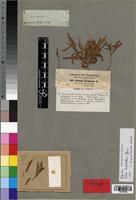
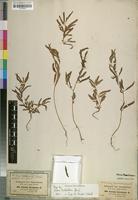
Isolectotype of Cassia hochstetteri Ghesq. [family LEGUMINOSAE/FABACEAE]
Isotype of Cassia hochstetteri Ghesq. [family CAESALPINIACEAE]
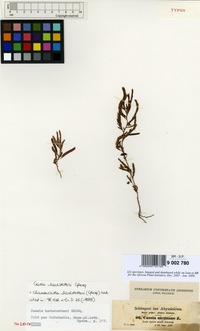
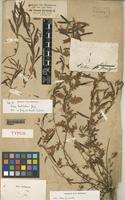
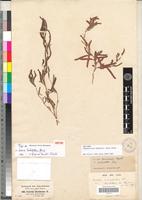
Type of Cassia hochstetteri Ghesq. [family CAESALPINIACEAE]
Isolectotype of Cassia hochstetteri Ghesq. [family LEGUMINOSAE-CAESALPINIACEAE]
Isolectotype of Cassia hochstetteri Ghesq. [family LEGUMINOSAE/FABACEAE]
Type of Cassia hochstetteri Ghesq. [family LEGUMINOSAE-CAESALPINIOIDEAE]
Isotype of Cassia hochstetteri Ghesq. [family CAESALPINIACEAE]
Type of Cassia hochstetteri Ghes. [family LEGUMINOSAE-CAESALPINIOIDEAE]
Type of Cassia hochstetteri Ghesq. [family FABACEAE]
Isolectotype of Cassia hochstetteri Ghesq. [family LEGUMINOSAE-CAESALPINIOIDEAE]
Isotype of Cassia hochstetteri Gherq. [family FABACEAE-CAESALPINIOIDEAE]
Previous
Next

Name

Identification
Cassia hochstetteri Ghesq. [family FABACEAE ] Verified by Not on sheet, Chamaecrista hochstetteri (Ghesq.) Lock. [family FABACEAE ] (stored under name); Verified by Not on sheet,
Related name
  • Chamaecrista nomane
  • Cassia nictitans
  • Chamaecrista hochstetteri
  • Cassia mimosoides
  • Senna dimidiata
  • Cassia hochstetteri
  • Cassia dimidiata

Flora

Entry for CASSIA hochstetteri Ghesq. [family LEGUMINOSAE-CAESALPINIOIDEAE]
Herbarium
Royal Botanic Gardens, Kew (K)
Collection
Flora of Tropical East Africa
Resource Type
Reference Sources
Entry From
Flora of Tropical East Africa, page 1, (1967) Author: J. P. M. Brenan
Names
CASSIA hochstetteri Ghesq. [family LEGUMINOSAE-CAESALPINIOIDEAE], in B.J.B.B. 9: 155 (1932). Type: Ethiopia, Tigre, Mt. Scholoda, 1837, Schimper 66 (BR, lecto., K, isolecto.!)
Senna dimidiata Roxb. [family LEGUMINOSAE-CAESALPINIOIDEAE], Fl. Indica 2: 352 (1832). Type: India, Calcutta Botanic Garden, Roxburgh (whereabouts of type uncertain–authentic painting no. 1839, K!). Non Cassia dimidiata D. Don, Prodr. Fl. Nepal.: 247 (1825) (see note)
Cassia sparsa Steyaert [family LEGUMINOSAE-CAESALPINIOIDEAE], in B.J.B.B. 21: 359 (1951), pro parte, saltern quoad spec. Roxburgh, sed excl. holotypum
Information
Annual herb, prostrate or erect. Steins 10–45 cm. long, simple or branched especially towards base, puberulous with short curved hairs which are often yellowish at least when dry; longer spreading hairs absent from stems. Leaves oblong to linear-oblong, 1.5–6 cm. long, 0.7–1.7 cm. wide; gland near top of petiole, sessile, circular or broadly elliptic, 0.2–0.7 mm. in diameter, purplish to blackish at least when dry; rhachis eglandular, channelled but not crenate-crested along upper side; leaflets sessile, mostly in 9–31 pairs, linear-oblong or elliptic-oblong, 4–7.5(–10) mm. long, 1-1.5(–2) mm. wide, rounded to acute and mucronate at apex, glabrous or with a few short cilia on margins particularly near apex; midrib only slightly excentric at least above, the apex of the leaflet being thus subcentral; lateral nerves prominulous beneath. Inflorescences mostly supra-axillary, 1–3-flowered; pedicels 3.5–7(–10) mm. long, puberulous (in Asia sometimes with longer spreading hairs). Petals yellow, 4–5 mm. long, 1.5–5 mm. wide. Stamens only 4–5(8–10 in other related East African species). Pods (1.5–)2.2–4.3 cm. long, 3.5–6 mm. wide. Seeds brown, without areoles. Fig. 10/43, p. 57.
Range
DISTR. T1, 7
Altitude range
about 1650–1680 m.
Distribution
TANGANYIKA Ngara District Bugufi, Murugwanza, 20 Jan. 1961, Tanner 5624!TANGANYIKA Mbeya Airfield, 11 May 1956, Milne-Redhead & Taylor 10049!TANGANYIKA Njombe District Msima Stock Farm, 1932, Emson 313A!
Distribution (external)
; Ethiopia
Madagascar
India
China
Japan
Notes
This species is outstanding in having only half the usual number of stamens. The small flowers on short pedicels and the subcentral nerve at the leaflet-apex are also striking features.The African material of C. hochstetteri has pods 3.5–4 mm. wide, while the pods are 4–6 mm. wide in Asia. I can see no other constant difference between specimens from the two continents.There is a tendency for the inflorescences in the African specimens to be more markedly supra-axillary than they are in Asia, and I have seen no African specimens with spreading hairs on the pedicels, though in Asiatic material they are not infrequent. C. hochstetteri has been collected very rarely in Africa, and because of this I prefer not to separate the Asiatic plants at present.The rejection of the name Cassia dimidiata for this species requires some comment. The name was due to Buchanan-Hamilton, who did not, however, publish it; he sent seeds to Roxburgh at Calcutta, and his herbarium-specimen came to D. Don. Don published Cassia dimidiata in 1825 from the herbarium-specimen, making no mention of the stamen-number. Roxburgh’s Senna dimidiata appeared later, in 1832, and the stamens were said to be 4–5. Whatever Buchanan-Hamilton intended by C. dimidiata, Don’s type at the British Museum (Natural History), which I have examined, shows 8 stamens and is not C. hochstetteri, but apparently C. mimosoïdes or a close relative, and is also evidently not the same as Roxburgh’s Senna dimidiata.

Related Materials

  • Terms and Conditions
  • Privacy Policy
  • Cookie Policy
  • Cookie Settings
  • Accessibility
  • Help
  • Contact Us
  • Facebook
  • Twitter
ITHAKA

JSTOR is part of ITHAKA, a not-for-profit organization helping the academic community use digital technologies to preserve the scholarly record and to advance research and teaching in sustainable ways.

©2000-2026 ITHAKA. All Rights Reserved. JSTOR®, the JSTOR logo, JPASS®, Aluka®, and ITHAKA® are registered trademarks of ITHAKA.

╳