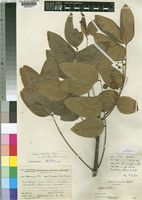
Entry From
Flora of Tropical East Africa, page 1, (1967) Author: J. P. M. Brenan
Names
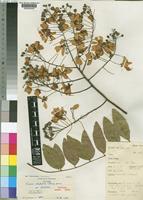
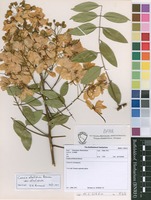
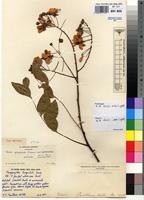
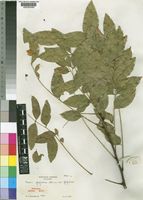
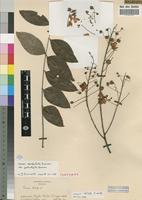
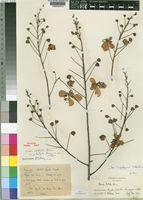
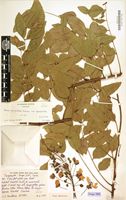
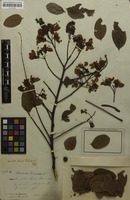
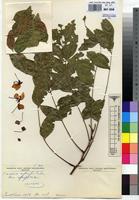
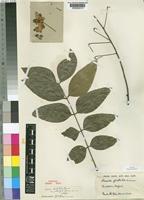
CASSIA afrofistula Brenan [family LEGUMINOSAE-CAESALPINIOIDEAE], in K.B. 13: 236 (1958); K.T.S.: 101 (1961). Type: Tanganyika, Tanga District, Sawa, Faulkner 1956 (K, holo.!, BR, iso.!)
CASSIA sieberana [family LEGUMINOSAE-CAESALPINIOIDEAE], [sensu T.S.K.: 61 (1936), non DC.]
CASSIA fistula [family LEGUMINOSAE-CAESALPINIOIDEAE], [sensu T.T.C.L.: 97 (1949), pro parte, non L. ]
CASSIA beareana [family LEGUMINOSAE-CAESALPINIOIDEAE], [sensu U.O.P.Z.: 175 (1949), non Holmes]
Distribution
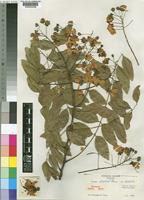
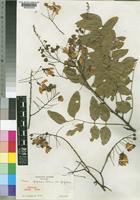
KENYA Kilifi District coast N. of Malindi, Boula, 5 Nov. 1945, J. Adamson 192 in Bally 6092! & Malindi, Oct. 1951, Tweedie 996!KENYA Tana River District Mambosasa, R. M. Graham Z.303 in F.H. 1791 !TANGANYIKA Tanga District Tanga, Ras Kasone, May 1942, Lindeman 1025 !TANGANYIKA Mafia I., 3 Apr. 1933, Wallace 743 !TANGANYIKA Lindi District Ngongo, 25 May 1943, Gillman 1483 !ZANZIBAR Zanzibar I., 1927, Toms 123 ! & Fumba, 28 Jan. 1929, Greenway 1233 ! & Chwaka road, 9 Dec. 1954, R. 0. Williams 189 !
Notes
The above description relates to var. afrofistula. The var, patentipila Brenan in K.B. 13: 238 (1958) occurs in Mozambique and should be looked for in SE. Tanganyika. It differs in having the inflorescence ± shortly pubescent with spreading hairs, not appressed-puberulous, and in mostly having some usually sparse crisped pubescence on the lower side of the leaflets (fig. 11/6–10). C. afrofistula has been frequently confused with true C. fistula L., which is probably a native of tropical Asia, but is cultivated as an ornamental tree in East Africa. C. fistula has normally pendulous racemes 1–3 together, and leaflets almost equal at base, with more numerous lateral nerves and minutely appressed-puberulous beneath. The pods of C. fistula are 1.5–2.5 cm. in diameter with hard woody walls, while those of C. afrofistula can easily be cracked between finger and thumb. This greater fragility of the pods also distinguishes C. afrofistula from C. angolensis, C. mannii, C. abbreviata and C. sieberana.