JSTOR Global Plants Home
  • Home
  • Browse
  • About
  • Access
  • Account
    • Saved Items
    • Profile
  • Log in

Global Plants

Skip to Main Content
  • JSTOR Global Plants Home
  • Global Plants

    • Browse
    • About
    • Access
    • Account
      • Saved Items
      • Profile
Log in
  • Browse
  • About
  • Access
  • Account
    • Saved Items
    • Profile
Advanced Search

Compilation
Casearia gladiiformis

7 Images see all

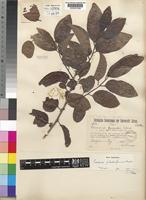
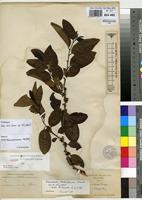
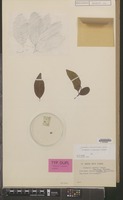
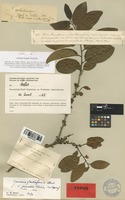
Isotype of Casearia junodii Schinz [family FLACOURTIACEAE]
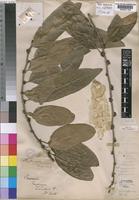
Casearia gladiiformis Mast.
Isotype of Casearia junodii Schinz [family FLACOURTIACEAE]
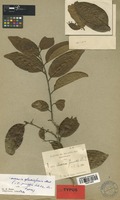
Holotype of Casearia gladiiformis Mast. [family FLACOURTIACEAE]
Previous
Next

Name

Identification
Casearia gladiiformis Mast. [family SAMYDACEAE ]
Related name
  • Casearia gladiiformis

Flora

Entry for Casearia gladiiformis [family SAMYDACEAE]
Herbarium
South African National Biodiversity Institute, Compton Herbarium, Cape Town (SAM)
Collection
Flora of Southern Africa
Resource Type
Reference Sources
Entry From
Flora of South Africa, (2003) Author: Dr J.P. Roux
Names
Casearia gladiiformis [family SAMYDACEAE]
Common names
C. junodii Schinz in Mem. Herb. Boiss. 10: 52 (1900); Gilg in Bot. Jahrb. 40: 513 (1908); Engl., Pflanzenw. Afr. 3, 2: 590 (1921); Gilg in Pflanzenfam. ed. 2, 21: 454 (1925); Henkel, Woody PI. Natal 87 (1934). Type: Mozambique, Delagoa Bay, Junod 351 (Z, holo.!; K!; PRE, photo.).
Information
Tree up to 25 m high; young branches puberulous, becoming glabrous; bark grey, smooth. Leaf-blade elliptic or ovate, 7-18 cm long, 3-7 cm wide, apex acuminate, acute or obtuse, cuneate and oblique at base, margins usually entire but sometimes serrate-crenate especially young and coppice shoot leaves, coriaceous, glabrous or puberulous on midrib when young, with circular and linear pellucid dots, lateral nerves 7-9, V2-angled, curved, more prominent on lower than upper side; petiole 0,1-2 cm long, channelled above, puberulous or glabrous, dark green and shiny. Flowers greenish, in dense, axillary fascicles on a cushion of minute, brown, membranous, ovate bracteoles with ciliate margins; pedicels 1-3 mm long, puberulous. Sepals 5, broadly elliptic, 3 mm long, 2 mm wide, puberulous dorsally. Staminal tube united for about 0,3-0,5 mm and then dividing into 10 fertile stamens and 10 alternating staminodes; filaments 1 mm long, glabrous; anthers ovate, 0,8 mm long, apiculate; staminodes 1 mm long, villous at apex. Ovary ovoid, 1,75 mm long, 1 mm wide, glabrou
Habitat
A tree with elliptic or ovate leaves varying considera­bly in size with margins usually entire, but sometimes serrate-crenate and with circular and linear pellucid dots scattered over the blade. The flowers are small and arranged in dense, axillary fascicles. The terminology relating to the structure of the flowers is not consistent, thus Phillips (I.e.) and Hutchinson (1967) refer to "calyx lobes", Wild (I.e.) to "sepals" and Sleumer (I.e.) to "tepals". Similarly Phillips, Hutchinson and Wild refer to "staminodes", while Sleumer refers to "disc lacinia".
Use
Casearia gladiiformisMast, in FT.A. 2: 493 (1871); Gilg in Bot. Jahrb. 40: 510 (1908); Engl., Pflanzenw. Afr. 3, 2: 589 (1921); Gilg in Pflanzenfam. ed. 2, 21: 454 (1925); Wild in F.Z. 1: 293 (1960); Sleumer in Bull. Jard. Bot. Nat. Belg. 41: 423 (1971); Wild & Vidigal in Fl. Mocamb. Flacourt. 35 (1973). Type: Mozambique, Shupanga, Zambesi River, Kirk s.n. (K, holo.!; PRE, photo.).
Range
Occurring in forest, chiefly along the coast, in Natal and the eastern Cape. Also found in Kenya, Tanzania, Malawi and Mozambique.

Related Materials

  • Terms and Conditions
  • Privacy Policy
  • Cookie Policy
  • Cookie Settings
  • Accessibility
  • Help
  • Contact Us
  • Facebook
  • Twitter
ITHAKA

JSTOR is part of ITHAKA, a not-for-profit organization helping the academic community use digital technologies to preserve the scholarly record and to advance research and teaching in sustainable ways.

©2000-2026 ITHAKA. All Rights Reserved. JSTOR®, the JSTOR logo, JPASS®, Aluka®, and ITHAKA® are registered trademarks of ITHAKA.

╳