JSTOR Global Plants Home
  • Home
  • Browse
  • About
  • Access
  • Account
    • Saved Items
    • Profile
  • Log in

Global Plants

Skip to Main Content
  • JSTOR Global Plants Home
  • Global Plants

    • Browse
    • About
    • Access
    • Account
      • Saved Items
      • Profile
Log in
  • Browse
  • About
  • Access
  • Account
    • Saved Items
    • Profile
Advanced Search

Compilation
Carpolobia suaveolens

11 Images see all

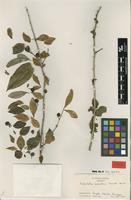
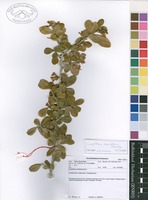
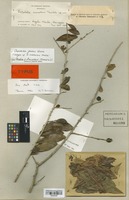
Isotype of Carpolobia suaveolens Meikle [family POLYGALACEAE]
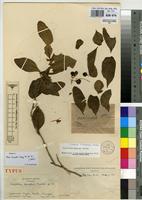
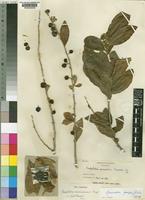
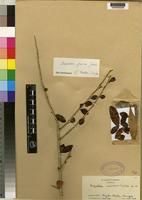
Type of Carpolobia suaveolens Meikle [family POLYGALACEAE]
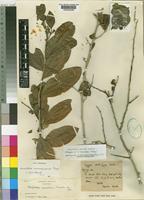
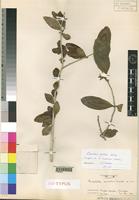
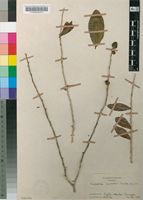
Holotype of Carpolobia suaveolens Meikle [family POLYGALACEAE]
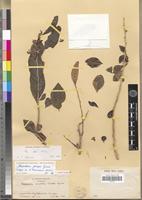
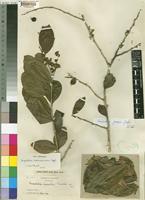
Isotype of Carpolobia suaveolens Meikle [family POLYGALACEAE]
Filed as Carpolobia suaveolens Meikle [family POLYGALACEAE]
Carpolobia goetzei Gürke [family POLYGALACEAE]
Isotype of Carpolobia suaveolens [family POLYGALACEAE]
Carpolobia goetzei Gürke [family POLYGALACEAE]
Type of Carpolobia suaveolens Meikle [family POLYGALACEAE]
Isotype of Carpolobia goetzei Gürke [family POLYGALACEAE]
Isotype of Carpolobia suaveolens Meikle [family POLYGALACEAE]
Previous
Next

Name

Identification
Isotype of Carpolobia suaveolens Meikle [family POLYGALACEAE ] Verified by Not on sheet, Carpolobia goetzei Gurke [family POLYGALACEAE ] (stored under name); Verified by Breteler & Smissaert-Houwing, 1977
Related name
  • Carpolobia goetzei
  • Carpolobia suaveolens
  • Carpolobia conradsiana

Flora

Entry for Carpolobia goetzei Gürke [family POLYGALACEAE]
Herbarium
Royal Botanic Gardens, Kew (K)
Collection
Flora of Tropical East Africa
Resource Type
Reference Sources
Entry From
Flora of Tropical East Africa, page 1, (2007) Author: JORGE PAIVA
Names
Carpolobia goetzei Gürke [family POLYGALACEAE], in E.J. 28: 417 (1900); T.T.C.L.: 454 (1949); Petit in F.C.B. 7: 283 (1958); Breteler & Smissaert-Houwing in Meded. Landb. Wagen. 77(18): 30/4, map 5 (1977); K.T.S.L.: 86, fig., map (1994). Type: Tanzania, Uzaramo District, near Dar es Salaam, Goetze 4 (B†, holo.; K!, lecto., BM!, iso.)
Carpolobia alba Chodat var. zanzibarica [family POLYGALACEAE], in Bull. Herb. Boiss. 5: 118 (1897). Type: Tanzania, Uzaramo District: Dar es Salaam, Kirk 119 (K!, lecto.)
Carpolobia conradsiana Engl. [family POLYGALACEAE], Pflanzenw. Afr. 3(1): 839 (1915); T.T.C.L.: 454 (1949); Exell in F.Z. 1, 1: 304 (1960). Type: Tanzania, Mwanza District: Ukerewe I., Conrads 5739 (K!, neo.; EA, iso.!)
Carpolobia suaveolens Meikle [family POLYGALACEAE], in K.B. 1950: 337 (1951). Type: Mozambique, Lugela, Namagoa, Faulkner 106 (K!, holo.; BR!, FT!, P!, iso.)
Information
Shrub or small tree up to 5 m tall; branchlets puberulous, glabrescent or glabrous. Stipules absent or visible as a dark, gland-like, glabrous spot, usually elevated or sometimes even conical-truncate, up to 1 mm high. Leaves papery to thinly coriaceous, shortly petiolate, obovate to elliptic or ovate-elliptic, (1.5–)2.5–12(–18)≈(1–)1.5–6(–7.5) cm, acuminate or rounded, obtuse, base rounded or cuneate; upper surface glabrous except for the midrib, sometimes sparsely pubescent below with rather long, reddish-brown hairs on midrib often extending towards the base or leaves entirely glabrous; petiole (1–)1.5–3(–4) mm. Flowers white, cream or yellowish, with purple, red to bright pink honeyguides on tips of the petals; the corolla turns pinkish-brown after fertilization, scented, in axillary racemes (1–3 per axil) up to 3.5 cm long, 2–9-flowered; peduncle 3 mm long, pubescent; rachis pubescent; bracts and bracteoles often soon caducous, triangular, 0.5–1.5(–2) mm long, pubescent or glabrous; the basal ones often sterile and up to 3(–4) mm long. Sepals pale green, broadly ovate-elliptic, (3–)4–10≈(2–)3–6 mm, the largest up to 2 times the smaller, the upper one keel-shaped, the 2 inner ones obtuse or emarginate, glabrous or brownish pubescent outside, more densely towards the base, ciliate. Petals subequal in size, (10–)12–15(–18)≈2–4(–5) mm, the median one narrowly obovate-spathulate, gradually tapering into the claw, the inner ones oblong-elliptic, puberulous outside, ciliate. Stamens (7–)9–12 mm long; anthers 1 mm long. Fruit ovoid-subglobose, (1–)1.5(–2) cm in diameter, usually lobed, 1–3-seeded. Seeds ellipsoid, flattened, 7–9(–10)≈3–6(–7.5) mm, covered with silky rusty brownish hairs. Fig. 1, p. 2.
Range
DISTR. U 2, 4; K 5 (fide EA), 7; T 1, 3, 4, 6–8; Z
Altitude range
0–1400 m
Distribution
KENYA Kwale District Shimba Hills, Mdogo forest, 5 Feb. 1953, Drummond & Hemsley 1135!KENYA Kilifi District Chasimba, 22 km SW of Kilifi, 6 Oct. 1974, Adams 93!TANZANIA Mwanza District Rubya Forest Reserve, 3 Feb. 1960, Carmichael 750!TANZANIA Kigoma District Kasye Forest, 20 Mar. 1994, Bidgood, Mbago & Vollesen 2849!TANZANIA Iringa District Mwanihana Forest Reserve, Sange River Area, Nov. 1981, Rodgers & Hall 1356!TANZANIA Zanzibar District Zanzibar I., Kesmi Kazi, 30 Sept. 1960, Faulkner 2723!UGANDA Ankole District Ruizi River, 16 Nov. 1950 (fr.), Jarrett 239!UGANDA Mengo District Entebbe, June 1905, E. Brown 244! & Oct. 1922 (fr.), Maitland 273!
Distribution (external)
Southern Sudan
Eastern Congo-Kinshasha
Zambia
Mozambique
Madagascar
Notes
USES. The fruit contains a sweet pulp that is edible, like the other three species of the genus (C. alba G. Don, C. glabrescens Hutch. & Dalz. and C. lutea G. Don).

Related Materials

  • Terms and Conditions
  • Privacy Policy
  • Cookie Policy
  • Cookie Settings
  • Accessibility
  • Help
  • Contact Us
  • Facebook
  • Twitter
ITHAKA

JSTOR is part of ITHAKA, a not-for-profit organization helping the academic community use digital technologies to preserve the scholarly record and to advance research and teaching in sustainable ways.

©2000-2026 ITHAKA. All Rights Reserved. JSTOR®, the JSTOR logo, JPASS®, Aluka®, and ITHAKA® are registered trademarks of ITHAKA.

╳