JSTOR Global Plants Home
  • Home
  • Browse
  • About
  • Access
  • Account
    • Saved Items
    • Profile
  • Log in

Global Plants

Skip to Main Content
  • JSTOR Global Plants Home
  • Global Plants

    • Browse
    • About
    • Access
    • Account
      • Saved Items
      • Profile
Log in
  • Browse
  • About
  • Access
  • Account
    • Saved Items
    • Profile
Advanced Search

Compilation
Carissa praetermissa

8 Images see all

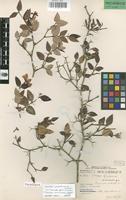
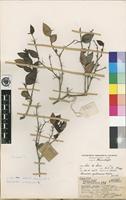
Paratype of Carissa praetermissa Kupicha [family APOCYNACEAE]
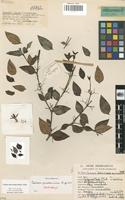
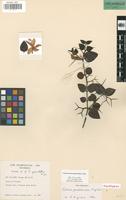
Isotype of Carissa praetermissa Kupicha [family APOCYNACEAE]
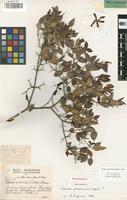
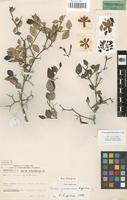
Paratype of Carissa praetermissa Kupicha [family APOCYNACEAE]
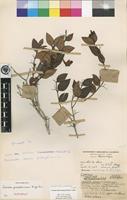
Isotype of Carissa praetermissa Kupicha [family APOCYNACEAE]
Paratype of Carissa praetermissa Kupicha [family APOCYNACEAE]
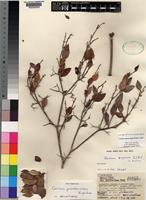
Holotype of Carissa praetermissa Kupicha [family APOCYNACEAE]
Previous
Next

Name

Identification
Carissa praetermissa Kupicha [family APOCYNACEAE ] Carissa macrocarpa (Eckl.) A.DC. [family APOCYNACEAE ] (stored under name); Verified by van Dilst, F.J.H.; Leeuwenberg, A.J.M., Carissa bispinosa (L.) Desf. ex Brenan [family APOCYNACEAE ] Carissa edulis (Forssk.) Vahl [family APOCYNACEAE ]
Related name
  • Carissa praetermissa
  • Carissa edulis
  • Carissa bispinosa
  • Carissa macrocarpa

Flora

Entry for Carissa praetermissa Kupicha [family APOCYNACEAE]
Herbarium
Royal Botanic Gardens, Kew (K)
Collection
Flora Zambesiaca
Resource Type
Reference Sources
Entry From
FZ, Vol 7, Part 2, (1985) Author: A. J. M. Leeuwenberg and F. K. Kupicha et al.
Names
Carissa praetermissa Kupicha [family APOCYNACEAE], in Kew Bull. 36: 47, fig. 1 (1981). TAB. 90. Type from Mozambique, GI: Inhambane, Bazaruto I., lighthouse hill, c. 50 m., fl. 20. x, 1958, Mogg 28448 (K, holotype; BM; LISC; LMU; SRGH).
Information
Many-stemmed rhizomatous shrub 0·5–3 m. high. Young twigs thinly to densely crispate-puberulous, reddish-brown, the surface ± smooth or finely and shallowly wrinkled; older twigs with rough whitish flaking bark. Spines either furcate or bifurcate, the axis 3–12 mm. long, the first branches 5-12 mm., the second branches 6-16 mm. long. Leaves moderately coriaceous, drying discolorous, the upper surface dark grey or brown, the lower surface paler, green or brown; petiole c. 2 mm. long, glabrous or minutely puberulous. Lamina 1·5–3·5(5) x 0·7–2(3) cm., ovate to narrowly ovate or elliptic, rarely subcircular, with apex usually acute, rarely obtuse, mucronate and base rounded to cuneate; upper surface glabrous, midrib impressed, lateral nerves faintly raised, very inconspicuous; lower surface glabrous or sparsely puberulous on midrib, midrib raised, lateral nerves invisible; margin revolute. Flowers pentamerous, solitary between two spines, shortly pedicellate. Calyx 4–5 mm. long, sepals subulate, dorsally puberulent. Corolla white; tube 11–16 mm. long, pubescent externally, pilose internally in the upper 2/3 to 3/4; lobes 9–21 mm. long, elliptic, overlapping to the left, pubescent below, glabrous or pubescent above. Stamens inserted at or just above the middle of the corolla tube; anthers subsessile, 1·5–2·5 mm. long. Gynoecium c. 4·5 mm. long, stigma not reaching to base of anthers; ovary c. 1 mm. long, ovoid, smooth, glabrous; style tapering, glabrous; stigma c. 1 mm. long, 2-lobed. Fruits c. 1·5 cm. long when ripe, subglobose, red, edible, 8-seeded. Seeds c. 5 mm. long, ovate in outline, discoid.
Habitat
In open woodland and forest, on sandy soil.
Range
Known only from Mozambique
Distribution
Mozambique GI Inhambane, Panda, fl. 25.ii.1955, E. M. & W. 595 (LISC).Mozambique Z Bajone, 3·2 km. from Murroa to Namuera, fl. 2.x.1949, Barbosa & Carvalho in Barbosa 4271 (K).

Related Materials

  • Terms and Conditions
  • Privacy Policy
  • Cookie Policy
  • Cookie Settings
  • Accessibility
  • Help
  • Contact Us
  • Facebook
  • Twitter
ITHAKA

JSTOR is part of ITHAKA, a not-for-profit organization helping the academic community use digital technologies to preserve the scholarly record and to advance research and teaching in sustainable ways.

©2000-2026 ITHAKA. All Rights Reserved. JSTOR®, the JSTOR logo, JPASS®, Aluka®, and ITHAKA® are registered trademarks of ITHAKA.

╳