JSTOR Global Plants Home
  • Home
  • Browse
  • About
  • Access
  • Account
    • Saved Items
    • Profile
  • Log in

Global Plants

Skip to Main Content
  • JSTOR Global Plants Home
  • Global Plants

    • Browse
    • About
    • Access
    • Account
      • Saved Items
      • Profile
Log in
  • Browse
  • About
  • Access
  • Account
    • Saved Items
    • Profile
Advanced Search

Compilation
Carissa haematocarpa

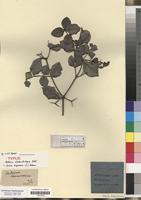
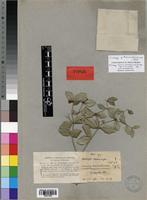
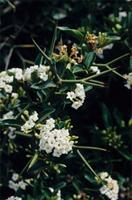
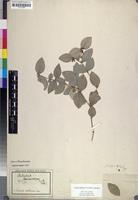
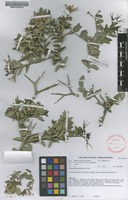
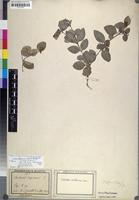
6 Images see all

Carissa haematocarpa (Eckl.) A.DC.
Type? of Arduina haematocarpa Eckl. [family APOCYNACEAE]
Filed as Carissa haematocarpa (Eckl.) A.DC. [family APOCYNACEAE]
Isotype of Arduina haematocarpa Eckl. [family APOCYNACEAE]
Type? of Arduina haematocarpa Eckl. [family APOCYNACEAE]
Lectotype of Arduina haematocarpa Eckl. [family APOCYNACEAE]
Previous
Next

Name

Identification
Carissa haematocarpa (Eckl.) A.DC. [family APOCYNACEAE ]
Related name
  • Carissa haematocarpa

Flora

Entry for Carissa haematocarpa [family APOCYNACEAE]
Herbarium
South African National Biodiversity Institute, Compton Herbarium, Cape Town (SAM)
Collection
Flora of Southern Africa
Resource Type
Reference Sources
Entry From
Flora of South Africa, (2003) Author: Dr J.P. Roux
Names
Carissa haematocarpa [family APOCYNACEAE]
Common names
Arduina haematocarpa Eckl. in S. Afr. Quart. Journ. 1: 372 (1830). A. ferox E. Mey., Comm. 191(1837). Syntypes: (a) Camdeboo, Drege; (b) near Cookhouse, Drege; (c) near Zwartkops River, Drege. Carissa ferox (E. Mey.) A.DC, I.e. 335 (1844); Marloth, Fl. S. Afr. 3, 1: t. 18e (1932). C. arduina sensu Stapf in F.C. 4, 1: 498 (1907), partly, as to syn. C. haematocarpa and C. ferox. Jasminonerium haematocarpum (Eckl.) Kuntze, Rev. Gen. PI. 2: 415 (1891). J. ferox (E. Mey.) Kuntze, I.e. (1891).
Information
Shrub up to 3 m high, twiggy, densely branched and very spiny, evergreen; branches divaricate, minutely papillose or puberulous to pubescent, very rarely glabrous in the young stage; bark greenish, wrinkled, sap milky; spines once or twice bifurcate, 2-4-5 cm long, arising usually in pairs at the apex of a shoot and decussate to the apical pair of leaves, persistent, green, becoming stout and woody. Leaves coriaceous, ovate-elliptic to elliptic, 1 -5-2-8 cm long and 1-1-5 cm broad, truncate to obtuse at the base, rarely subcordate, apex obtuse to acute, mucronate, glossy dark green above, paler below, puberulous to minutely papillose or glabrous, lower surface often wrinkled; secondary nerves 4-6 on each side, obscure; petiole short, up to 3 mm long, channelled above; axillary glands small; stipules 0. Inflorescence cymose, contracted, few-flowered, subsessile; bracts linear-lanceolate, 1 -5 mm long; pedicels up to 1 mm long, puberulous. Flowers small, white, scented. Calyx 2-5-3 mm long, puberulous; sepals 5, ovate, acute or, rarely, acuminate. Corolla salver-shaped; tube cylindric, 6-7 mm long, slightly wider towards the mouth, pubescent or glabrous without, hairy within especially at the throat; lobes 5, broadly ovate to subrotund, 2 mm long and 3 mm broad, apex truncate to obtuse, usually minutely mucronulate, overlapping to the left, usually pubescent on both surfaces. Stamens 5, inserted towards the apex of the tube; anthers subsessile 1-5 mm long. Ovary entire, 2-chambered, each with 1 or 2 ovules; style filiform 4 mm long; stigma level with the anthers, ellipsoid, minutely bifurcate at the apex. Fruit a berry, ovoid or subglobose, 6-8 mm long and 4-5 mm in diameter, black or bluish-purple, edible. Seeds 1 or 2, irregularly elliptical in outline; testa rough, hard. Fig. 37: 3.
Habitat
Closely allied to C. bispinosa, but differs in the shorter and more rounded corolla lobes. The shorter and more elliptic-ovate leaves and the purple to black fruits are also helpful in separating C. haematocarpa.
Use
4. Carissa haematocarpa (Eckl.) A.DC. in DC, Prodr. 8: 336 (1844). Type: Uitenhage, Ecklon.
Range
Occurs in dry, karroid bushveld in southern and eastern Cape Province, Namaqualand and the southern part of South West Africa.

Related Materials

  • Terms and Conditions
  • Privacy Policy
  • Cookie Policy
  • Cookie Settings
  • Accessibility
  • Help
  • Contact Us
  • Facebook
  • Twitter
ITHAKA

JSTOR is part of ITHAKA, a not-for-profit organization helping the academic community use digital technologies to preserve the scholarly record and to advance research and teaching in sustainable ways.

©2000-2026 ITHAKA. All Rights Reserved. JSTOR®, the JSTOR logo, JPASS®, Aluka®, and ITHAKA® are registered trademarks of ITHAKA.

╳