JSTOR Global Plants Home
  • Home
  • Browse
  • About
  • Access
  • Account
    • Saved Items
    • Profile
  • Log in

Global Plants

Skip to Main Content
  • JSTOR Global Plants Home
  • Global Plants

    • Browse
    • About
    • Access
    • Account
      • Saved Items
      • Profile
Log in
  • Browse
  • About
  • Access
  • Account
    • Saved Items
    • Profile
Advanced Search

Compilation
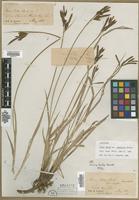
Carex torta

9 Images see all

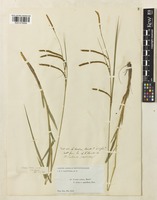
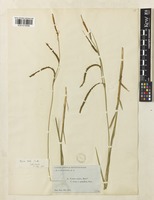
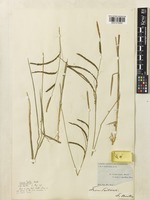
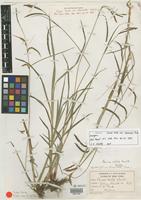
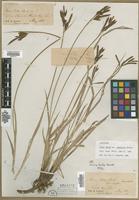
Carex torta Boott ex Tuck. [family CYPERACEAE]
Holotype of Carex torta var. staminata Peck [family CYPERACEAE]
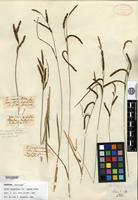
Lectotype of Carex torta Boott var. composita Porter [family CYPERACEAE]
Isotype of Carex caespitosa Linnaeus var. ramosa Dewey [family CYPERACEAE]
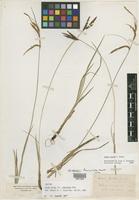
Isotype of Carex torta var. staminata Peck [family CYPERACEAE]
Holotype of Carex caespitosa Linnaeus var. ramosa Dewey [family CYPERACEAE]
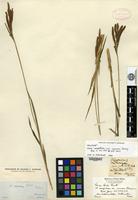
Filed as Carex torta var. composita Porter [family CYPERACEAE]
Previous
Next

Name

Identification
Carex torta Boott ex Tuckerman [family CYPERACEAE ] (stored under name); Verified by Not on Sheet, Carex caespitosa Linnaeus [family CYPERACEAE ] Verified by Dewey, 1827
Related name
  • Carex torta
  • Carex caespitosa
Common name
  • Carex tordu, Flora of North America Vol. 23

Flora

Entry for Carex torta Boott [family CYPERACEAE]
Herbarium
Flora of North America (FNA)
Collection
Flora of North America
Resource Type
Reference Sources
Entry From
Flora of North America, Vol 23,
Names
Carex torta Boott [family CYPERACEAE], in E. Tuckerman, Enum. Meth. Caric., 11. 1843
Carex acuta Linnaeus var. sparsiflora Dewey [family CYPERACEAE]
Carex caespitosa Linnaeus var. ramosa Dewey [family CYPERACEAE]
Carex torta var. composita Porter [family CYPERACEAE]
Carex torta var. staminata Peck [family CYPERACEAE]
Treatment Author(s)
Peter W. Ball
A. A. Reznicek
Information
Plants cespitose. Culms angled, 25–75 cm, glabrous. Leaves: basal sheaths red-brown; sheaths of proximal leaves glabrous, fronts lacking spots and veins, entire, apex truncate; blades 3–5 mm wide. Inflorescences: proximal bract subequal to inflorescence, 1–3 mm wide. Spikes erect or the proximal pendent; proximal 3–4 spikes pistillate, usually sessile, 2.5–9 cm × 4–5 mm, base attenuate; terminal 1–2 spikes staminate. Pistillate scales purple-brown to black, shorter than perigynia, apex acute, awnless. Perigynia divergent, green, veinless, somewhat flattened, tightly enclosing and distended by the achenes, ovoid, 2.3–4.7 × 1.1–1.8 mm, dull, apex acute, glabrous; beak green, often twisted, 0.1–0.3 mm, orifice oblique. Achenes not constricted, dull. 2n = 66.
Phenology Fruiting
jun
summer
Altitude range
0–1500 m N.B., N.S., Ont., Que.;
Distribution
USA Ark.USA Conn.USA Ill.USA Ind.USA IowaUSA Ky.USA MaineUSA Md.USA Mass.USA Mo.USA N.H.USA N.J.USA N.Y.USA N.C.USA OhioUSA Okla.USA Pa.USA S.C.USA Tenn.USA Vt.USA Va.USA W.Va.
Discussion
A very common riverine species of eastern North America, Carex torta has an almost identical habit and habitat to the western C. nudata. Carex torta is, however, not a member of the C. stricta subgroup and has unusual green, glabrous perigynia that taper into a triangular, twisted beak with an obliquely bidentate orifice. Carex torta appears to be somewhat transitional to the Cryptocarpae group, based on the pendent spikes, sheath morphology, and large achenes.

Related Materials

  • Terms and Conditions
  • Privacy Policy
  • Cookie Policy
  • Cookie Settings
  • Accessibility
  • Help
  • Contact Us
  • Facebook
  • Twitter
ITHAKA

JSTOR is part of ITHAKA, a not-for-profit organization helping the academic community use digital technologies to preserve the scholarly record and to advance research and teaching in sustainable ways.

©2000-2026 ITHAKA. All Rights Reserved. JSTOR®, the JSTOR logo, JPASS®, Aluka®, and ITHAKA® are registered trademarks of ITHAKA.

╳