JSTOR Global Plants Home
  • Home
  • Browse
  • About
  • Access
  • Account
    • Saved Items
    • Profile
  • Log in

Global Plants

Skip to Main Content
  • JSTOR Global Plants Home
  • Global Plants

    • Browse
    • About
    • Access
    • Account
      • Saved Items
      • Profile
Log in
  • Browse
  • About
  • Access
  • Account
    • Saved Items
    • Profile
Advanced Search

Compilation
Carex thornei

9 Images see all

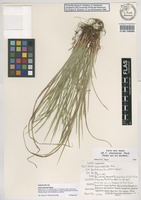
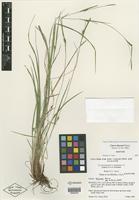
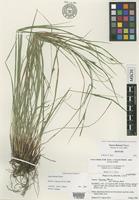
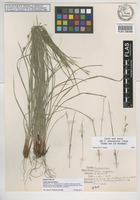
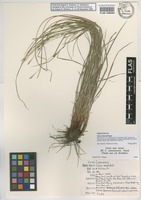
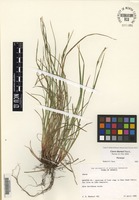
Paratype of Carex thornei Naczi [family CYPERACEAE]
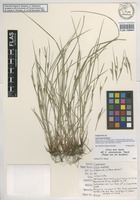
Isotype of Carex thornei Naczi [family CYPERACEAE]
Paratype of Carex thornei Naczi [family CYPERACEAE]
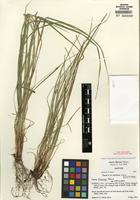
Isotype of Carex thornei Naczi [family CYPERACEAE]
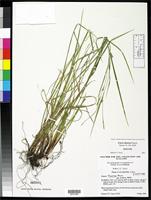
Isotype of Carex thornei Naczi, R.F.C. 2002 [family CYPERACEAE]
Paratype of Carex thornei Naczi [family CYPERACEAE]
Previous
Next

Name

Identification
Isotype of Carex thornei Naczi [family CYPERACEAE ] (stored under name); Verified by R.F.C. Naczi, 2003 Carex thornei Naczi [family CYPERACEAE ] Verified by R.F.C. Naczi, 2003
Related name
  • Carex thornei

Flora

Entry for Carex thornei Naczi [family CYPERACEAE]
Herbarium
Flora of North America (FNA)
Collection
Flora of North America
Resource Type
Reference Sources
Entry From
Flora of North America, Vol 23,
Names
Carex thornei Naczi [family CYPERACEAE], Novon, 12: 516, fig. 4. 2002
Treatment Author(s)
Peter W. Ball
A. A. Reznicek
Information
Plants densely cespitose; rhizome internodes 0.8–6.4 mm, 1.2–2.2 mm thick. Culms purple-red to 4.8–8.1 cm at base, 24–53 cm; vegetative shoots 28–49 cm, 0.5–1.3 times as tall as culms. Leaves green, widest blades 2.1–4 mm wide. Inflorescences 13–38 cm, 0.77–0.96 of culm height; internode between proximalmost scales in proximalmost spike 1.7–2.9 mm; internode between distal lateral spikes (1.6–)3.4–15.2 cm, longest internode between distal lateral spikes (5.3–)8.8–15.2 cm; longest peduncle per plant of terminal lateral spikes (2.2–)5.1–10.4 cm; proximal bract sheaths tight, hyaline band of sheath front with apex usually truncate or concave, occasionally convex, elongated to 2.2(–5) mm beyond apex; ligules 4–4.9(–9.6) mm; blades uniformly green, bract blade of distalmost lateral spike slightly exceeding or exceeded by terminal spike, longest bract blade of distalmost lateral spike 3.9–11 cm. Spikes 4–5, usually separate or the distal 2(–3) overlapping; lateral spikes pistillate, with 3–12 perigynia, longest per plant with 6–12, 5–21 × 3.2–4.1 mm, ratio of longest lateral spike (in mm) to flower number = 1.8–2.1; terminal spike 16–32 × 1.9–2.5 mm, longest per plant 17–36 mm, exceeding distalmost lateral spike. Pistillate scales 3–4.6 × 1.6–2 mm, body 1.6–2.6 mm, midrib prolonged as awn 1.1–2.5 mm. Staminate scales 4.3–5 × 1.4–1.8 mm, apex usually acute, occasionally obtuse, awnless. Perigynia distichously imbricate, prominently 53–64-veined, narrowly obovate or narrowly oblong in outline, 3.8–4.9 × 1.4–1.7 mm, (2.4–) 2.5–3.1 times as long as wide, 1.7–2 times as long as achene bodies, base gradually tapered, apex gradually tapered; beak absent or straight, 0–0.4 mm, 0–11% of perigynium length. Achenes 2.6–3.5 × 1.3–1.6 mm, tightly enveloped by perigynia, base abruptly contracted, apex abruptly contracted; stipe 0.2–0.6 mm; body 2.1–2.7 mm; beak straight, 0.1–0.4(–1.5) mm.
Conservation Status
of conservation concern;
Phenology Fruiting
spring
mar
apr
may
Altitude range
40–100 m;
Distribution
USA Ala.USA Fla.USA Ga.
Discussion
Carex thornei is endemic to the drainage of the lower Chattahoochee, lower Flint, and upper Apalachicola rivers. It frequently occurs with C. abscondita and C. basiantha.

Related Materials

  • Terms and Conditions
  • Privacy Policy
  • Cookie Policy
  • Cookie Settings
  • Accessibility
  • Help
  • Contact Us
  • Facebook
  • Twitter
ITHAKA

JSTOR is part of ITHAKA, a not-for-profit organization helping the academic community use digital technologies to preserve the scholarly record and to advance research and teaching in sustainable ways.

©2000-2026 ITHAKA. All Rights Reserved. JSTOR®, the JSTOR logo, JPASS®, Aluka®, and ITHAKA® are registered trademarks of ITHAKA.

╳