

Compilation
Carex suberecta
1 Images see all
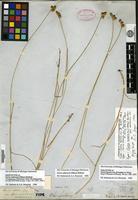
Name
Identification
Carex suberecta (Olney) Britton [family CYPERACEAE ] (stored under name); Verified by P. E. Rothrock & A. A. Reznicek (MICH), 1998 Carex tenera Dewey [family CYPERACEAE ] Verified by Olney, 1871 Carex foenea Willdenow [family CYPERACEAE ] Verified by A. Gray, 1867 Carex alata Torrey [family CYPERACEAE ] Verified by M. L. Fernald, Carex straminea Willdenow ex Schkuhr [family CYPERACEAE ] Verified by Not on Sheet, Carex suberecta (Olney) Britton [family CYPERACEAE ] Verified by S. C. Zager, 1990 Carex foenea Willdenow [family CYPERACEAE ] Verified by S. T. Olney,
Related name
- Carex foenea
- Carex suberecta
- Carex tenera
- Carex alata
- Carex straminea
Flora
Entry for Carex suberecta (Olney) Britton [family CYPERACEAE]
Herbarium
Flora of North America (FNA)
Collection
Flora of North America
Resource Type
Reference Sources
Entry From
Flora of North America, Vol 23,
Names
Carex suberecta (Olney) Britton [family CYPERACEAE], Man. Fl. N. States ed., 2, 1057. 1905
Carex tenera Dewey var. suberecta Olney [family CYPERACEAE], Caric. Bor.-Amer., 3. 1871
Treatment Author(s)
Peter W. Ball
A. A. Reznicek
Information
Plants cespitose; rhizomes appearing elongate in old clumps. Culms uniformly slender, 40–80 cm; vegetative culms few, inconspicuous, usually fewer than 15 leaves, not strikingly 3-ranked. Leaves: sheaths adaxially conspicuously green-veined nearly to collar, narrow hyaline band or sharp Y-shaped region at collar, adaxially firm, summits U-shaped; distal ligules 1.6–3.3 mm; blades 2–5 per fertile culm, 12–18 cm × 1.5–2.5 mm. Inflorescences stiffly erect, dense to slightly open, brown, 1.5–3(–3.5) cm × 6–14 mm; proximal internode 2–12 mm; 2d internode 2–7 mm; proximal bracts scalelike, often with bristletips shorter than or equaling inflorescences. Spikes 2–5, distant, distinct, ovoid, 7–12 × 4–7 mm, base rounded or short-acute, apex acute. Pistillate scales reddish brown, 1-veined midstripe sometimes pale, broadly lanceolate, 2.7–3.6 mm, shorter and narrower than perigynia, apex firm, acute to acuminate. Perigynia 15–80 in larger spikes, appressed, usually golden brown, conspicuously 6–9-veined abaxially, inconspicuously veined adaxially, diamond shaped, flat except over achene, 4–5 × 2–2.8 mm, 0.4–0.5 mm thick, base subacute or acute, margin flat, including wing 0.6–0.9 mm wide, smooth; beak apprressed, golden brown at tip, flat, 0.7–1.6(–1.8) mm, 2/5+ length of body, ciliate-serrulate, abaxial suture with hyaline, golden brown margin, distance from beak tip to achene 2–3 mm. Achenes elliptic to ovate, 1.5–1.7 × 0.8–1.1 mm, 0.3–0.4 mm thick. 2n = 72.
Phenology Fruiting
early summer
Altitude range
100–600 m;
Distribution
USA Ark.USA Ill.USA Ind.USA IowaUSA Mich.USA Minn.USA Mo.USA OhioUSA Tex.USA Va.USA Wis.USA W.Va.Canada Ont.