JSTOR Global Plants Home
  • Home
  • Browse
  • About
  • Access
  • Account
    • Saved Items
    • Profile
  • Log in

Global Plants

Skip to Main Content
  • JSTOR Global Plants Home
  • Global Plants

    • Browse
    • About
    • Access
    • Account
      • Saved Items
      • Profile
Log in
  • Browse
  • About
  • Access
  • Account
    • Saved Items
    • Profile
Advanced Search

Compilation
Carex spectabilis

6 Images see all

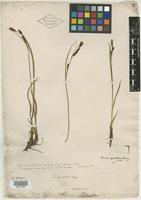
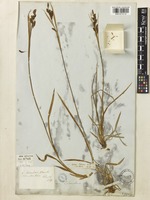
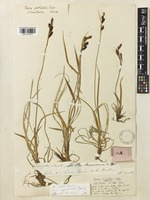
Type? of Carex spectabilis Dewey [family CYPERACEAE]
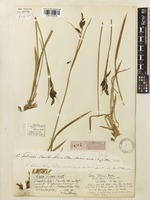
Carex spectabilis Dewey [family CYPERACEAE]
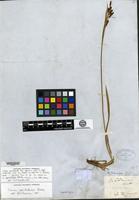
Type? of Carex tolmiei Boott [family CYPERACEAE]
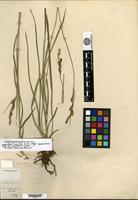
Isotype of Carex heteroneura W. Boott [family CYPERACEAE]
Carex spectabilis Dewey [family CYPERACEAE]
Type of Carex nigella Boott [family CYPERACEAE]
Previous
Next

Name

Identification
Carex spectabilis Dewey [family CYPERACEAE ] (stored under name); Verified by D. F. Murray, Carex tolmiei Boott [family CYPERACEAE ] Verified by Boott, 1839
Related name
  • Carex spectabilis
  • Carex heteroneura
  • Carex tolmiei

Flora

Entry for Carex spectabilis Dewey [family CYPERACEAE]
Herbarium
Flora of North America (FNA)
Collection
Flora of North America
Resource Type
Reference Sources
Entry From
Flora of North America, Vol 23,
Names
Carex spectabilis Dewey [family CYPERACEAE], Amer. J. Sci. Arts, 29: 248, plate X, fig. 76. 1836
Carex invisa L. H. Bailey [family CYPERACEAE]
Carex nigella Boott [family CYPERACEAE]
Carex spectabilis var. superba T. Holm [family CYPERACEAE]
Carex tolmiei Boott [family CYPERACEAE]
Carex tolmiei var. invisa (L. H. Bailey) Kükenthal [family CYPERACEAE]
Treatment Author(s)
Peter W. Ball
A. A. Reznicek
Information
Culms 25–50 cm. Leaves basal and cauline; proximal leaves reduced to sheaths; distal leaves with blades 2–5 mm wide. Inflorescences: spikes separate, oblong or elongate, 8–20 × 3.5–5 mm; lateral spikes 2–4(–9); proximal spikes spreading or pendent, long-pedunculate; distal spikes approximate, erect or spreading, short-pedunculate. Pistillate scales brown or black, midvein prominent, lighter colored than body, conspicuous, lanceolate, shorter or longer than and as broad as perigynia, apex acute or mucronate. Perigynia yellow-green, green, or purple-black, veined or veinless, ovate, 3.5–5 × 1.75–2 mm, smooth; beak 0.4–0.5 mm, entire or deeply bidentate, smooth.
Phenology Fruiting
jul
summer
aug
sep
fall
Altitude range
300–3500 m;
Distribution
USA AlaskaUSA Calif.USA IdahoUSA Mont.USA Oreg.USA UtahUSA Wash.USA Wyo.Canada Alta.Canada B.C.Canada Yukon
Discussion
Some specimens of Carex spectabilis in Glacier County, Montana, show transitions to C. paysonis.

Related Materials

  • Terms and Conditions
  • Privacy Policy
  • Cookie Policy
  • Cookie Settings
  • Accessibility
  • Help
  • Contact Us
  • Facebook
  • Twitter
ITHAKA

JSTOR is part of ITHAKA, a not-for-profit organization helping the academic community use digital technologies to preserve the scholarly record and to advance research and teaching in sustainable ways.

©2000-2026 ITHAKA. All Rights Reserved. JSTOR®, the JSTOR logo, JPASS®, Aluka®, and ITHAKA® are registered trademarks of ITHAKA.

╳