JSTOR Global Plants Home
  • Home
  • Browse
  • About
  • Access
  • Account
    • Saved Items
    • Profile
  • Log in

Global Plants

Skip to Main Content
  • JSTOR Global Plants Home
  • Global Plants

    • Browse
    • About
    • Access
    • Account
      • Saved Items
      • Profile
Log in
  • Browse
  • About
  • Access
  • Account
    • Saved Items
    • Profile
Advanced Search

Compilation
Carex setacea

5 Images see all

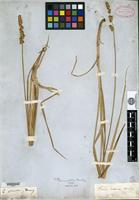
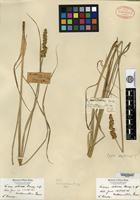
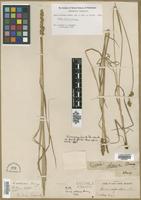
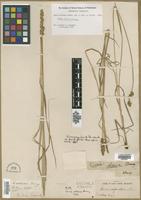
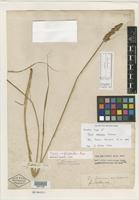
Type? of Carex setacea Dewey [family CYPERACEAE]
Previous
Next

Name

Identification
Carex setacea Dewey [family CYPERACEAE ] (stored under name); Verified by Dewey, 1825
Related name
  • Carex vulpinoidea
  • Carex setacea
Common name
  • Carex à gaine tronguée, Flora of North America Vol. 23
  • Carex vulpinoïde, Flora of North America Vol. 23

Flora

Entry for Carex vulpinoidea Michaux [family CYPERACEAE]
Herbarium
Flora of North America (FNA)
Collection
Flora of North America
Resource Type
Reference Sources
Entry From
Flora of North America, Vol 23,
Names
Carex vulpinoidea Michaux [family CYPERACEAE], Fl. Bor.-Amer., 2: 169. 1803
Carex microsperma Wahlenberg [family CYPERACEAE]
Carex multiflora Willdenow [family CYPERACEAE]
Carex multiflora var. microsperma (Wahlenberg) Dewey [family CYPERACEAE]
Carex scabrior Dewey [family CYPERACEAE]
Carex setacea Dewey [family CYPERACEAE]
Carex vulpinoidea var. microsperma (Wahlenberg) Dewey [family CYPERACEAE]
Carex vulpinoidea var. pycnocephala F. J. Hermann [family CYPERACEAE]
Carex vulpinoidea var. scabrior (Dewey) Alph. Wood [family CYPERACEAE]
Carex vulpinoidea var. segregata Farwell [family CYPERACEAE]
Carex vulpinoidea var. setacea (Dewey) Kükenthal [family CYPERACEAE]
Treatment Author(s)
Peter W. Ball
A. A. Reznicek
Information
Culms to 100 cm × 2 mm, scabrous. Leaves: sheath fronts spotted red-brown or pale brown, apex truncate or short-convex, membranous or hyaline, rugose; ligule retuse or rounded, to 2 mm, free limb to 0.2 mm; blades 120 cm × 5 mm, longer than flowering stem. Inflorescences spicate, (3–)7–10 cm × 15 mm, with 10–15 branches, the proximal branches distinctly separate; the proximal internode to 25 mm; bracts setaceous, those subtending at least the proximal lateral branches conspicuous. Scales pale brown, hyaline, awn to 3 mm. Perigynia green to pale brown, veinless on both faces or 3-veined abaxially, body ovate or elliptic, 2–3.2 × 1.3–1.8 mm, base obtuse; beak 0.8–1.2 mm, 1/3–1/2 length of perigynium. Achenes red-brown, ovate, 1.2–1.4 × 1 mm, glossy. 2n = 52.
Phenology Fruiting
jul
summer
aug
Altitude range
0–1800 m;
Distribution
St. Pierre and MiquelonMexico (Sonora)introduced to EuropeNew Zealand.USA Ala.USA Ariz.USA Ark.USA Calif.USA Colo.USA Conn.USA Del.USA D.C.USA Fla.USA Ga.USA IdahoUSA Ill.USA Ind.USA IowaUSA Kans.USA Ky.USA La.USA MaineUSA Md.USA Mass.USA Mich.USA Minn.USA Miss.USA Mo.USA Nebr.USA N.H.USA N.J.USA N.Mex.USA N.Y.USA N.C.USA N.Dak.USA OhioUSA Okla.USA Oreg.USA Pa.USA R.I.USA S.C.USA S.Dak.USA Tenn.USA Tex.USA Vt.USA Va.USA Wash.USA W.Va.USA Wis.USA Wyo.Canada Alta.Canada B.C.Canada Man.Canada N.B.Canada Nfld. and Labr.Canada N.S.Canada Ont.Canada P.E.I.Canada Que.Canada Sask.
Discussion
Carex vulpinoidea is widely distributed in North America and frequently grows as a weed in wet roadside ditches and fields. It is quite variable, particularly in the degree to which the spongy tissue lateral to the achene is developed. The development of that tissue determines the shape of the perigynium and the degree to which the perigynium appears to contract into the achene, as discussed by F. M. B. Boott (1858–1867). The flowering stems shorter than the leaves, the pale brown, elliptic perigynia, and the preference for moist substrates of C. vulpinoidea readily distinguish it from C. annectens.

Related Materials

  • Terms and Conditions
  • Privacy Policy
  • Cookie Policy
  • Cookie Settings
  • Accessibility
  • Help
  • Contact Us
  • Facebook
  • Twitter
ITHAKA

JSTOR is part of ITHAKA, a not-for-profit organization helping the academic community use digital technologies to preserve the scholarly record and to advance research and teaching in sustainable ways.

©2000-2026 ITHAKA. All Rights Reserved. JSTOR®, the JSTOR logo, JPASS®, Aluka®, and ITHAKA® are registered trademarks of ITHAKA.

╳