JSTOR Global Plants Home
  • Home
  • Browse
  • About
  • Access
  • Account
    • Saved Items
    • Profile
  • Log in

Global Plants

Skip to Main Content
  • JSTOR Global Plants Home
  • Global Plants

    • Browse
    • About
    • Access
    • Account
      • Saved Items
      • Profile
Log in
  • Browse
  • About
  • Access
  • Account
    • Saved Items
    • Profile
Advanced Search

Compilation
Carex physochlaena

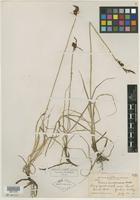
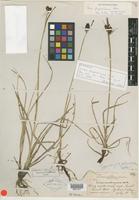
6 Images see all

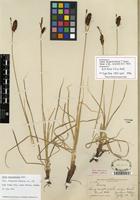
Isolectotype of Carex membranacea Hook. [family CYPERACEAE]
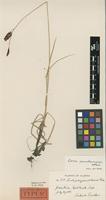
Type of Carex physochlaena T.Holm [family CYPERACEAE]
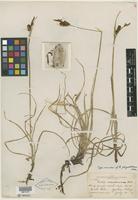
Type of Carex physochlaena Holm [family CYPERACEAE]
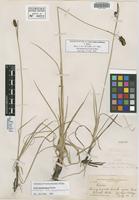
Isolectotype of Carex physochlaena Holm [family CYPERACEAE]
Type of Carex physochlaena Holm [family CYPERACEAE]
Lectotype of Carex physochlaena Holm [family CYPERACEAE]
Previous
Next

Name

Identification
Carex physochlaena Holm [family CYPERACEAE ] (stored under name); Verified by Not on sheet,
Related name
  • Carex membranacea
  • Carex physochlaena
Common name
  • Carex membraneux, Flora of North America Vol. 23

Flora

Entry for Carex membranacea Hooker [family CYPERACEAE]
Herbarium
Flora of North America (FNA)
Collection
Flora of North America
Resource Type
Reference Sources
Entry From
Flora of North America, Vol 23,
Names
Carex membranacea Hooker [family CYPERACEAE], in G. F. Lyon, Attempt Repulse Bay, 195. 1825
Carex physochlaena T. Holm [family CYPERACEAE]
Treatment Author(s)
Peter W. Ball
A. A. Reznicek
Information
Plants cespitose; rhizomes long, lax. Culms trigonous in cross section, 13–55 cm, scabrous distally. Leaves: basal sheaths reddish brown; ligules shorter than wide; blades mid to dark green, V-shaped, 2.5–5(–6.2) mm wide, glabrous. Inflorescences 2.5–10(–13) cm; proximal bract 0.6–19 cm, shorter than or equaling inflorescence; proximal 1–3 spikes pistillate, erect; terminal 1–3 spikes staminate. Pistillate scales ovate, 2.2–4.5 × 1–1.7 mm, as long as or shorter than perigynia, margins entire, apex obtuse or acute, awnless. Perigynia spreading or reflexed, often dark-colored, obscurely few-veined, veins not running into beak, elliptic, 2.2–4.1 × 1.3–2.2 mm, abruptly contracted; beak 0.2–0.8 mm, obscurely bidentulate, smooth, teeth straight, to 0.3 mm. Achenes yellow, trigonous, smooth. Stigmas 3. 2n = 74, 76–80.
Phenology Fruiting
summer
jun
jul
aug
Altitude range
0–2000 m;
Distribution
ne Asia.USA AlaskaCanada B.C.Canada Nfld. and Labr.Canada N.W.T.Canada NunavutCanada Que.Canada Yukon
Discussion
Carex membranacea is common throughout arctic and high boreal regions of North America. It is noticeably absent from Greenland and occurs in Eurasia only in the Russian Far East (Chukotka and the Koryak mountains).
Morphologically Carex membranacea is closest to C. rotundata. Leaf and stem shape easily distinguish those two species but shape is often difficult to evaluate on herbarium specimens. Leaf sheath coloration, although not a definitive character, is helpful in distinguishing between the two species. Carex membranacea almost always has red basal sheaths; sheaths are usually brown in C. rotundata.

Related Materials

  • Terms and Conditions
  • Privacy Policy
  • Cookie Policy
  • Cookie Settings
  • Accessibility
  • Help
  • Contact Us
  • Facebook
  • Twitter
ITHAKA

JSTOR is part of ITHAKA, a not-for-profit organization helping the academic community use digital technologies to preserve the scholarly record and to advance research and teaching in sustainable ways.

©2000-2026 ITHAKA. All Rights Reserved. JSTOR®, the JSTOR logo, JPASS®, Aluka®, and ITHAKA® are registered trademarks of ITHAKA.

╳