JSTOR Global Plants Home
  • Home
  • Browse
  • About
  • Access
  • Account
    • Saved Items
    • Profile
  • Log in

Global Plants

Skip to Main Content
  • JSTOR Global Plants Home
  • Global Plants

    • Browse
    • About
    • Access
    • Account
      • Saved Items
      • Profile
Log in
  • Browse
  • About
  • Access
  • Account
    • Saved Items
    • Profile
Advanced Search

Compilation
Carex obispoensis

19 Images see all

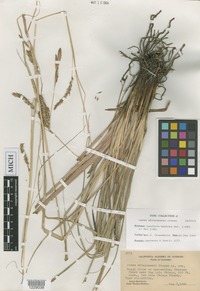
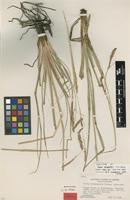
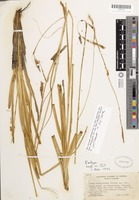
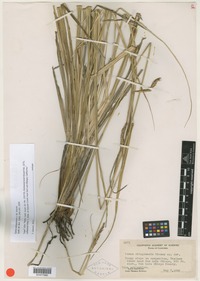
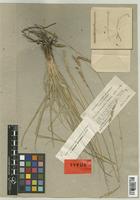
Isotype of Carex obispoensis J.W. Stacey [family CYPERACEAE]
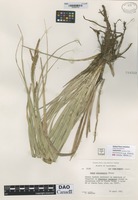
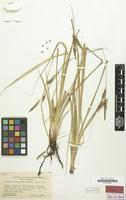
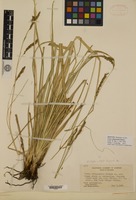
not on sheet of Carex obispoensis Stacey [family CYPERACEAE]
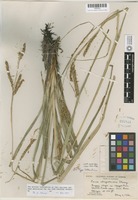
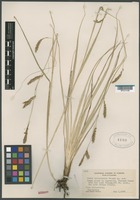
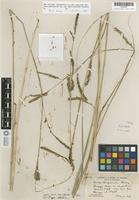
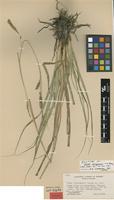
Isotype of Carex obispoensis Stacy [family CYPERACEAE]
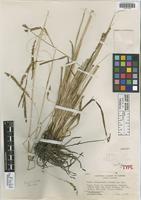
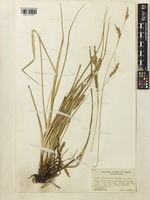
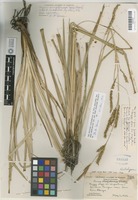
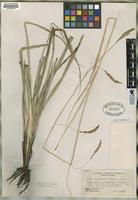
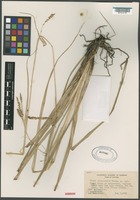
Type of Carex obispoensis Stacey [family CYPERACEAE]
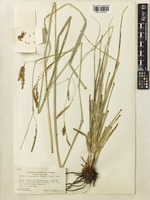
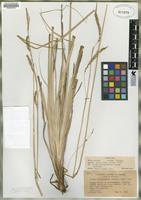
Isotype of Carex obispoensis Stacey [family CYPERACEAE]
Isotype of Carex obispoensis [family CYPERACEAE]
Type of Carex obispoensis Stacey [family CYPERACEAE]
Isotype of Carex obispoensis Stacey [family CYPERACEAE]
Type of Carex obispoensis Stacey [family CYPERACEAE]
Isotype of Carex obispoensis Stacey [family CYPERACEAE]
Holotype of Carex obispoensis Stacey [family CYPERACEAE]
Isotype of Carex obispoensis Stacey [family CYPERACEAE]
Carex obispoensis Stacey [family CYPERACEAE]
Isotype of Carex obispoensis Stacey [family CYPERACEAE]
Previous
Next

Name

Identification
Carex obispoensis Stacey [family CYPERACEAE ] (stored under name); Verified by Not on sheet.,
Related name
  • Carex obispoensis
Common name
  • San Luis Obispo sedge, Flora of North America Vol. 23

Flora

Entry for Carex obispoensis Stacey [family CYPERACEAE]
Herbarium
Flora of North America (FNA)
Collection
Flora of North America
Resource Type
Reference Sources
Entry From
Flora of North America, Vol 23,
Names
Carex obispoensis Stacey [family CYPERACEAE], Leafl. W. Bot., 1: 240. 1936
Treatment Author(s)
Peter W. Ball
A. A. Reznicek
Information
Plants densely cespitose. Culms dark brown to chestnut at base, surrounded by remains of previous year’s leaf bases, but not conspicuously fibrillose; flowering stems 60–180 cm × 2–2.5 mm, much longer than leaves at maturity, glabrous. Leaves: sheaths glabrous, ivory to brown on back, dark chestnut-hyaline on front, sometimes finely red dotted near apex; blades rigid, flat distally but often keeled or channeled near base, margins revolute, 4–8 mm wide, finely retrorse-scabrous adaxially, margins and abaxial midribs also sometimes finely scabrous. Inflorescences: peduncles of lateral spikes slender, to 10 mm, finely scabrous; peduncle of terminal spike scabrous; proximal bracts shorter than inflorescences; sheaths 9–100 mm; blades 2–3.5 mm wide. Lateral spikes 6–15, 1–3 per node; proximal spikes well separated (except those at same node), erect or arching at maturity, pistillate with 15–45 perigynia attached less than 1 mm apart, cylindric, 2.5–8 × 4–6 mm; distal spikes staminate or androgynous, erect, crowded near apex, sessile or short-pedunculate. Terminal spike staminate, often crowded with other staminate or predominantly lateral staminate spikes, 20–80 × 2.5–7 mm. Pistillate scales suffused with chestnut except for hyaline margins and green midrib, ovate to oblong, shorter than mature perigynia, apex acute, sometimes with scabrous awn to 1 mm, glabrous. Perigynia green, usually red dotted, strongly 2-ribbed, 12–20-veined, loosely enveloping achene, lance-ellipsoid, 5–8 × 1.4–2.7 mm, membranous, base with short stipe, apex tapering to beak, shortly and evenly pubescent; beak bidentate, margins serrulate. Achenes sessile, 3–4 × 1.4–2.2 mm.
Conservation Status
of conservation concern;
Phenology Fruiting
spring
mar
apr
may
summer
jun
jul
aug
Altitude range
elevations below 600 m;
Distribution
USA Calif.
Discussion
Although Carex obispoensis is rare and endemic to San Luis Obispo County, California, this large, striking sedge has two quite extensive populations in Arroyo de la Cruz and Cuesta Ridge Botanical Area.

Related Materials

  • Terms and Conditions
  • Privacy Policy
  • Cookie Policy
  • Cookie Settings
  • Accessibility
  • Help
  • Contact Us
  • Facebook
  • Twitter
ITHAKA

JSTOR is part of ITHAKA, a not-for-profit organization helping the academic community use digital technologies to preserve the scholarly record and to advance research and teaching in sustainable ways.

©2000-2026 ITHAKA. All Rights Reserved. JSTOR®, the JSTOR logo, JPASS®, Aluka®, and ITHAKA® are registered trademarks of ITHAKA.

╳