JSTOR Global Plants Home
  • Home
  • Browse
  • About
  • Access
  • Account
    • Saved Items
    • Profile
  • Log in

Global Plants

Skip to Main Content
  • JSTOR Global Plants Home
  • Global Plants

    • Browse
    • About
    • Access
    • Account
      • Saved Items
      • Profile
Log in
  • Browse
  • About
  • Access
  • Account
    • Saved Items
    • Profile
Advanced Search

Compilation
Carex missouriensis

11 Images see all

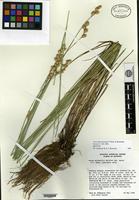
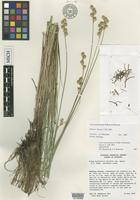
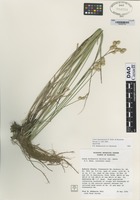
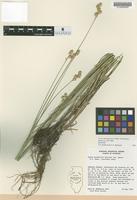
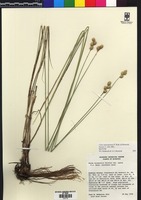
Isotype of Carex missouriensis P. Rothr. & Reznicek [family CYPERACEAE]
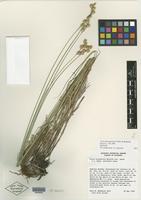
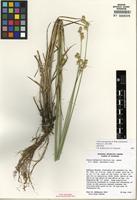
Isotype of Carex missouriensis Rothrock, P.E. & Reznicek, A.A. 2001 [family CYPERACEAE]
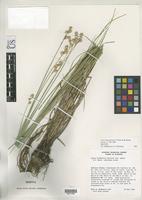
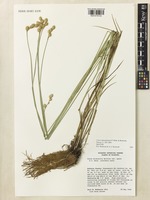
Isotype of Carex missouriensis P. Rothr. & Reznicek [family CYPERACEAE]
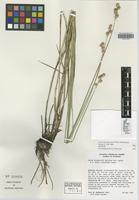
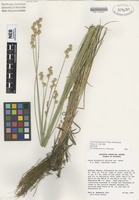
Holotype of Carex missouriensis P.Rothr. & Reznicek [family CYPERACEAE]
Isotype of Carex missouriensis P.E. Rothr. & Reznicek [family CYPERACEAE]
Isotype of Carex missouriensis P.Rothr. & Reznicek [family CYPERACEAE]
Carex missouriensis Rothr., P. & Reznicek [family CYPERACEAE]
Isotype of Carex missouriensis P. Rothrock & A. Reznicek [family CYPERACEAE]
Isotype of Carex missouriensis P. Rothr. and Reznicek [family CYPERACEAE]
Isotype of Carex missouriensis P. Roth. & Reznicek [family CYPERACEAE]
Previous
Next

Name

Identification
Isotype of Carex missouriensis P. Rothr. & Reznicek [family CYPERACEAE ] (stored under name); Verified by Not on sheet,
Related name
  • Carex missouriensis
  • Carex bicknellii

Flora

Entry for Carex missouriensis P. E. Rothrock & Reznicek [family CYPERACEAE]
Herbarium
Flora of North America (FNA)
Collection
Flora of North America
Resource Type
Reference Sources
Entry From
Flora of North America, Vol 23,
Names
Carex missouriensis P. E. Rothrock & Reznicek [family CYPERACEAE], Novon, 11: 220, figs. 1(left), 3C, 4, 10. 2001
Treatment Author(s)
Peter W. Ball
A. A. Reznicek
Information
Plants densely cespitose, to 200 culms together; rhizomes may appear elongate in old clumps. Culms 45–90 cm; vegetative culms few, inconspiculous, usually fewer than 12 leaves, not strikingly 3-ranked. Leaves: sheaths glabrous, individually indistinct Y-shaped hyaline band reaching 0–8 mm below the collar, summit U-shaped or truncate, extending 0–2 mm beyond collar, smooth; distal ligules 2–4 mm; blades 3–6 per fertile culm, 2.5–25 cm × 1.8–3.2(–4) mm. Inflorescences open to congested, erect to nodding, pale or golden brown, 2–4.5 cm × 7.5–19 mm; proximal internode 3.5–12 mm; 2d internode 3–10 mm; proximal bracts scalelike or often with bristle tips shorter than or equaling inflorescences. Spikes 3–8, distant, distinct, globose to ovoid or conic, 8–14 × 4.5–9.5 mm, base rounded to acute, apex acute, obtuse, or rounded. Pistillate scales pale yellowish brown or occasionally copper-brown tinged, with narrow yellow-brown midstripe, lanceolate or lance-ovate, 3.7–4.4 mm, reaching base to middle of perignyium beaks, margin whitish to brownish hyaline, apex membranaceous, curled, acuminate or awned to 0.7 mm. Staminate scales acuminate-awned. Anthers (1.8–)2.2–3.6 mm. Perigynia 15–80 on larger spikes, loosely ascending, light green, yellow-brown, or copper-brown, green or brown winged, inconspicuously 0–3(–5)-veined adaxially, 0–8-veined abaxially, 1–2 veins in winged margin, broadly elliptic to ovate, flat or concavo-convex except over achene, (4.2–)4.6–6.7(–7.1 in larger perigynia) × 2.5–4 mm, 0.5–0.7 mm thick, herbaceous, ± opaque, with achene not visible through adaxial face, margin flat, including wing 0.6–1.1 mm wide smooth; beak tip, strongly flattened, 2–2.8 mm, serrulate-margined to apex, abaxial suture pale or copper-brown, distance from beak tip to achene 2.6–4.2 mm. Achenes elliptic to ± orbiculate, 1.6–2.2 × 1.2–1.6 mm, 0.5–0.7 mm thick, apiculum to 0.4–1.1 mm. 2n =50, 52, 54.
Phenology Fruiting
early summer
Altitude range
100–400 m;
Distribution
USA Ill.USA Ind.USA IowaUSA Kans.USA Mo.USA Nebr.

Related Materials

  • Terms and Conditions
  • Privacy Policy
  • Cookie Policy
  • Cookie Settings
  • Accessibility
  • Help
  • Contact Us
  • Facebook
  • Twitter
ITHAKA

JSTOR is part of ITHAKA, a not-for-profit organization helping the academic community use digital technologies to preserve the scholarly record and to advance research and teaching in sustainable ways.

©2000-2026 ITHAKA. All Rights Reserved. JSTOR®, the JSTOR logo, JPASS®, Aluka®, and ITHAKA® are registered trademarks of ITHAKA.

╳