JSTOR Global Plants Home
  • Home
  • Browse
  • About
  • Access
  • Account
    • Saved Items
    • Profile
  • Log in

Global Plants

Skip to Main Content
  • JSTOR Global Plants Home
  • Global Plants

    • Browse
    • About
    • Access
    • Account
      • Saved Items
      • Profile
Log in
  • Browse
  • About
  • Access
  • Account
    • Saved Items
    • Profile
Advanced Search

Compilation
Carex microchaeta

8 Images see all

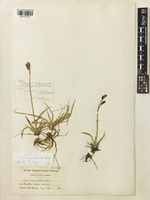
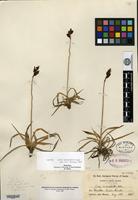
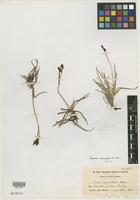
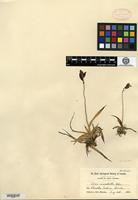
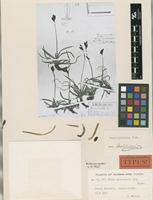
Isotype of Carex microchaeta Holm [family CYPERACEAE]
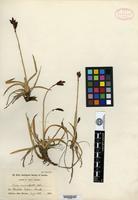
Type of Carex microchaeta Holm [family CYPERACEAE]
Type? of Carex microchaeta Holm [family CYPERACEAE]
Isotype of Carex microchaeta Holm, H.T. 1904 [family CYPERACEAE]
Isotype of Carex microchaeta Holm [family CYPERACEAE]
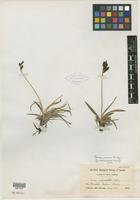
Type? of Carex microchaeta Holm [family CYPERACEAE]
Isotype of Carex microchaeta Holm [family CYPERACEAE]
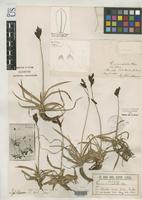
Type of Carex microchaeta T.Holm [family CYPERACEAE]
Previous
Next

Name

Identification
Isotype of Carex microchaeta Holm [family CYPERACEAE ] (stored under name); Verified by Holm, 1904
Related name
  • Carex microchaeta
  • Carex podocarpa

Flora

Entry for Carex microchaeta T. Holm [family CYPERACEAE]
Herbarium
Flora of North America (FNA)
Collection
Flora of North America
Resource Type
Reference Sources
Entry From
Flora of North America, Vol 23,
Names
Carex microchaeta T. Holm [family CYPERACEAE], Amer. J. Sci., 167: 305. 1904
Treatment Author(s)
Peter W. Ball
A. A. Reznicek
Information
Culms 5–35 cm. Leaves basal; proximal leaves with blades 5–6 mm wide. Inflorescences: spikes approximate, oblong to elongate, 8–25 × 3–8 mm; proximal spike separate, sometimes pendent and long-pedunculate; lateral spikes 2–4; distal spikes erect, short-pedunculate. Pistillate scales dark brown to black, ovate or lanceolate, equaling and as wide as perigynia, apex acute or mucronate. Perigynia veinless, ovate, 3-5–4 × 1.5–2 mm, papillose; beak 0.3–0.5 mm, shallowly bidentate or truncate, sparsely papillose or smooth.
Distribution
nw North AmericaAsia (Russian Far East).

Related Materials

  • Terms and Conditions
  • Privacy Policy
  • Cookie Policy
  • Cookie Settings
  • Accessibility
  • Help
  • Contact Us
  • Facebook
  • Twitter
ITHAKA

JSTOR is part of ITHAKA, a not-for-profit organization helping the academic community use digital technologies to preserve the scholarly record and to advance research and teaching in sustainable ways.

©2000-2026 ITHAKA. All Rights Reserved. JSTOR®, the JSTOR logo, JPASS®, Aluka®, and ITHAKA® are registered trademarks of ITHAKA.

╳