JSTOR Global Plants Home
  • Home
  • Browse
  • About
  • Access
  • Account
    • Saved Items
    • Profile
  • Log in

Global Plants

Skip to Main Content
  • JSTOR Global Plants Home
  • Global Plants

    • Browse
    • About
    • Access
    • Account
      • Saved Items
      • Profile
Log in
  • Browse
  • About
  • Access
  • Account
    • Saved Items
    • Profile
Advanced Search

Compilation
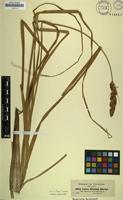
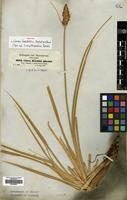
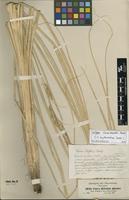
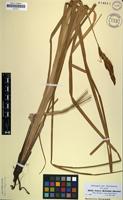
Carex koestlini

21 Images see all

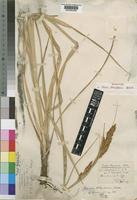
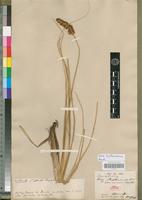
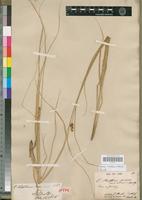
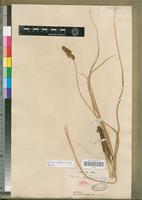
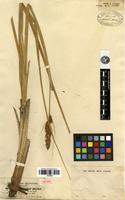
Syntype of Carex steudneri Boeck. [family CYPERACEAE]
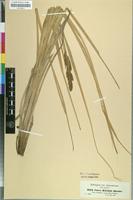
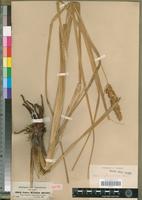
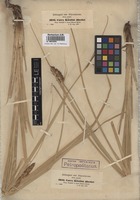
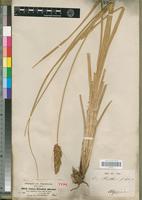
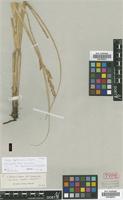
Isotype of Carex koestlini Hochst. ex Steud. [family CYPERACEAE]
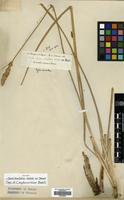
Carex koestlini Hochst.ex Steud. [family CYPERACEAE]
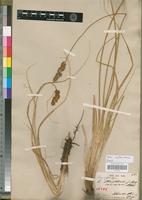
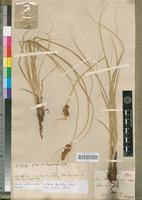
Isotype of Carex koestlini Steud. [family CYPERACEAE]
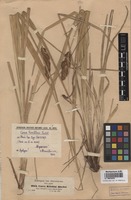
Syntype of Carex koestlini Steud. var. minor Boott [family CYPERACEAE]
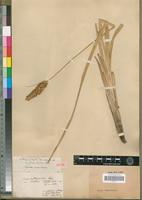
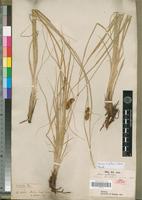
Isotype of Carex koestlini Steud. [family CYPERACEAE]
Syntype of Carex koestlini Steud. var. minor Boott [family CYPERACEAE]
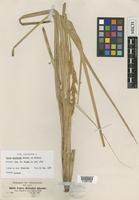
Original material of Carex koestlini Hochst.ex Steud. [family CYPERACEAE]
Type of Carex koestlini Steud. [family CYPERACEAE]
Isotype of Carex koestlini Hochst. ex Steud. [family CYPERACEAE]
Syntype of Carex koestlini Steud. var. minor Boott [family CYPERACEAE]
Isotype of Carex leptosaccus C.B.Clarke [family CYPERACEAE]
Isotype of Carex koestlini Hochst. ex Steud. [family CYPERACEAE]
Syntype of Carex koestlini Steud. var. minor Boott [family CYPERACEAE]
Isotype of Carex koestlini Hochst. ex Steud. [family CYPERACEAE]
Isotype of Carex koestlini Steud. [family CYPERACEAE]
Previous
Next

Name

Identification
Carex koestlini Hochst. ex Steud. [family CYPERACEAE ] Verified by Not on sheet, Carex erythrorrhiza Boeckeler [family CYPERACEAE ] (stored under name); Verified by Not on sheet, Isotype of Carex koestlini Hochst. ex Steud. [family CYPERACEAE ] Verified by Not on sheet,
Related name
  • Carex steudneri
  • Carex koestlini
  • Carex wahlenbergiana
  • Carex conferta
  • Carex erythrorrhiza
  • Carex leptosaccus

Flora

Entry for CAREX Koestlini Hochst. ex Steud. [family CYPERACEAE]
Herbarium
Royal Botanic Gardens, Kew (K)
Collection
Flora of Tropical Africa
Resource Type
Reference Sources
Entry From
Flora of Tropical Africa, Vol 8, page 264, (1902) Author: (By C. B. Clarke.)
Names
CAREX Koestlini Hochst. ex Steud. [family CYPERACEAE], Syn. Pl. Glum. ii. 193. —Boott, Carex, ii. 75 (excl. var. β), tt. 204, 205; Boeck. in Linnæa, xxxix. 101; Engl. Hochgebirgsfl. Trop. Afr. 151 excl. C. Steudneri; C. B. Clarke in Durand & Schinz, Conspect. Fl. Afr. v. 686.
Information
Glabrous. Rhizome 1/4– 1/3 in. in diam., whence descend thick smooth red roots. Stems 1 1/2–3 ft. long, rather stout, triquetrous, rough on the angles. Leaves nearly as long as the stem, 1/4– 1/3 in. broad. Inflorescence up to 6 1/2 by 3/4 in., very dense (sometimes interrupted at the base), from straw-colour to rusty brown; lowest bract not sheathing, usually as long as the panicle, but in one example nearly a foot long. Spikes exceeding 1/4 in. in length, female at the base, some male at the top. Female glumes 1/6– 1/4 in. long, elliptic, acuminate, hardly mucronate. Utricle 1/6– 1/4 in. long, elongate-lanceolate, attenuated at either end, plano-convex, thin, appearing winged, smooth, with 3–5 thin nerves on the plane face, 9 thin nerves on the convex face, finally straw-coloured; beak elongate-conic, split nearly to the base on the convex face, margins sparingly scabrid; style-branches 2, linear, long.
Distribution
Abyssinia Nile Land Samen; near Demerki on Mount Bachit, 10,500 ft., Schimper, 66! 1244! and without precise locality, Schimper, 1036! 1037!
Notes
In this critical series, Schimper's 1244 (figured by Boott, l. c. t. 205) is the type of the species; but the description above given is taken from Schimper's 1036, 1037, which are figured in Boott, l. c. t. 204; because in these latter the utricles and nuts are fully ripened.

Related Materials

  • Terms and Conditions
  • Privacy Policy
  • Cookie Policy
  • Cookie Settings
  • Accessibility
  • Help
  • Contact Us
  • Facebook
  • Twitter
ITHAKA

JSTOR is part of ITHAKA, a not-for-profit organization helping the academic community use digital technologies to preserve the scholarly record and to advance research and teaching in sustainable ways.

©2000-2026 ITHAKA. All Rights Reserved. JSTOR®, the JSTOR logo, JPASS®, Aluka®, and ITHAKA® are registered trademarks of ITHAKA.

╳