JSTOR Global Plants Home
  • Home
  • Browse
  • About
  • Access
  • Account
    • Saved Items
    • Profile
  • Log in

Global Plants

Skip to Main Content
  • JSTOR Global Plants Home
  • Global Plants

    • Browse
    • About
    • Access
    • Account
      • Saved Items
      • Profile
Log in
  • Browse
  • About
  • Access
  • Account
    • Saved Items
    • Profile
Advanced Search

Compilation
Carex involucrata

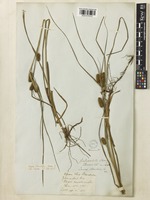
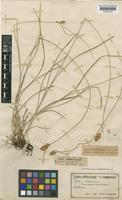
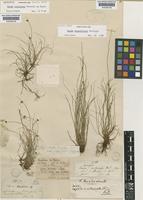
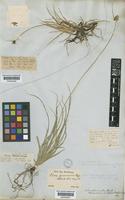
8 Images see all

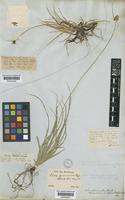
Carex sororia Kunth [family CYPERACEAE]
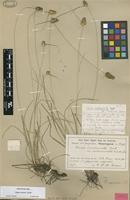
Holotype of Carex involucrata Boott var. submuricata C.B.Clarke [family CYPERACEAE]
Carex involucrata Boott var. submuricata Clarke, C.B. ex Kük. [family CYPERACEAE]
Carex sororia Kunth [family CYPERACEAE]
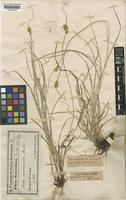
Carex frankii Kunth [family CYPERACEAE]
Carex involucrata Boott var. submuricata Clarke, C.B. ex Kük. [family CYPERACEAE]
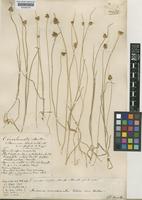
Carex trichodes Steud. [family CYPERACEAE]
Carex sororia Kunth [family CYPERACEAE]
Previous
Next

Name

Identification
Carex sororia Kunth [family CYPERACEAE ] (stored under name); Carex involucrata Booth [family CYPERACEAE ] Verified by Clarke, C.B.,
Related name
  • Carex muricata
  • Carex lateriflora
  • Carex bonariensis
  • Carex sororia
  • Carex trichodes
  • Carex involucrata
  • Carex bovariensis

Flora

Entry for Carex aureolensis Steudel [family CYPERACEAE]
Herbarium
Flora of North America (FNA)
Collection
Flora of North America
Resource Type
Reference Sources
Entry From
Flora of North America, Vol 23,
Names
Carex aureolensis Steudel [family CYPERACEAE], Syn. Pl. Glumac., 2: 223. 1855
Carex atrovirens Boeckeler [family CYPERACEAE]
Carex involucrata Boeckeler [family CYPERACEAE]
Treatment Author(s)
Peter W. Ball
A. A. Reznicek
Information
Plants colonial, long-rhizomatous. Culms (10–)20–85 cm. Leaves 2–8.5 mm wide, sparingly scabrous. Spikes 4–6, erect; lateral spikes pistillate with a few staminate flowers proximally and rarely also distally, narrowly elliptic, 11–4.5 × 5.5–11 mm; terminal spike staminate, sometimes gynecandrous or abortive, 9–42 × 1.5–3.5 mm. Pistillate scales with distinct body, 2.9–7(–11.8) × 0.4–0.9(–1.1) mm, body 1.5–2.5 mm, translucent, apex with long, scabrous awn to 1.4–4.5(–9) mm, exceeding perigynia. Staminate scales ± tightly imbricate, lanceolate, narrowly ovate, or oblong-obovate, 3.3–9.3(–12.5) × 0.9–1.6 mm, apex acute to truncate-erose or retuse, sometimes with scabrous awn to 0.1–6.2(–9.2) mm. Perigynia horizontal, 3.2–5.1(–5.6) × 1.3–2.5 mm, minutely pustulate; beak 1.2–2.1 mm, smooth. Achenes trigonous-obovoid, sides strongly concave, 1.2–1.8(–2.1) × 0.9–1.3(–1.5) mm, less than 2 times as long as wide; style deciduous, straight or sinuous.
Phenology Fruiting
summer
jun
jul
aug
Altitude range
0–500 m;
Distribution
Mexico (Coahuila)Mexico (Nuevo León)South America.USA Ala.USA Ark.USA Fl.USA Ga.USA Ill.USA Kans.USA Ky.USA La.USA Miss.USA Mo.USA Nebr.USA N.Mex.USA N.C.USA Okla.USA S.C.USA Tenn.USA Tex.USA Va.
Discussion
Carex aureolensis has been recognized as a distinct species based on its staminate and pistillate scale morphology, growth habit, and distribution.

Related Materials

  • Terms and Conditions
  • Privacy Policy
  • Cookie Policy
  • Cookie Settings
  • Accessibility
  • Help
  • Contact Us
  • Facebook
  • Twitter
ITHAKA

JSTOR is part of ITHAKA, a not-for-profit organization helping the academic community use digital technologies to preserve the scholarly record and to advance research and teaching in sustainable ways.

©2000-2026 ITHAKA. All Rights Reserved. JSTOR®, the JSTOR logo, JPASS®, Aluka®, and ITHAKA® are registered trademarks of ITHAKA.

╳