JSTOR Global Plants Home
  • Home
  • Browse
  • About
  • Access
  • Account
    • Saved Items
    • Profile
  • Log in

Global Plants

Skip to Main Content
  • JSTOR Global Plants Home
  • Global Plants

    • Browse
    • About
    • Access
    • Account
      • Saved Items
      • Profile
Log in
  • Browse
  • About
  • Access
  • Account
    • Saved Items
    • Profile
Advanced Search

Compilation
Carex incondita

3 Images see all

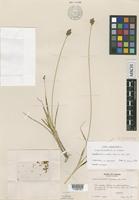
Isotype of Carex incondita F.J.Herm. [family CYPERACEAE]
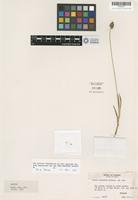
Isotype of Carex incondita F. J. Hermann [family CYPERACEAE]
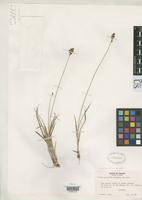
Holotype of Carex incondita Hermann, F.J. 1956 [family CYPERACEAE]
Previous
Next

Name

Identification
Isotype of Carex incondita F. J. Hermann [family CYPERACEAE ] (stored under name); Verified by Not on sheet,
Related name
  • Carex macloviana
  • Carex incondita
Common name
  • Carex des Malouines, Flora of North America Vol. 23

Flora

Entry for Carex macloviana D’Urville [family CYPERACEAE]
Herbarium
Flora of North America (FNA)
Collection
Flora of North America
Resource Type
Reference Sources
Entry From
Flora of North America, Vol 23,
Names
Carex macloviana D’Urville [family CYPERACEAE], Mém. Soc. Linn. Paris, 4: 599. 1826
Carex incondita F. J. Hermann [family CYPERACEAE]
Treatment Author(s)
Peter W. Ball
A. A. Reznicek
Information
Plants densely cespitose. Culms (9–)16–60 cm. Leaves: sheath adaxially white-hyaline, summits usually U-shaped, rarely prolonged to 3 mm beyond collar; distal ligules 0.5–2.5(–3) mm; blades 2–6 per fertile culm, (4–)8–18 cm × (1.7–)2–3.6(–4) mm. Inflorescences stiffly erect, dense, brown or dark brown, 0.9–2.1 cm × 10–15(–18.5) mm; proximal internode 1.5–3.7(–4.8) mm; 2d internode 1–3 mm; proximal bracts scalelike or bristlelike, shorter than inflorescences. Spikes (3–)5–9, densely aggregated, ± individually indistinct, ovoid to broadly ovoid, 5.5–10.5 × 4–7 mm, base rounded to acute or tapered, apex truncate to tapered. Pistillate scales gold to brown, often reddish, sometimes with whitish or gold midstripe, ovate to broadly ovate, 2.7–3.5(–4) mm, shorter or longer and usually narrower than perigynia, margin, white-hyaline usually conspicuous, 0.03–0.25 mm wide, apex usually obtuse. Perigynia appressed-ascending to ascending-spreading, straw colored, gold, red-brown, or coppery, conspicuously 0–7(–11)-veined abaxially, conspicuously 0–3-veined adaxially, narrowly to broadly ovate, plano-convex to biconvex, occasionally ± flat around achene, 3.5–4.5 × (1.1–)1.3–2 mm, 0.4–0.5 mm thick, margin flat, including wing 0.2–0.5 mm wide, darker than perigynium body, ciliate-serrulate at least on distal body, pithlike tissue usually present in proximal perigynium walls in U-shape around achene, glossy metallic sheen; beak white, golden brown, red-brown, brown, or dark brown, usually white-hyaline at tip, cylindric, unwinged, ± entire for (0.4–)0.5–0.6(–0.9) mm, abaxial suture usually white, conspicuous, distance from beak tip to achene (1.2–)1.6–2.4 mm. Achenes usually elliptic, (1.2–)1.4–1.9 × 0.85–1.1 mm, 0.35–0.5 mm thick. 2n = 86.
Phenology Fruiting
summer
jun
jul
aug
fall
sep
oct
nov
Altitude range
0–3300 m;
Distribution
GreenlandSouth America (Chile to Tierra del Fuego)Europe (Finland).Europe (Iceland).Europe (Norway).Europe (n Sweden).USA AlaskaUSA Colo.USA Mont.USA Wyo.Canada Alta.Canada B.C.Canada Nfld. and Labr. (Labr.)Canada N.W.T.Canada Que.Canada Yukon

Related Materials

  • Terms and Conditions
  • Privacy Policy
  • Cookie Policy
  • Cookie Settings
  • Accessibility
  • Help
  • Contact Us
  • Facebook
  • Twitter
ITHAKA

JSTOR is part of ITHAKA, a not-for-profit organization helping the academic community use digital technologies to preserve the scholarly record and to advance research and teaching in sustainable ways.

©2000-2026 ITHAKA. All Rights Reserved. JSTOR®, the JSTOR logo, JPASS®, Aluka®, and ITHAKA® are registered trademarks of ITHAKA.

╳