JSTOR Global Plants Home
  • Home
  • Browse
  • About
  • Access
  • Account
    • Saved Items
    • Profile
  • Log in

Global Plants

Skip to Main Content
  • JSTOR Global Plants Home
  • Global Plants

    • Browse
    • About
    • Access
    • Account
      • Saved Items
      • Profile
Log in
  • Browse
  • About
  • Access
  • Account
    • Saved Items
    • Profile
Advanced Search

Compilation
Carex fuliginosa

4 Images see all

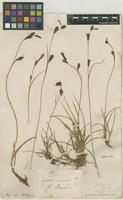
Filed as Carex fuliginosa Schkuhr [family CYPERACEAE]
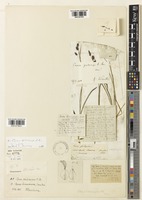
Carex podocarpa R.Br. [family CYPERACEAE]
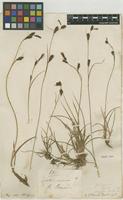
Filed as Carex fuliginosa Schkuhr [family CYPERACEAE]
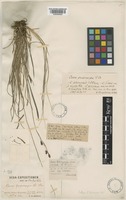
Type of Carex behringensis C.B.Clarke [family CYPERACEAE]
Previous
Next

Name

Identification
Carex fuliginosa Schkuhr [family CYPERACEAE ] (stored under name); Verified by Not on sheet, Carex frigida All. [family CYPERACEAE ] Verified by Smith, Sir James Edward,
Related name
  • Carex frigida
  • Carex fuliginosa
Common name
  • Carex fuligineux, Flora of North America Vol. 23

Flora

Entry for Carex fuliginosa Schkuhr [family CYPERACEAE]
Herbarium
Flora of North America (FNA)
Collection
Flora of North America
Resource Type
Reference Sources
Entry From
Flora of North America, Vol 23,
Names
Carex fuliginosa Schkuhr [family CYPERACEAE], Beschr. Riedgräs., 1: 91, plate Cc, fig. 47c. 1801
Carex misandra R. Brown [family CYPERACEAE]
Treatment Author(s)
Peter W. Ball
A. A. Reznicek
Information
Plants densely cespitose; rhizomes inconspicuous. Culms to 30 cm. Leaves: blades 1.5–3.5 mm wide. Inflorescences 1–12 cm, proximal internodes 5–50 mm; peduncles of proximal spikes to 5 cm; proximal bracts with blade 0–15(–40) mm, sheath cylindric, (3–)4–22 mm, mouth 0.5–1.2 mm wide. Spikes (2–)3–4(–5); lateral spikes pistillate, the proximal inclined or pendent, 6–21 × 3–6 mm; terminal spike gynecandrous, rarely staminate, pendent, 8–10 × 3.5–5 mm. Pistillate scales black or brown with pale, weak midvein and very narrowly scarious margins, ovate, 2.8–4.2 × 1.4–2.4 mm, apex obtuse to acuminate. Staminate scales brown to black with pale midvein and scarious margins, oblong-obovate to obovate, 3–5 × 1.4–1.8 mm. Anthers 1.2–2.7 mm. Perigynia ascending, pale brown proximally, black or dark brown distally, veins indistinct, lanceolate, 3.3–5.5 × 0.9–1.3(–1.4) mm, margins ciliate, glabrous; beak indistinct. Achenes obovoid, 1.5–2 × 0.9–1 mm.
Phenology Fruiting
summer
jun
jul
aug
Altitude range
50–2000 m;
Distribution
GreenlandEurasia.USA AlaskaUSA Colo.USA Mont.USA UtahUSA Wyo.Canada Alta.Canada B.C.Canada Man.Canada N.W.T.Canada Que.Canada Yukon
Discussion
W. Dietrich (1967) recognized two subspecies in the alpine and artic regions of Europe, Carex fuligonosa subsp. fuliginosa, from the mountains of central Europe, with leaves about 1/2 as long as the fertile stems and spikes 15–20(–25) mm, and subsp. misandra (R. Brown) Nyman, from northern Europe, with leaves not more than 1/3 as long as the fertile stems and spikes 10–15 mm. The North American populations have traditionally been placed in subsp. misandra, but in North America many small plants with short spikes have culms scarcely exceeding the leaves; plants with long spikes have the leaves not more than 1/4 the length of the culms.

Related Materials

  • Terms and Conditions
  • Privacy Policy
  • Cookie Policy
  • Cookie Settings
  • Accessibility
  • Help
  • Contact Us
  • Facebook
  • Twitter
ITHAKA

JSTOR is part of ITHAKA, a not-for-profit organization helping the academic community use digital technologies to preserve the scholarly record and to advance research and teaching in sustainable ways.

©2000-2026 ITHAKA. All Rights Reserved. JSTOR®, the JSTOR logo, JPASS®, Aluka®, and ITHAKA® are registered trademarks of ITHAKA.

╳