JSTOR Global Plants Home
  • Home
  • Browse
  • About
  • Access
  • Account
    • Saved Items
    • Profile
  • Log in

Global Plants

Skip to Main Content
  • JSTOR Global Plants Home
  • Global Plants

    • Browse
    • About
    • Access
    • Account
      • Saved Items
      • Profile
Log in
  • Browse
  • About
  • Access
  • Account
    • Saved Items
    • Profile
Advanced Search

Compilation
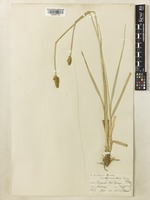
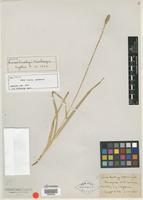
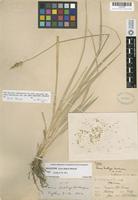
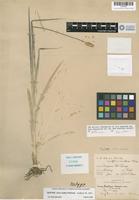
Carex dudleyi

5 Images see all

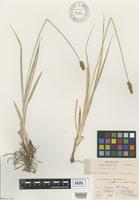
Carex dudleyi Mack. [family CYPERACEAE]
Holotype of Carex dudleyi Mack. [family CYPERACEAE]
Holotype of Carex dudleyi Mackenzie [family CYPERACEAE]
Isotype of Carex dudleyi Mackenzie [family CYPERACEAE]
Previous
Next

Name

Identification
Carex dudleyi Mackenzie [family CYPERACEAE ] (stored under name); Verified by Mackenzie, K. K.,
Related name
  • Carex dudleyi

Flora

Entry for Carex densa (L. H. Bailey) L. H. Bailey [family CYPERACEAE]
Herbarium
Flora of North America (FNA)
Collection
Flora of North America
Resource Type
Reference Sources
Entry From
Flora of North America, Vol 23,
Names
Carex densa (L. H. Bailey) L. H. Bailey [family CYPERACEAE], Mem. Torrey Bot. Club, 1: 50. 1889
Carex brongniartii Kunth var. densa L. H. Bailey [family CYPERACEAE], Proc. Amer. Acad. Arts, 22: 137. 1887
Carex breviliguata Mackenzie [family CYPERACEAE]
Carex chrysoleuca T. Holm [family CYPERACEAE]
Carex dudleyi Mackenzie [family CYPERACEAE]
Carex vicaria L. H. Bailey [family CYPERACEAE]
Carex vicaria var. costata L. H. Bailey [family CYPERACEAE]
Carex vulpinoidea Michaux var. vicaria (L. H. Bailey) Kükenthal [family CYPERACEAE]
Treatment Author(s)
Peter W. Ball
A. A. Reznicek
Information
Culms to 70 cm × 1.5 mm, scabrous. Leaves: sheath fronts rugose, indistinctly spotted pale brown, apex convex, membranous; ligule emarginate to acute, 0–4 mm, free limb to 0.2 mm; blades 50 cm × 5 mm, shorter than flowering stem. Inflorescences spicate or somewhat capitate, 3–5 cm × 15–25 mm, with 10–15 branches, proximal not distinct; the proximal internode to 0.5 cm; bracts scalelike, the proximal setaceous, conspicuous. Scales hyaline, brown, awn 0.5–2 mm. Perigynia dull yellow-brown turning medium brown, red-brown distally, (3–)5–7-veined abaxially, (0–)3–5-veined adaxially, body elliptic to ovate, 2.8–4 × 1.5–2 mm, base obtuse to rounded, usually with well-developed spongy tissue; beak 1–1.5 mm, 1/3–1/2 length of perigynium. Achenes red-brown, ovate, 1.5–1.7 × 1.5–1.8 mm, glossy.
Phenology Fruiting
jun
summer
Altitude range
0–1500 m;
Distribution
USA Calif.USA Oreg.USA Wash.
Discussion
Carex densa has been subdivided into as many as four species. Variable characters of the taxon include the compaction of the inflorescence, the shape of the sheath apex, the size and number of veins on the perigynium, the length of the pistillate scale awn, and the development of spongy tissue basal and lateral to the perigynium. The morphologic variation shows no geographic or ecologic pattern and cannot be separated consistently by visual or statistical analyses. The most frequently recognized taxa, C. densa and C. dudleyi, are end-points along a morphologic continuum of spongy tissue development. The perigynium of typical C. densa has well-developed spongy tissue, giving an ovate shape and rounded base. In contrast, the typical C. dudleyi lacks development of spongy tissue, giving a rhombic shape and tapered base. These extremes are connected by a continuous range of intermediate forms that display the same range of variation found in C. vulpinoidea. A single species is here recognized; however, further study may clarify patterns of biological variation within the complex taxon.

Related Materials

  • Terms and Conditions
  • Privacy Policy
  • Cookie Policy
  • Cookie Settings
  • Accessibility
  • Help
  • Contact Us
  • Facebook
  • Twitter
ITHAKA

JSTOR is part of ITHAKA, a not-for-profit organization helping the academic community use digital technologies to preserve the scholarly record and to advance research and teaching in sustainable ways.

©2000-2026 ITHAKA. All Rights Reserved. JSTOR®, the JSTOR logo, JPASS®, Aluka®, and ITHAKA® are registered trademarks of ITHAKA.

╳