JSTOR Global Plants Home
  • Home
  • Browse
  • About
  • Access
  • Account
    • Saved Items
    • Profile
  • Log in

Global Plants

Skip to Main Content
  • JSTOR Global Plants Home
  • Global Plants

    • Browse
    • About
    • Access
    • Account
      • Saved Items
      • Profile
Log in
  • Browse
  • About
  • Access
  • Account
    • Saved Items
    • Profile
Advanced Search

Compilation
Carex disperma

12 Images see all

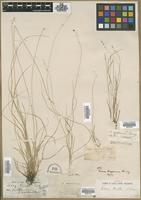
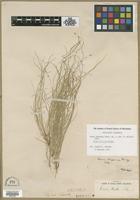
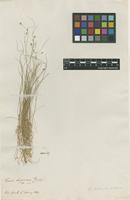
Type? of Carex disperma Dewey [family CYPERACEAE]
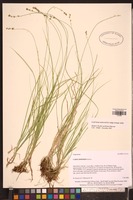
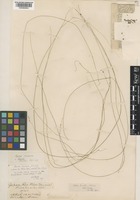
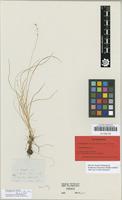
Filed as Carex disperma [family CYPERACEAE]
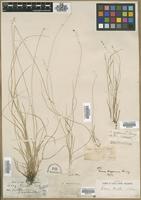
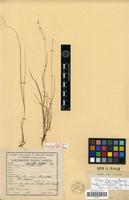
Type? of Carex disperma Dewey [family CYPERACEAE]
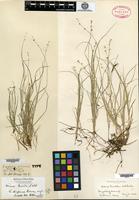
Carex disperma Dewey [family CYPERACEAE]
Holotype of Carex nakaii Léveillé & Vant. [family CYPERACEAE]
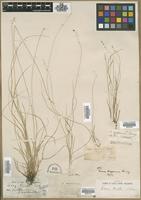
Holotype of Carex disperma Dewey [family CYPERACEAE]
Filed as Carex disperma Dewey [family CYPERACEAE]
Type? of Carex blyttii F.Nyl. 1844 [family CYPERACEAE]
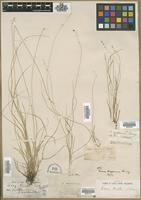
Type? of Carex disperma Dewey [family CYPERACEAE]
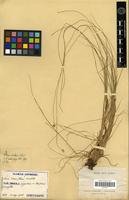
Isotype of Carex nakaii Léveillé & Vant. [family CYPERACEAE]
Previous
Next

Name

Identification
Carex disperma Dewey [family CYPERACEAE ] (stored under name); Verified by Dewey, 1824
Related name
  • Carex nakaii
  • Carex disperma
  • Carex blyttii
  • Carex loliaceae
  • Carex tenella
Common name
  • Carex disperme, Flora of North America Vol. 23

Flora

Entry for Carex disperma Dewey [family CYPERACEAE]
Herbarium
Flora of North America (FNA)
Collection
Flora of North America
Resource Type
Reference Sources
Entry From
Flora of North America, Vol 23,
Names
Carex disperma Dewey [family CYPERACEAE], Amer. J. Sci. Arts, 8: 266. 1824
Carex tenella Schkuhr [family CYPERACEAE]
Treatment Author(s)
Peter W. Ball
A. A. Reznicek
Information
Plants with loose, branching system of slender, pale brown rhizomes. Culms very slender, nodding, 15–60 cm, exceeding leaves, scabrid. Leaves: basal sheaths pale brown abaxially, inner band white-hyaline, truncate at summit; ligules broader than long; blades mid to dark green, flat, 15–30 × 0.75–1.5 mm, scabrid. Inflorescences 1.5–2.5 cm × 3–5 mm; proximal bract 5–20 mm; distal bracts scalelike. Spikes 2–4(–5), proximal separate, distal aggregate, globose, 3–5 × 2–4 mm. Pistillate scales white-hyaline with green center, ovate, narrower and shorter than perigynia, apex acuminate. Perigynia 1–6, pale green, often brown or even purplish in age, plump, 2.25–3 × 1.3–1.5 mm, membranous, shiny. Achenes red-brown, oblong-elliptic, 1.5–1.75 × 1 mm, glossy. 2n = 70.
Phenology Fruiting
may
spring
jun
summer
jul
aug
Altitude range
0–3500 m;
Distribution
GreenlandEurasia.USA AlaskaUSA Calif.USA Colo.USA Conn.USA IdahoUSA Ind.USA MaineUSA Mass.USA Mich.USA Minn.USA Mont.USA Nev.USA N.H.USA N.J.USA N.Mex.USA N.Y.USA N.Dak.USA OhioUSA Oreg.USA Pa.USA S.Dak.USA UtahUSA Vt.USA Wash.USA Wis.USA Wyo.Canada Alta.Canada B.C.Canada Man.Canada N.B.Canada Nfld. and Labr.Canada N.W.T.Canada N.S.Canada Ont.Canada P.E.I.Canada Que.Canada Sask.Canada Yukon

Related Materials

  • Terms and Conditions
  • Privacy Policy
  • Cookie Policy
  • Cookie Settings
  • Accessibility
  • Help
  • Contact Us
  • Facebook
  • Twitter
ITHAKA

JSTOR is part of ITHAKA, a not-for-profit organization helping the academic community use digital technologies to preserve the scholarly record and to advance research and teaching in sustainable ways.

©2000-2026 ITHAKA. All Rights Reserved. JSTOR®, the JSTOR logo, JPASS®, Aluka®, and ITHAKA® are registered trademarks of ITHAKA.

╳