JSTOR Global Plants Home
  • Home
  • Browse
  • About
  • Access
  • Account
    • Saved Items
    • Profile
  • Log in

Global Plants

Skip to Main Content
  • JSTOR Global Plants Home
  • Global Plants

    • Browse
    • About
    • Access
    • Account
      • Saved Items
      • Profile
Log in
  • Browse
  • About
  • Access
  • Account
    • Saved Items
    • Profile
Advanced Search

Compilation
Carex danaensis

6 Images see all

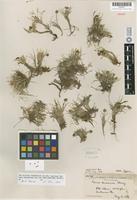
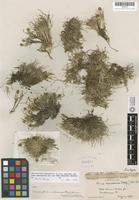
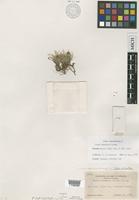
Holotype of Carex danaensis Stacey [family CYPERACEAE]
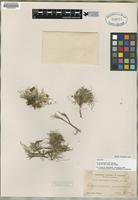
Isotype of Carex danaensis Stacey [family CYPERACEAE]
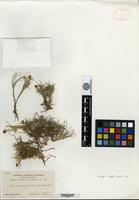
Isotype of Carex danaensis Stacey, J.W. 1939 [family CYPERACEAE]
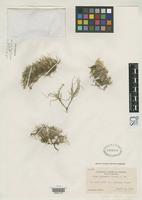
Isotype of Carex danaensis Stacey [family CYPERACEAE]
Previous
Next

Name

Identification
Isotype of Carex danaensis Stacey [family CYPERACEAE ] (stored under name); Verified by Not on sheet,
Related name
  • Carex incurviformis
  • Carex danaensis

Flora

Entry for Carex incurviformis Mackenzie [family CYPERACEAE]
Herbarium
Flora of North America (FNA)
Collection
Flora of North America
Resource Type
Reference Sources
Entry From
Flora of North America, Vol 23,
Names
Carex incurviformis Mackenzie [family CYPERACEAE], in P. A. Rydberg, Fl. Rocky Mts., 120, 1060. 1917
Carex danaensis Stacey [family CYPERACEAE]
Carex incurviformis var. danaensis (Stacey) F. J. Hermann [family CYPERACEAE]
Carex maritima Gunnerus var. incurviformis (Mackenzie) B. Boivin [family CYPERACEAE]
Treatment Author(s)
Peter W. Ball
A. A. Reznicek
Information
Plants colonial. Culms curved, bluntly trigonous, 2–12 cm, smooth-angled distally. Leaves: basal sheaths brown; ligules 0.3–0.6 mm; blades involute, ± equaling culms, 0.5–1.5 mm wide. Inflorescences 0.5–1.2 cm; spikes (3–)5–7, essentially indistinguishable in dense hemispheric head. Pistillate scales brown to dark brown, with narrow whitish hyaline margins, ovate, conspicuously shorter than perigynia, apex ± acute to acuminate, body shiny. Anthers 0.9–1.4 mm. Perigynia light brown proximally, dark brown distally, usually strongly 8–11-veined abaxially, 4–11-veined adaxially, not or little inflated, narrowly elliptic, 2.9–3.9 × 1–1.5(–1.6) mm, leathery, dull to satiny; stipe 0.2–0.4 mm; beak poorly defined, 0.4–0.9 mm, smooth or slightly scabrous-margined.
Phenology Fruiting
jun
summer
jul
aug
Altitude range
1900–4400 m;
Distribution
USA AlaskaUSA Calif.USA Colo.USA Mont.USA Wyo.Canada Alta.Canada B.C.
Discussion
Carex incurviformis is an alpine member of the C. maritima complex, and seems clearly (though subtly) distinct from the widespread and variable C. maritima, which in North America is a lowland and mostly coastal species. It is tentatively accorded species rank pending a comprehensive, worldwide revision of the complex even though, in other regions, apparently typical C. maritima does occur in alpine settings.
Plants of California especially and, to a lesser extent, the southern Rockies have broader, blunter scales with slighty wider hyaline margins than plants of the northern Rockies. California plants were described as Carex danaensis Stacey. As more collections accumulated, F. J. Hermann (1955) noted that the distinctions between C. danaensis and C. incurviformis were slight. He recognized C. danaensis only as a variety of C. incurviformis and expanded its range to include Colorado. With even more material the distinctions appear to be no more than a regional trend and are not given formal recognition.

Related Materials

  • Terms and Conditions
  • Privacy Policy
  • Cookie Policy
  • Cookie Settings
  • Accessibility
  • Help
  • Contact Us
  • Facebook
  • Twitter
ITHAKA

JSTOR is part of ITHAKA, a not-for-profit organization helping the academic community use digital technologies to preserve the scholarly record and to advance research and teaching in sustainable ways.

©2000-2026 ITHAKA. All Rights Reserved. JSTOR®, the JSTOR logo, JPASS®, Aluka®, and ITHAKA® are registered trademarks of ITHAKA.

╳