JSTOR Global Plants Home
  • Home
  • Browse
  • About
  • Access
  • Account
    • Saved Items
    • Profile
  • Log in

Global Plants

Skip to Main Content
  • JSTOR Global Plants Home
  • Global Plants

    • Browse
    • About
    • Access
    • Account
      • Saved Items
      • Profile
Log in
  • Browse
  • About
  • Access
  • Account
    • Saved Items
    • Profile
Advanced Search

Compilation
Carex cumulata

5 Images see all

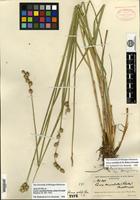
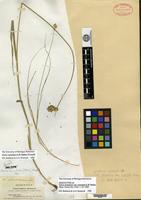
Holotype of Carex cumulata (L. H. Bailey) Mackenzie f. soluta Fernald [family CYPERACEAE]
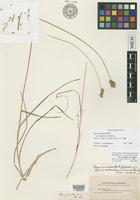
Isosyntype of Carex straminea Willd. var. cumulata L.H.Bailey [family CYPERACEAE]
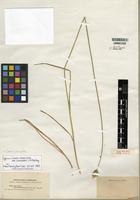
Isosyntype of Carex cumulata (L.H. Bailey) Mack. [family CYPERACEAE]
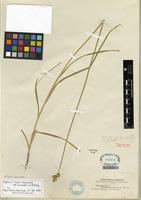
Isosyntype of Carex straminea Willdenow ex Schkuhr var. cumulata L. H. Bailey [family CYPERACEAE]
Previous
Next

Name

Identification
Carex cumulata (L. H. Bailey) Mackenzie [family CYPERACEAE ] (stored under name); Verified by P. E. Rothrock & A. A. Reznicek, Carex cumulata (L. H. Bailey) Mackenzie [family CYPERACEAE ] Verified by Fernald, 1942
Related name
  • Carex alata
  • Carex straminea
  • Carex cumulata
Common name
  • Carex dense, Flora of North America Vol. 23

Flora

Entry for Carex cumulata ( L. H. Bailey) Mackenzie [family CYPERACEAE]
Herbarium
Flora of North America (FNA)
Collection
Flora of North America
Resource Type
Reference Sources
Entry From
Flora of North America, Vol 23,
Names
Carex cumulata ( L. H. Bailey) Mackenzie [family CYPERACEAE], Bull. Torrey Bot. Club, 49: 366. 1923
Carex straminea Willdenow ex Schkuhr var. cumulata L. H. Bailey [family CYPERACEAE], Mem. Torrey Bot. Club, 1: 23. 1889
Treatment Author(s)
Peter W. Ball
A. A. Reznicek
Information
Plants densely cespitose. Culms 20–80 cm; vegetative culms with leaf blades in stiff rosettes. Leaves: sheaths adaxially green-veined nearly to collar, with a white-hyaline band or sharp Y-shaped hyaline region at collar; adaxially firm, summits truncate, prolonged 0.3 mm beyond collar, abaxially finely papillose; distal ligules 2–7 mm; blades 2–4 per fertile culm, 14–30 cm × 3–6(–8) mm. Inflorescences dense or open, light green or brown, 1.5–4(–5) cm × 7–16 mm; proximal internode 3–5(–12) mm; 2d internode 2–9 mm; proximal bracts bristlelike or, sometimes, leaflike. Spikes 3–10, distant, distinct, conic or ovoid, 6–12 × 4–7 mm, base truncate or rounded, apex obtuse; staminate portion 2 mm or less. Pistillate scales white-hyaline or brown, with green or white midstripe extending to tip, broadly lanceolate, 2.8–3.5 mm, shorter and narrower than perigynia, apex firm, obtuse or acute. Perigynia appressed, greenish to dark brown, conspicuously 3–7-veined abaxially, inconspicuously veined adaxially, obovate, concavo-convex, 3–4.2 × (1.8–)2–3.2 mm, 0.5–0.7 mm thick, margin flat, including wing 0.5–0.8 mm wide; beak appressed-ascending, brown at tip, flat, ciliate-serrulate, abaxial suture with white or hyaline brown margin, distance from beak tip to achene 1.5–2 mm. Achenes elliptic, 1.7–1.9 × 1.1–1.25 mm, 0.5–0.6 mm thick; styles abaxially-adaxially bent. 2n = 36, 38.
Altitude range
0–300 m;
Distribution
USA Conn.USA Ill.USA Ind.USA MaineUSA Mass.USA Mich.USA N.H.USA N.J.USA N.Y.USA Pa.USA R.I.USA Vt.USA Wis.Canada Man.Canada N.B.Canada Nfld. and Labr.Canada N.S.Canada Ont.Canada P.E.I.Canada Que.
Discussion
Carex cumulata is infrequent and seldom abundant in the habitats in which it is occurs. All reports of this species from Manitoba and extreme western Ontario, Canada are based upon historic collections made by John Macoun in 1872.
A few collecions appear to be sterile hybrids of Carex cumulata and C. scoparia. Carex cumulata and C. merritt-fernaldii sometimes occur together and frequently are mis-identified. Carex cumulata can be distinguished, however, by its adaxially green and veined sheaths, obovate perigynia and usually broader (3–6 mm) leaves.

Related Materials

  • Terms and Conditions
  • Privacy Policy
  • Cookie Policy
  • Cookie Settings
  • Accessibility
  • Help
  • Contact Us
  • Facebook
  • Twitter
ITHAKA

JSTOR is part of ITHAKA, a not-for-profit organization helping the academic community use digital technologies to preserve the scholarly record and to advance research and teaching in sustainable ways.

©2000-2026 ITHAKA. All Rights Reserved. JSTOR®, the JSTOR logo, JPASS®, Aluka®, and ITHAKA® are registered trademarks of ITHAKA.

╳