JSTOR Global Plants Home
  • Home
  • Browse
  • About
  • Access
  • Account
    • Saved Items
    • Profile
  • Log in

Global Plants

Skip to Main Content
  • JSTOR Global Plants Home
  • Global Plants

    • Browse
    • About
    • Access
    • Account
      • Saved Items
      • Profile
Log in
  • Browse
  • About
  • Access
  • Account
    • Saved Items
    • Profile
Advanced Search

Compilation
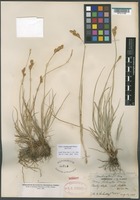
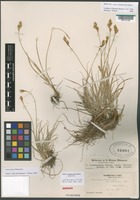
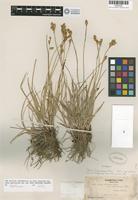
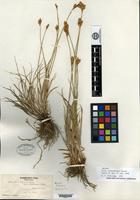
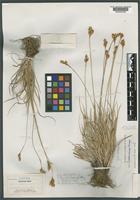
Carex constanceana

10 Images see all

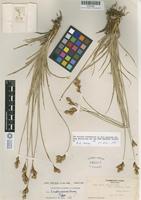
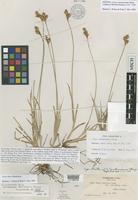
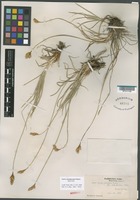
Holotype of Carex constanceana Stacey [family CYPERACEAE]
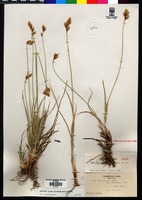
Isotype of Carex constanceana J.W. Stacey [family CYPERACEAE]
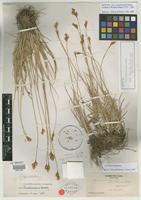
Isotype of Carex constanceana Stacey [family CYPERACEAE]
Previous
Next

Name

Identification
Carex constanceana Stacey [family CYPERACEAE ] (stored under name); Verified by Stacey, J. W., 1936
Related name
  • Carex constanceana
  • Carex petasata
  • Carex davyi

Flora

Entry for Carex constanceana Stacey [family CYPERACEAE]
Herbarium
Flora of North America (FNA)
Collection
Flora of North America
Resource Type
Reference Sources
Entry From
Flora of North America, Vol 23,
Names
Carex constanceana Stacey [family CYPERACEAE], Leafl. W. Bot., 2: 123. 1938
Treatment Author(s)
Peter W. Ball
A. A. Reznicek
Information
Plants densely cespitose. Culms 25–35 cm. Leaves: sheaths adaxially white-hyaline, summits U-shaped or rounded, sometimes prolonged beyond collar and rounded; distal ligules 1–3 mm; blades (2–)3–5 per fertile culm, 4–15 cm × 2–3 mm. Inflorescences open, orange-brown or greenish, 2.5–4 cm × 13–15 mm; proximal internode 6–12 mm; 2d internode 2–6 mm; proximal bracts scalelike or bristlelike, shorter than inflorescences. Spikes 3–7, distant, distinct, oblanceloid to obovoid, 14–21 × 7–10 mm, base attenuate, apex acute to rounded. Pistillate scales orange- or red-brown to coppery, with white or green midstripe, lanceolate to ovate, 4.8–5.5 mm, 2/3–3/4 length of and narrower than perigynia, margin white-hyaline, 0–0.2(–0.4) mm wide, apex obtuse. Staminate scales with white-hyaline margin 0–0.2(–0.4) mm wide. Perigynia appressed to appressed-ascending, greenish to straw colored, conspicuously 8–16-veined abaxially, conspicuously, shortly 4–7-veined adaxially, at least 3 adaxial veins longer than achene, lanceolate to ovate, plano-convex, 6.8–7.5 × 2–2.4 mm, (0.5–)0.6–0.8 mm thick, margin flat, including wing 0.4–0.5 mm wide, ciliate-serrulate at least distally; beak red-brown, sometimes white-hyaline at tip, cylindric, unwinged, entire for 0.5–0.9 mm, abaxial suture usually inconspicuous, distance from beak tip to achene 3.5–4.2 mm. Achenes ovate or obovate, 2.1–2.5 × 1.2–1.5 mm, 0.5–0.6 mm thick.
Conservation Status
of conservation concern;
Phenology Fruiting
summer
jun
jul
aug
Altitude range
2000 m;
Distribution
USA Wash.
Discussion
Carex constanceana, known from only one locality, has not been collected since the early 1900s. It has features of C. petasata and of C. davyi. In one flora C. constanceana was included in C. petasata (A. Cronquist 1969).

Related Materials

  • Terms and Conditions
  • Privacy Policy
  • Cookie Policy
  • Cookie Settings
  • Accessibility
  • Help
  • Contact Us
  • Facebook
  • Twitter
ITHAKA

JSTOR is part of ITHAKA, a not-for-profit organization helping the academic community use digital technologies to preserve the scholarly record and to advance research and teaching in sustainable ways.

©2000-2026 ITHAKA. All Rights Reserved. JSTOR®, the JSTOR logo, JPASS®, Aluka®, and ITHAKA® are registered trademarks of ITHAKA.

╳