JSTOR Global Plants Home
  • Home
  • Browse
  • About
  • Access
  • Account
    • Saved Items
    • Profile
  • Log in

Global Plants

Skip to Main Content
  • JSTOR Global Plants Home
  • Global Plants

    • Browse
    • About
    • Access
    • Account
      • Saved Items
      • Profile
Log in
  • Browse
  • About
  • Access
  • Account
    • Saved Items
    • Profile
Advanced Search

Compilation
Carex consimilis

7 Images see all

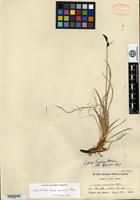
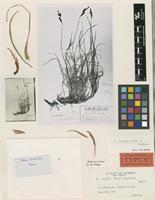
Isotype of Carex consimilis Holm [family CYPERACEAE]
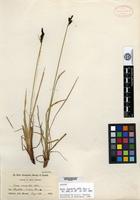
not on sheet of Carex consimilis Holm [family CYPERACEAE]
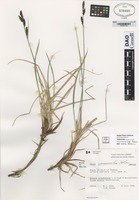
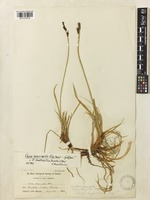
Isotype of Carex consimilis Holm [family CYPERACEAE]
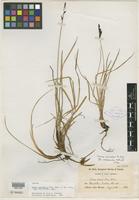
Type of Carex consimilis T.Holm [family CYPERACEAE]
Carex lugens Holm [family CYPERACEAE]
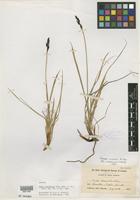
Isotype of Carex consimilis Holm [family CYPERACEAE]
Previous
Next

Name

Identification
Isotype of Carex consimilis Holm [family CYPERACEAE ] (stored under name); Verified by Holm, 1904
Related name
  • Carex consimilis
  • Carex bigelowii

Flora

Entry for Carex bigelowii Torrey ex Schweinitz subsp. lugens (T. Holm) T. V. Egorova [family CYPERACEAE]
Herbarium
Flora of North America (FNA)
Collection
Flora of North America
Resource Type
Reference Sources
Entry From
Flora of North America, Vol 23,
Names
Carex bigelowii Torrey ex Schweinitz subsp. lugens (T. Holm) T. V. Egorova [family CYPERACEAE], Novosti Sist. Vyssh. Rast., 10: 104. 1973
Carex lugens T. Holm [family CYPERACEAE], Amer. J. Sci., 160: 269, figs. A–D. 1900
Carex consimilis T. Holm [family CYPERACEAE]
Carex cyclocarpa T. Holm [family CYPERACEAE]
Carex yukonensis Britton [family CYPERACEAE]
Treatment Author(s)
Peter W. Ball
A. A. Reznicek
Information
Plants usually cespitose. Proximal pistillate spike densely flowered, base cuneate, less often attenuate. Perigynia green, uniformly purple-black on apical 1/2, 1.5–2.9 × 0.9–2 mm; stipe 0–0.15 mm, apex rounded or acute, strongly to minutely papillose. 2n = 80 (Asia).
Phenology Fruiting
aug
summer
sep
fall
Altitude range
0–1500 m;
Distribution
Asia (Siberia).Asia (Russian Far East).USA AlaskaCanada B.C.Canada N.W.T.Canada NunavutCanada Yukon
Discussion
The chromosome number reported for Carex bigelowii subsp. lugens from eastern Asia indicates that there may be a significant genetic difference between populations of the two regions.
Most floras (I. L. Wiggins and J. H. Thomas 1962; E. Hultén 1968; A. E. Porsild and W. J. Cody 1980) recognize two species, C. lugens and C. consimilis, in the western Arctic, with greater affinities to the eastern Asian members of the complex than to the eastern C. bigelowii. These treatments usually separate C. lugens by the cespitose habit, leaves less than 2 mm wide, and setaceous proximal bract. Careful study of the complex indicates that although there are cespitose and rhizomatous morphs, leaf width, bract width, perigynium size and shape all vary considerably within and between populations and variation is not correlated with habit. It is not known whether variation in habit is due to genetic differences or merely to plant responses to differences in substrate and soil moisture. Long-rhizomatous plants tend to occur in dry tundra, and short-rhizomatous plants tend to occur in wet, peaty muskeg. For that reason, the group is recognized as a single taxon that clearly needs further study.
Carex bigelowii subsp. lugens may intergrade or hybridize with C. scopulorum at the southern edge of the range in the Yukon, as indicated by the wider leaves and large range of variation in the area. Carex sphacelata T. Holm and C. chionophila T. Holm, also described from the Yukon, appear to be hybrids between C. bigelowii subsp. lugens and C. aquatilis.

Related Materials

  • Terms and Conditions
  • Privacy Policy
  • Cookie Policy
  • Cookie Settings
  • Accessibility
  • Help
  • Contact Us
  • Facebook
  • Twitter
ITHAKA

JSTOR is part of ITHAKA, a not-for-profit organization helping the academic community use digital technologies to preserve the scholarly record and to advance research and teaching in sustainable ways.

©2000-2026 ITHAKA. All Rights Reserved. JSTOR®, the JSTOR logo, JPASS®, Aluka®, and ITHAKA® are registered trademarks of ITHAKA.

╳