JSTOR Global Plants Home
  • Home
  • Browse
  • About
  • Access
  • Account
    • Saved Items
    • Profile
  • Log in

Global Plants

Skip to Main Content
  • JSTOR Global Plants Home
  • Global Plants

    • Browse
    • About
    • Access
    • Account
      • Saved Items
      • Profile
Log in
  • Browse
  • About
  • Access
  • Account
    • Saved Items
    • Profile
Advanced Search

Compilation
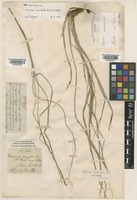
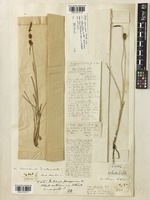
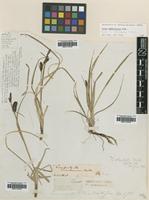
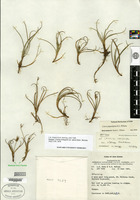
Carex compacta

13 Images see all

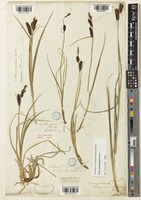
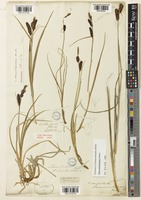
Type of Carex membranacea Hook. [family CYPERACEAE]
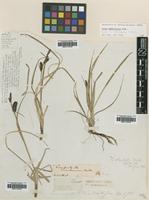
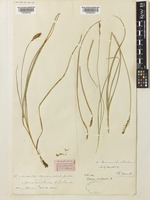
Type? of Carex compacta (R.Br.) Poir. [family CYPERACEAE]
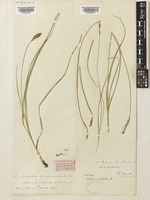
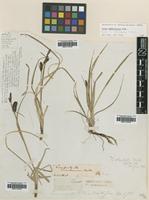
Uncinia compacta R.Br. [family CYPERACEAE]
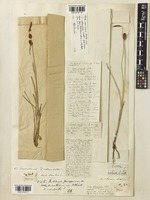
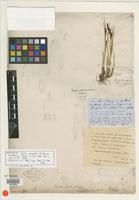
Carex rotundata Wahlenb. [family CYPERACEAE]
Carex membranacea Hook. [family CYPERACEAE]
Uncinia compacta R.Br. [family CYPERACEAE]
Type? of Carex compacta (R.Br.) Poir. [family CYPERACEAE]
Lectotype of Carex compacta R. Br. [family CYPERACEAE]
Carex vesicaria L. subsp. saxatilis (L.) Kük. [family CYPERACEAE]
Uncinia uncinata (L.f.) Kük. [family CYPERACEAE]
Carex rotundata Wahlenb. [family CYPERACEAE]
Type? of Carex compacta (R.Br.) Poir. [family CYPERACEAE]
Isotype of Uncinia compacta R. Brown var. alpina Nooteboom [family CYPERACEAE]
Previous
Next

Name

Identification
Carex compacta (R.Br.) Poir. [family CYPERACEAE ] Carex membranacea Hook. [family CYPERACEAE ] (stored under name); Verified by Bruce Austin Ford, Carex rotundata Wahlenb. [family CYPERACEAE ] Verified by Bruce Austin Ford,
Related name
  • Carex rotundata
  • Carex membranacea
  • Carex compacta
Common name
  • Carex saxatile, Flora of North America Vol. 23

Flora

Entry for Carex saxatilis Linnaeus [family CYPERACEAE]
Herbarium
Flora of North America (FNA)
Collection
Flora of North America
Resource Type
Reference Sources
Entry From
Flora of North America, Vol 23,
Names
Carex saxatilis Linnaeus [family CYPERACEAE], Sp. Pl., 2: 976. 1753
Carex ambusta Boott [family CYPERACEAE]
Carex compacta R. Brown ex Dewey [family CYPERACEAE]
Carex miliaris Michaux [family CYPERACEAE]
Carex physocarpa C. Presl [family CYPERACEAE]
Carex rhomalea (Fernald) Mackenzie [family CYPERACEAE]
Treatment Author(s)
Peter W. Ball
A. A. Reznicek
Information
Plants usually loosely cespitose; rhizomes short, congested. Culms trigonous in cross section, 8–90 cm, scabrous distally. Leaves: basal sheaths reddish brown; ligules as wide as to slightly longer than wide; blades mid to dark green, V-shaped, sometimes with revolute margins, 0.9–6.3 mm wide, glabrous. Inflorescences 2.5–14(–20) cm; proximal bract 0.6–16(–29) cm, shorter than or equaling inflorescence; proximal 1–3 spikes pistillate, erect or the proximal often pendent; terminal 1–3 spikes staminate. Pistillate scales ovate, 1.9–4.3(–5) × 0.9–2.1 mm, as long as or shorter than perigynia, margins entire, apex obtuse or acute, awnless. Perigynia ascending, often dark-colored, obscurely few-veined, veins not running to beak, tightly investing achene, elliptic, 2.2–5.5 × 1.1–2.9 mm, apex abruptly contracted; beak 0.2–0.8 mm, bidentulate, teeth straight, to 0.3 mm. Stigmas 2. Achenes yellow, biconvex, smooth. 2n = 78, 80.
Phenology Fruiting
summer
jun
jul
aug
Altitude range
0–3700 m;
Distribution
GreenlandSt. Pierre and MiquelonEurasia.USA AlaskaUSA Colo.USA MaineUSA Mont.USA UtahUSA Wash.USA Wyo.Canada Alta.Canada B.C.Canada Man.Canada N.B.Canada Nfld. and Labr.Canada N.W.T.Canada N.S.Canada NunavutCanada Ont.Canada Que.Canada Sask.Canada Yukon
Discussion
Carex saxatilis is highly variable in North America. Plants from western North America, often named C. physocarpa, tend to be robust with long peduncles on the pistillate spikes, wide leaves, and large perigynia. These characters decrease in size eastward across North America with successively smaller plants usually referred to as C. saxatilis and C. miliaris. This weak east/west cline is confounded by large amounts of variation within small geographic areas and phenotypic plasticity. B. A. Ford et al. (1991) and B. A. Ford and P. W. Ball (1992) have demonstrated that these segregates represent elements in a continuum rather than discrete taxa.
Hybrids between Carex saxatilis and C. vesicaria (= C. ×stenolepis Lessing; = C. ×mainensis Porter ex Britton) and C. saxatilis and C. utriculata (= C. ×physocarpoides Lepage) have been found in North America (B. A. Ford et al. 1993). These hybrids are infrequent, largely sterile, and intermediate in morphology between the two parents.

Related Materials

  • Terms and Conditions
  • Privacy Policy
  • Cookie Policy
  • Cookie Settings
  • Accessibility
  • Help
  • Contact Us
  • Facebook
  • Twitter
ITHAKA

JSTOR is part of ITHAKA, a not-for-profit organization helping the academic community use digital technologies to preserve the scholarly record and to advance research and teaching in sustainable ways.

©2000-2026 ITHAKA. All Rights Reserved. JSTOR®, the JSTOR logo, JPASS®, Aluka®, and ITHAKA® are registered trademarks of ITHAKA.

╳