JSTOR Global Plants Home
  • Home
  • Browse
  • About
  • Access
  • Account
    • Saved Items
    • Profile
  • Log in

Global Plants

Skip to Main Content
  • JSTOR Global Plants Home
  • Global Plants

    • Browse
    • About
    • Access
    • Account
      • Saved Items
      • Profile
Log in
  • Browse
  • About
  • Access
  • Account
    • Saved Items
    • Profile
Advanced Search

Compilation
Carex capitata

10 Images see all

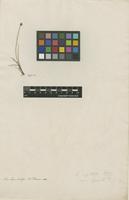
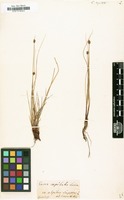
Filed as Carex capitata L. [family CYPERACEAE]
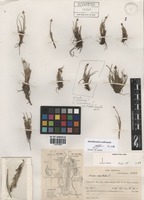
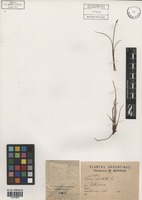
Isotype of Carex arctogena Harry Sm. [family CYPERACEAE]
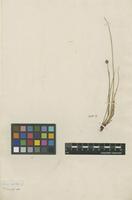
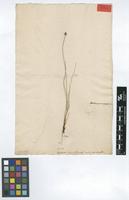
Filed as Carex capitata [family CYPERACEAE]
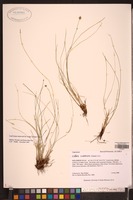
Carex capitata L. [family CYPERACEAE]
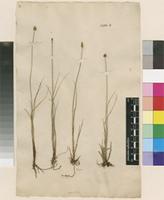
Lectotype of Carex capitata L. [family CYPERACEAE]
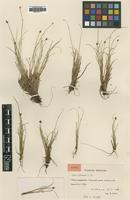
Filed as Carex capitata [family CYPERACEAE]
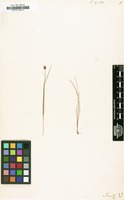
Carex capitata L. [family CYPERACEAE]
Filed as Carex capitata [family CYPERACEAE]
Previous
Next

Name

Identification
Carex capitata L. [family CYPERACEAE ] (stored under name); Isotype of Carex arctogena Harry Sm. [family CYPERACEAE ]
Related name
  • Carex capitata
  • Carex arctogena
Common name
  • Carex capité, Flora of North America Vol. 23

Flora

Entry for Carex capitata Linnaeus [family CYPERACEAE]
Herbarium
Flora of North America (FNA)
Collection
Flora of North America
Resource Type
Reference Sources
Entry From
Flora of North America, Vol 23,
Names
Carex capitata Linnaeus [family CYPERACEAE], Syst. Nat. ed., 10, 2: 1261. 1759
Carex arctogena Harry Smith [family CYPERACEAE]
Carex capitata var. arctogena (Harry Smith) Hultén [family CYPERACEAE]
Carex capitata subsp. arctogena (Harry Smith) Böcher [family CYPERACEAE]
Treatment Author(s)
Peter W. Ball
A. A. Reznicek
Information
Pistillate scales ovate, as long as or much shorter than the perigynia, margins narrowly or broadly hyaline. Perigynia 2–4 × 1.5–1.8 mm, distal margins smooth; beak smooth or sparingly serrulate. 2n = 50.
Phenology Fruiting
jul
summer
aug
Altitude range
20–3400 m;
Distribution
GreenlandMexicoSouth AmericaEurasia.USA AlaskaUSA Calif.USA Colo.USA Mont.USA Nev.USA N.H.USA Wyo.Canada Alta.Canada B.C.Canada Man.Canada Nfld. and Labr.Canada N.W.T.Canada NunavutCanada Ont.Canada Que.Canada Sask.Canada Yukon
Discussion
A. Cronquist (1969) placed Carex capitata in Utah; the species is not listed by B. J. Albee et al. (1988), nor have specimens been seen from there.
In Scandinavia (L. Reinhammar 1999) and Russia (T. V. Egorova 1999), Carex arctogena is distinguished from C. capitata on ecologic and morphologic grounds and also by allozymes at the rank of species. In North America the distinctions are not clear; two taxa can be observed, but there are also numerous specimens of uncertain determination. When making new collections, it is important to evaluate the differences seen elsewhere and to pay close attention to habitat and habit (see below). Separate status at some rank may be appropriate for the taxon “arctogena” in North America too. If C. antarctogena Roivainen from Tierra del Fuego is placed within C. capitata as D. M. Moore and A. O. Chater (1971) and D. M. Moore (1983) have done, then the species occurs at both the northern and the southern extremes of the Americas.
Carex capitata and C. arctogena differ in habitat (boreal mires versus alpine heaths), habit (mat-forming versus tufted), and morphology of the pistillate scales (much shorter and narrower than perigynia and with narrow hyaline margins versus as long as perigynia and with broad hyaline margins) and perigynia (beak gradually formed and smooth versus beak and may be sparingly serrulate).

Related Materials

  • Terms and Conditions
  • Privacy Policy
  • Cookie Policy
  • Cookie Settings
  • Accessibility
  • Help
  • Contact Us
  • Facebook
  • Twitter
ITHAKA

JSTOR is part of ITHAKA, a not-for-profit organization helping the academic community use digital technologies to preserve the scholarly record and to advance research and teaching in sustainable ways.

©2000-2026 ITHAKA. All Rights Reserved. JSTOR®, the JSTOR logo, JPASS®, Aluka®, and ITHAKA® are registered trademarks of ITHAKA.

╳