JSTOR Global Plants Home
  • Home
  • Browse
  • About
  • Access
  • Account
    • Saved Items
    • Profile
  • Log in

Global Plants

Skip to Main Content
  • JSTOR Global Plants Home
  • Global Plants

    • Browse
    • About
    • Access
    • Account
      • Saved Items
      • Profile
Log in
  • Browse
  • About
  • Access
  • Account
    • Saved Items
    • Profile
Advanced Search

Compilation
Carex brevior

14 Images see all

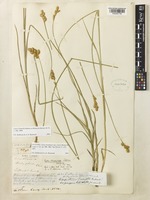
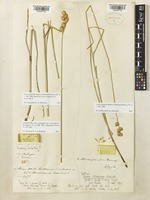
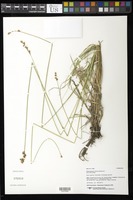
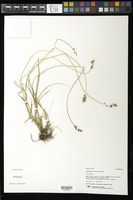
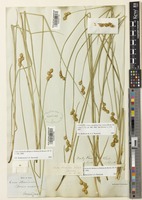
Syntype of Carex straminea unrecorded var. crawei Boott [family CYPERACEAE]
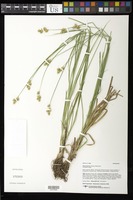
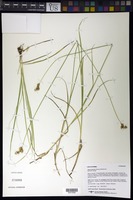
Carex brevior (Dewey) Mack. ex Lunell [family CYPERACEAE]
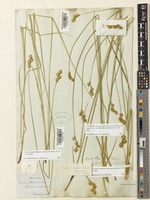
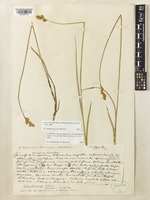
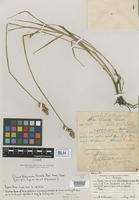
Lectotype of Carex straminea unrecorded var. crawei Boott [family CYPERACEAE]
Syntype of Carex straminea unrecorded var. crawei Boott [family CYPERACEAE]
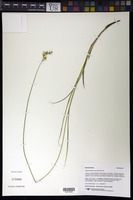
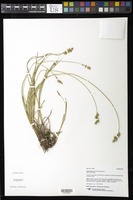
Carex brevior (Dewey) Mack. ex Lunell [family CYPERACEAE]
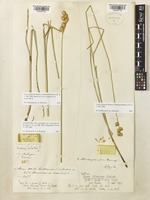
Filed as Carex straminea Willd. in Schkuhr var. maxima L.H.Bailey [family CYPERACEAE]
Carex brevior (Dewey) Mack. ex Lunell [family CYPERACEAE]
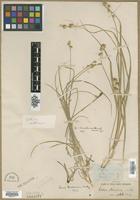
Type of Carex brevior (Dewey) Mack. var. pseudofestucacea Farw. [family CYPERACEAE]
Carex brevior (Dewey) Mack. ex Lunell [family CYPERACEAE]
Syntype of Carex straminea unrecorded var. crawei Boott [family CYPERACEAE]
Previous
Next

Name

Identification
Carex brevior (Dewey) Mack. [family CYPERACEAE ] (stored under name); Verified by Not on sheet, Carex brevior (Dewey) Mack. [family CYPERACEAE ] Verified by Not on sheet,
Related name
  • Carex brevior
  • Carex straminea
  • Carex sp.
Common name
  • Carex de Fernald, Flora of North America Vol. 23
  • Carex à têtes, Flora of North America Vol. 23

Flora

Entry for Carex brevior (Dewey) Mackenzie ex Lunell [family CYPERACEAE]
Herbarium
Flora of North America (FNA)
Collection
Flora of North America
Resource Type
Reference Sources
Entry From
Flora of North America, Vol 23,
Names
Carex brevior (Dewey) Mackenzie ex Lunell [family CYPERACEAE], Amer. Midl. Naturalist, 4: 235. 1915
Carex straminea Willdenow ex Schkuhr var. brevior Dewey [family CYPERACEAE], Amer. J. Sci. Arts, 11: 158. 1826
Treatment Author(s)
Peter W. Ball
A. A. Reznicek
Information
Plants densely cespitose; rhizomes sometimes short-prolonged, appearing elongate in old clumps. Culms 15–120 cm; vegetative culms few, inconspicuous, usually fewer than 15 leaves, not strikingly 3-ranked. Leaves: sheaths adaxially white-hyaline, summits U-shaped or sometimes prolonged to 2 mm beyond collar and rounded, smooth; distal ligules 2.2–3.5 mm; blades 3–5 per fertile culm, 12–30 cm × 1.5–3.5 mm. Inflorescences open, brown, (1.3–)2.5–5(–6.5) cm × 5–18 mm; proximal internode (3–)6–13(–23) mm; 2d internode 2–12 mm; proximal bracts scalelike or bristlelike, shorter than inflorescences. Spikes (3–)4–7, 5–7 on larger culms, distant, distinct, ovoid to ellipsoid, 7–17(–24) × 4–8(–12) mm, base attenuate or rarely rounded, apex acute to rounded; terminal spike usually with conspicuous staminate base. Pistillate scales white-hyaline, tinged reddish brown, usually with whitish, pale gold, or green midstripe, broadly lanceolate to narrowly ovate, 2.6–4.3 mm, as long as to 0.7–0.9 mm shorter than perignyium beaks, narrower than perigynia, margins thin, sometimes involute, apex mostly acute. Perigynia (10–)15–40(–45) per spike, ascending-spreading, green or reddish brown, veinless or faintly and irregularly 1–5-veined adaxially, orbiculate or broadly ovate, plano-convex, (2.6–)3.4–4.8(–5.2) × (2–)2.3–3.2 mm, 0.5–0.6 mm thick, 1.2–1.8 times as long as wide, nearly leathery, margin flat, including wing 0.3–0.8 mm wide, ciliate-serrulate at least distally, smooth; beak pale green or brown at tip, flat, ± ciliate-serrulate, abaxial suture with gold or reddish brown-hyaline margin, distance from beak tip to achene 1.5–2.4 mm. Achenes orbiculate to broadly ovate, 1.5–2.2 × 1.3–1.8 mm, 0.5–0.6 mm thick. 2n = 48, 52, 56, 60, 64, 68.
Altitude range
0–2700 m;
Distribution
Mexico (Tamaulipas).USA Ariz.USA Ark.USA Colo.USA Conn.USA Del.USA D.C.USA Ga.USA IdahoUSA Ill.USA Ind.USA IowaUSA Kans.USA Ky.USA MaineUSA Mass.USA Mich.USA Minn.USA Miss.USA Mo.USA Mont.USA Nebr.USA N.H.USA N.J.USA N.Mex.USA N.Y.USA N.C.USA N.Dak.USA OhioUSA Okla.USA Pa.USA R.I.USA S.Dak.USA Tenn.USA Tex.USA Vt.USA Va.USA Wash.USA W.Va.USA Wis.USA Wyo.Canada Alta.Canada B.C.Canada Man.Canada Ont.Canada Que.Canada Sask.
Discussion
Carex brevior seems to display an unusually broad, aneuploid chromosome series that does not readily correlated with any features of external morphology (P. E. Rothrock and A. A. Reznicek 1998). The chromosome variation may, however, have a geographic relationship. Among the plants observed, the lowest number came from northeast Texas while the highest number (n = 34) came from Manitoba (Á. Löve and D. Löve 1981b).
Records of Carex brevior from ruderal habitats east and south of its main range are likely introductions.

Related Materials

  • Terms and Conditions
  • Privacy Policy
  • Cookie Policy
  • Cookie Settings
  • Accessibility
  • Help
  • Contact Us
  • Facebook
  • Twitter
ITHAKA

JSTOR is part of ITHAKA, a not-for-profit organization helping the academic community use digital technologies to preserve the scholarly record and to advance research and teaching in sustainable ways.

©2000-2026 ITHAKA. All Rights Reserved. JSTOR®, the JSTOR logo, JPASS®, Aluka®, and ITHAKA® are registered trademarks of ITHAKA.

╳