JSTOR Global Plants Home
  • Home
  • Browse
  • About
  • Access
  • Account
    • Saved Items
    • Profile
  • Log in

Global Plants

Skip to Main Content
  • JSTOR Global Plants Home
  • Global Plants

    • Browse
    • About
    • Access
    • Account
      • Saved Items
      • Profile
Log in
  • Browse
  • About
  • Access
  • Account
    • Saved Items
    • Profile
Advanced Search

Compilation
Carex atratiformis

7 Images see all

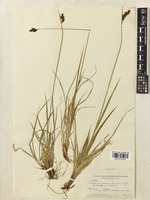
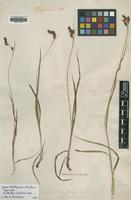
Carex atratiformis Britton [family CYPERACEAE]
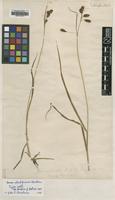
Type of Carex atratiformis Britton [family CYPERACEAE]
Filed as Carex atratiformis [family CYPERACEAE]
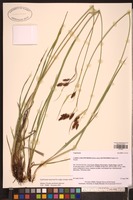
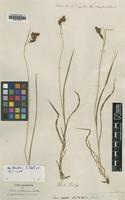
Isotype of Carex raymondii Calder [family CYPERACEAE]
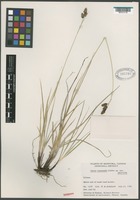
Type of Carex atratiformis Britton [family CYPERACEAE]
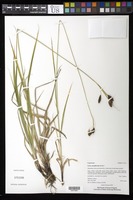
Carex atratiformis Britton [family CYPERACEAE]
Previous
Next

Name

Identification
Carex atratiformis Britton [family CYPERACEAE ] (stored under name); Verified by (Joseph Albert) Ernest Rouleau, Carex ovata Burm.f. [family CYPERACEAE ]
Related name
  • Carex ovata
  • Carex atratiformis
Common name
  • Carex atratiforme, Flora of North America Vol. 23

Flora

Entry for Carex atratiformis Britton [family CYPERACEAE]
Herbarium
Flora of North America (FNA)
Collection
Flora of North America
Resource Type
Reference Sources
Entry From
Flora of North America, Vol 23,
Names
Carex atratiformis Britton [family CYPERACEAE], Bull. Torrey Bot. Club, 22: 222. 1895
Carex ovata Rudge [family CYPERACEAE], Trans. Linn. Soc. London, 7: 96, plate 9, fig. 1. 1804,. not Burman f. 1768
Carex atrata Linnaeus subsp. atratiformis (Britton) Kükenthal [family CYPERACEAE]
Carex atratiformis subsp. raymondii (Calder) A. E. Porsild [family CYPERACEAE]
Carex raymondii Calder [family CYPERACEAE]
Treatment Author(s)
Peter W. Ball
A. A. Reznicek
Information
Plants loosely cespitose. Culms 20–70 cm, distally finely scabrous. Leaves 2.5–5 mm wide. Inflorescences: proximal bracts shorter than or exceeding inflorescences; spikes distinct, spreading or the proximal pendent and often separate, elongate, 10–25 × 5–8 mm; lateral 3–6 spikes pistillate, long-pendunculate; terminal spike gynecandrous. Pistillate scales light to dark brown with hyaline margins, lanceolate, longer than and as broad as perigynia, midvein same color as body, inconspicuous or lighter in color, conspicuous, raised, prominent, sometimes short-mucronate. Perigynia ascending, yellow brown or chestnut, veinless, ovate or elliptic, 2.5–3 × 1.5–1.75 mm, apex abruptly beaked, distally papillose; beak 0.4–0.5 mm, bidentate, smooth. Achenes filling proximal 1/2 or less of perigynia.
Phenology Fruiting
jun
summer
jul
aug
Altitude range
10–1500 m;
Distribution
USA AlaskaUSA MaineUSA Mich.USA N.H.USA N.Y.USA Vt.Canada Alta.Canada B.C.Canada Man.Canada N.B.Canada Nfld. and Labr.Canada N.W.T.Canada N.S.Canada Ont.Canada Que.Canada Sask.Canada Yukon
Discussion
Carex raymondii is a minor variant consisting of specimens with yellow-brown perigynia and light brown scales with midribs lighter in color than the bodies of the scales. The hybrid taxon Carex ×quirponensis Fernald (= C. atratiformis × C. norvegica) is known from Newfoundland and Quebec.

Related Materials

  • Terms and Conditions
  • Privacy Policy
  • Cookie Policy
  • Cookie Settings
  • Accessibility
  • Help
  • Contact Us
  • Facebook
  • Twitter
ITHAKA

JSTOR is part of ITHAKA, a not-for-profit organization helping the academic community use digital technologies to preserve the scholarly record and to advance research and teaching in sustainable ways.

©2000-2026 ITHAKA. All Rights Reserved. JSTOR®, the JSTOR logo, JPASS®, Aluka®, and ITHAKA® are registered trademarks of ITHAKA.

╳