JSTOR Global Plants Home
  • Home
  • Browse
  • About
  • Access
  • Account
    • Saved Items
    • Profile
  • Log in

Global Plants

Skip to Main Content
  • JSTOR Global Plants Home
  • Global Plants

    • Browse
    • About
    • Access
    • Account
      • Saved Items
      • Profile
Log in
  • Browse
  • About
  • Access
  • Account
    • Saved Items
    • Profile
Advanced Search

Compilation
Carduus osterhoutii

5 Images see all

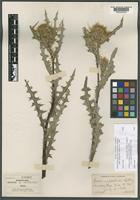
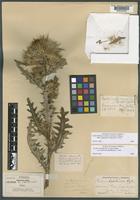
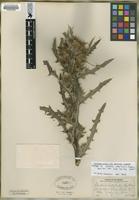
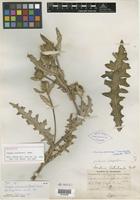
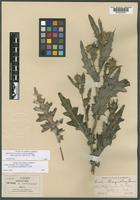
Paratype of Carduus osterhoutii Rydb. [family ASTERACEAE]
Paratype of Carduus osterhoutii [family ASTERACEAE]
Holotype of Carduus osterhoutii Rydb. [family ASTERACEAE]
Isotype of Carduus osterhoutii Rydb. [family ASTERACEAE]
Previous
Next

Name

Identification
Carduus osterhoutii Rydb. [family ASTERACEAE ] (stored under name); Verified by Not on sheet,
Related name
  • Carduus parryi
  • Cirsium clavatum
  • Carduus hookerianus
  • Carduus osterhoutii
Common name
  • Osterhout’s thistle, Flora of North America Vol. 19

Flora

Entry for Cirsium clavatum (M. E. Jones) Petrak var. osterhoutii (Rydberg) D. J. Keil [family COMPOSITAE]
Herbarium
Flora of North America (FNA)
Collection
Flora of North America
Resource Type
Reference Sources
Entry From
Flora of North America, Vol 19,
Names
Cirsium clavatum (M. E. Jones) Petrak var. osterhoutii (Rydberg) D. J. Keil [family COMPOSITAE], Sida, 21: 212. 2004
Carduus osterhoutii Rydberg [family COMPOSITAE], Bull. Torrey Bot. Club, 32: 131. 1905
Cirsium osterhoutii (Rydberg) Petrak [family COMPOSITAE]
Cirsium araneans Rydberg [family COMPOSITAE]
Treatment Author(s)
David J. Keil
Information
Abaxial leaf faces ± tomentose. Involucres ovoid to campanulate, 2–2.8 × 1.5–3 cm, villous-ciliate with long septate trichomes connecting adjacent phyllaries and/or thinly arachnoid-tomentose. Phyllaries in 5–6 series, imbricate or subequal, green or with maroon to dark brown subapical patch or appendage, linear to linear-lanceolate, abaxial faces with narrow glutinous ridge that is often concealed by trichomes; outer and middle bases appressed, apical appendages erect or stiffly ascending, linear-lanceolate to acicular, entire or spinulose-dentate, spines erect or ascending, 2–5 mm; apices of inner sometimes flexuous or reflexed, narrow, flat, and entire or expanded, scarious, and lacerate-dentate.
Phenology
jun-aug (summer)
Altitude range
3000–3600 m;
Distribution
USA Colo.
Discussion
The densely pubescent involucre of var. osterhoutii is a feature that links those plants with Cirsium eatonii var. eriocephalum. Some specimens tentatively assigned to C. clavatum var. osterhoutiii may be derivatives of past introgression with C. eatonii var. eriocephalum. Congested heads and strongly undulate leaves with numerous closely spaced lobes are features that suggest such a relationship. Further studies at both population and regional levels are needed to establish the nature of the variation patterns. Where I have observed var. osterhoutii in the field, populations appeared to be morpologically stable, and there was no evidence of current introgression with C. eatonii.

Related Materials

  • Terms and Conditions
  • Privacy Policy
  • Cookie Policy
  • Cookie Settings
  • Accessibility
  • Help
  • Contact Us
  • Facebook
  • Twitter
ITHAKA

JSTOR is part of ITHAKA, a not-for-profit organization helping the academic community use digital technologies to preserve the scholarly record and to advance research and teaching in sustainable ways.

©2000-2026 ITHAKA. All Rights Reserved. JSTOR®, the JSTOR logo, JPASS®, Aluka®, and ITHAKA® are registered trademarks of ITHAKA.

╳