JSTOR Global Plants Home
  • Home
  • Browse
  • About
  • Access
  • Account
    • Saved Items
    • Profile
  • Log in

Global Plants

Skip to Main Content
  • JSTOR Global Plants Home
  • Global Plants

    • Browse
    • About
    • Access
    • Account
      • Saved Items
      • Profile
Log in
  • Browse
  • About
  • Access
  • Account
    • Saved Items
    • Profile
Advanced Search

Compilation
Cardiospermum pechuelii

3 Images see all

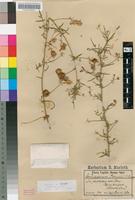
Isotype of Cardiospermum pechuelii Kuntze [family SAPINDACEAE]
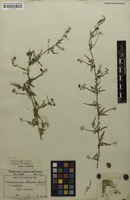
Filed as Cardiospermum pechuelii Kuntze [family SAPINDACEAE]
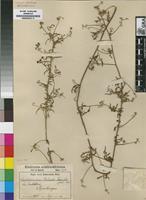
Type? of Cardiospermum pechuelii Kuntze [family SAPINDACEAE]
Previous
Next

Name

Identification
Cardiospermum pechuelii Kuntze [family SAPINDACEAE ] Verified by Not on sheet, Cardiospermum corindum L. [family SAPINDACEAE ] (stored under name); Verified by Not on sheet,
Related name
  • Cardiospermum corindum
  • Cardiospermum pechuelii

Flora

Entry for Cardiospermum corindum L. [family SAPINDACEAE]
Herbarium
Royal Botanic Gardens, Kew (K)
Collection
Flora Zambesiaca
Resource Type
Reference Sources
Entry From
FZ, Vol 2, Part 2, page 494, (1966) Author: A. W. Exell
Names
Cardiospermum pechuelii Kuntze [family SAPINDACEAE], in Jahrb. Königl. Bot. Gart. Berl. 4: 262 (1886). Type from SW. Africa.
Cardiospermum corindum forma pechuelii Kuntze Radlk. [family SAPINDACEAE], in Mart., Fl. Bras. 13, 3: 448 (1897). Type as above.
Cardiospermum alatum Bremek. & Oberm. [family SAPINDACEAE], in Ann. Transv. Mus. 16: 422 (1935). Type: Bechuanaland Prot., Ngami, van Son in Herb. Transv. Mus. 29000 (PRE, holotype).
Cardiospermum corindum L. [family SAPINDACEAE], Sp. Pl. ed. 2: 526 (1762). — Gibbs in Journ. Linn. Soc., Bot. 37: 436 (1906). — Eyles in Trans. Roy. Soc. S. Afr. 5: 405 (1916). — Radlk. in Engl., Pflanzenr. IV, 165, 1, 2: 397 (1932). — Steedman, Trees etc. S. Rhod.: 43 (1933). — Exell & Mendonça, C.F.A. 2, 1: 75 (1954). Type from Brazil.
Information
Annual herbaceous or slightly woody climber, densely puberulous; internodes 4–8(11) cm. long. Leaves pinnate to biternate; petiole 0·5–3(4·5) cm. long; rhachis 1–3 cm. long. Leaflets with lowest pair ternate, terminal one 2–4 × 1–2 (2·3) cm., lateral ones 2–3·5 × 1–2 cm., lamina with upper surface bright green and under surface grey-green with raised venation, puberulous, apex obtuse and apiculate, margin crenate to lobed, base attenuate. Inflorescence an axillary many-branched numerous-flowered corymbose thyrse; peduncle c. 6 cm. long, pubescent, multibracteate. Flowers white to creamy yellow, 4–6 mm. long. Sepals with lateral ones c. 1 mm. long, anterior and posterior ones c. 3 mm. long, ovate. Petals 4–5 mm. long, 2 anterior ones ovate with small petaloid appendages, 2 posterior ones ovate bearing recurved appendages with clavate apices covered with patent hairs which cause them to cohere. Stamens with the filaments of the inner ones slightly shorter; filaments free. Ovary hirsute. Fruit 2–3·6 cm. long, 3-gonous or 3-quetrous. Seed 5 mm. in diam., globose; hilum reniform.
Habitat
Margins of rivers and lower altitude savannas.
Range
Widespread in tropical and subtropical regions; in our area confined mainly to the Limpopo, Lundi-Sabi and Upper Zambezi river valleys
Altitude range
800
0
inferred from low
Distribution
Zimbabwe S 3·2 km. from Beitbridge on West Nicholson Road, fl. 15.ii.1955, E.M. & W. 411(BM; LISC; SRGH).Zimbabwe E Birchenough Bridge, fl. & fr. i.1938, Obermeyer 2432 (SRGH).Zambia C Lusaka, fl. 26.i.1957, Noak 74 (SRGH).Zimbabwe W Matopos, fl. & fr. iii.1918, Eyles 999 (BM; SRGH).Zambia B Sesheke, fl. 25.i.1952, White 1958 (BM; FHO; K).Botswana N Francistown, fl. i.1926, Rand 45 (BM).Caprivi Strip Singalamwe, fl. 1.i.1959, Killick & Leistner 3248 (SRGH).
Notes
Radlkofer (loc. cit.) divides this species into 14 forms which are difficult to separate satisfactorily. He places all the specimens cited from our area in forma pechuelii (loc. cit.) which, if distinct, seems to be confined to SW. Africa.

Related Materials

  • Terms and Conditions
  • Privacy Policy
  • Cookie Policy
  • Cookie Settings
  • Accessibility
  • Help
  • Contact Us
  • Facebook
  • Twitter
ITHAKA

JSTOR is part of ITHAKA, a not-for-profit organization helping the academic community use digital technologies to preserve the scholarly record and to advance research and teaching in sustainable ways.

©2000-2026 ITHAKA. All Rights Reserved. JSTOR®, the JSTOR logo, JPASS®, Aluka®, and ITHAKA® are registered trademarks of ITHAKA.

╳