JSTOR Global Plants Home
  • Home
  • Browse
  • About
  • Access
  • Account
    • Saved Items
    • Profile
  • Log in

Global Plants

Skip to Main Content
  • JSTOR Global Plants Home
  • Global Plants

    • Browse
    • About
    • Access
    • Account
      • Saved Items
      • Profile
Log in
  • Browse
  • About
  • Access
  • Account
    • Saved Items
    • Profile
Advanced Search

Compilation
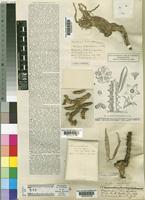
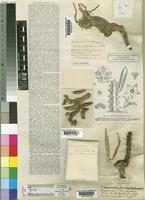
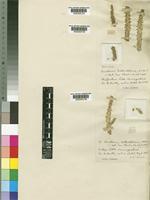
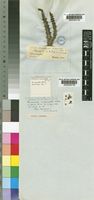
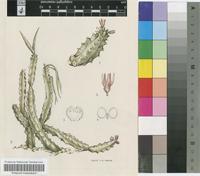
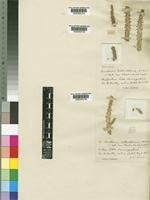
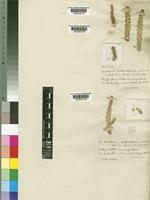
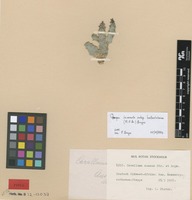
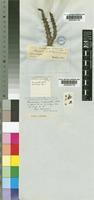
Caralluma incarnata

9 Images see all

Quaqua incarnata (L.f.) Bruyns var. incarnata [family ASCLEPIADACEAE]
Quaqua incarnata (L.f.) Bruyns [family ASCLEPIADACEAE]
Caralluma incarnata (L.f.) N.E.Br.
Quaqua incarnata (L.f.) Bruyns var. incarnata [family ASCLEPIADACEAE]
Isoneotype of Caralluma ausana Dinter & A.Berger [family APOCYNACEAE]
Quaqua incarnata (L.f.) Bruyns [family ASCLEPIADACEAE]
Previous
Next

Name

Identification
Caralluma incarnata (L.f.) N.E.Br. [family APOCYNACEAE ]
Related name
  • Caralluma incarnata

Flora

Entry for CARALLUMA incarnata N. E. Br. [family ASCLEPIADACEAE]
Herbarium
Royal Botanic Gardens, Kew (K)
Collection
Flora Capensis
Resource Type
Reference Sources
Entry From
Flora Capensis, Vol 4, page 518, (1909) Author: By N. E. BROWN.
Names
CARALLUMA incarnata N. E. Br. [family ASCLEPIADACEAE], in Gard. Chron. 1892, xii. 369;—Schlechter in Journ. Bot. 1898, 478.
Stapelia incarnata Linn. f. [family ASCLEPIADACEAE], Suppl. 171; Thunb. Prodr. 46; Fl. Cap. ed. 2, ii. 167, and ed. Schultes, 240; Masson, Stap. 22, t. 34; Willd. Sp. Pl. i. 1289; Pers. Syn. Pl. i. 279; Poir. Encycl. Meth. vii. 386, and in Dict. Sc. Nat. l. 392; Ait. Hort. Kew. ed. 2, ii. 92; Haw. Syn. Pl. Succ. 24; Schultes, Syst. Veg. vi. 23; Spreng. Syst. Veg. i. 840; Loud. Encycl. Pl. 200, fig. 3294; Dietr. Syn. Pl. ii. 886.
Podanthes incarnata Sweet [family ASCLEPIADACEAE], Hort. Brit. ed. 2, 358.
Piaranthus incarnatus G. Don [family ASCLEPIADACEAE], Gen. Syst. iv. 114; Decne in DC. Prodr. viii. 650.
Boucerosia incarnata N. E. Br. [family ASCLEPIADACEAE], in Journ. Linn. Soc. xvii. 166, t. 11, figs. 14–17.
Euphorbium erectum, quadrangulare, spinosum, &c. Burm. [family EUPHORBIACEAE], Rar. Afr. Pl. Dec. i. 15, t. 7, fig. 1.
Information
a bushy plant a foot or more high; branches erect, 1/2– 3/4 in. thick, 4-angled, with stout conical spreading teeth 1 1/2–2 lin. long, hardened at the tips, glabrous, greyish-green (subglaucous?); flowering-cushions small, arranged along the grooves between the angles, producing “usually solitary” (Masson), “4-nate” (Thunberg) flowers, probably for 2 or more years in succession; pedicels 1/2– 3/4 lin. long, glabrous; sepals about 3/4 lin. long, ovate-lanceolate, acuminate, glabrous; corolla pale pink varying to white (Masson), with a few hairs around the mouth of the tube and at the very base of the lobes within, otherwise glabrous and not ciliate; tube about 1 lin. long, campanulate; lobes ascending-spreading, 1 1/2–1 3/4 lin. long, 1/2– 2/3 lin. broad at the base, probably larger when alive, linear-lanceolate, subacute or obtuse, convex from the sides being reflexed or recurved; outer corona-lobes about 1/4 lin. long, erect or ascending-spreading, subquadrate, bifid, with a broad notch between the teeth, not exceeding the staminal column, “yellow” (Thunberg); inner corona-lobes 1/3 lin. long, linear-subulate, acute, incumbent on the backs of the anthers and slightly exceeding them. null
Distribution
COAST REGION near Verloren Valley in Piquetberg Div. and on mountains near Compagnies Post (East India Company's Fort?) at Saldahna Bay in Malmesbury Div., Thunberg! Var. β; Clanwilliam Div.; near Lamberts Bay, Pillans 86! Malmesbury Div.; among shrubs in sandy places near Hopefield, 200 ft., only one plant found, Bolus, 10729!
Notes
Possibly Zeyher, 1146, without locality, may belong to this species, but the specimens I have seen are flowerless. The variety alba is partly described from a fresh flower preserved in fluid and may not differ from the type in anything but colour, as the flowers of Thunberg's type may have originally been as large as those of the variety, but have become greatly shrunken from being less carefully pressed.

Related Materials

  • Terms and Conditions
  • Privacy Policy
  • Cookie Policy
  • Cookie Settings
  • Accessibility
  • Help
  • Contact Us
  • Facebook
  • Twitter
ITHAKA

JSTOR is part of ITHAKA, a not-for-profit organization helping the academic community use digital technologies to preserve the scholarly record and to advance research and teaching in sustainable ways.

©2000-2026 ITHAKA. All Rights Reserved. JSTOR®, the JSTOR logo, JPASS®, Aluka®, and ITHAKA® are registered trademarks of ITHAKA.

╳