JSTOR Global Plants Home
  • Home
  • Browse
  • About
  • Access
  • Account
    • Saved Items
    • Profile
  • Log in

Global Plants

Skip to Main Content
  • JSTOR Global Plants Home
  • Global Plants

    • Browse
    • About
    • Access
    • Account
      • Saved Items
      • Profile
Log in
  • Browse
  • About
  • Access
  • Account
    • Saved Items
    • Profile
Advanced Search

Compilation
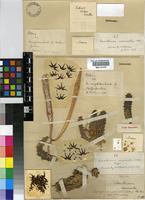
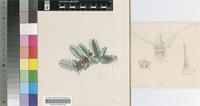
Caralluma arenicola

5 Images see all

Type of Quaqua armata (N.E.Br.) Bruyns subsp. arenicola (N.E.Br.) Bruyns [family APOCYNACEAE]
Caralluma arenicola N.E.Br.
Type of Caralluma arenicola N.E.Br. [family ASCLEPIADACEAE]
Quaqua armata (N.E.Br.) Bruyns subsp. arenicola (N.E.Br.) Bruyns [family ASCLEPIADACEAE]
Type of Quaqua armata (N.E.Br.) Bruyns subsp. arenicola (N.E.Br.) Bruyns [family APOCYNACEAE]
Previous
Next

Name

Identification
Caralluma arenicola N.E.Br. [family APOCYNACEAE ]
Related name
  • Caralluma arenicola

Flora

Entry for CARALLUMA arenicola N. E. Br. [family ASCLEPIADACEAE]
Herbarium
Royal Botanic Gardens, Kew (K)
Collection
Flora Capensis
Resource Type
Reference Sources
Entry From
Flora Capensis, Vol 4, page 518, (1909) Author: By N. E. BROWN.
Names
CARALLUMA arenicola N. E. Br. [family ASCLEPIADACEAE]
Information
plant about 3–4 in. high, with numerous erect 4-angled stems 3/4–1 in. (or more?) square, glabrous, green, slightly glaucous, branching at the base; sides flat below, grooved above; teeth very spreading, 1 1/2–2 1/2 lin. long, stout, conical, hardened at the acute tips; flowers in small clusters along the sides of the stems; pedicels 1/2–1 1/2 lin. (in fruit elongating to 1/2–1 in.) long, stout, glabrous; sepals 1 1/4–1 1/2 lin. long, 1/2 lin. broad, ovate-lanceolate, acuminate, glabrous; corolla minutely papillate-tuberculate (or rarely with very minute hairs) at the base of the lobes on their inner surface and within the tube, elsewhere smooth and glabrous, not ciliate, rich blackish-purple or “very deep maroon” (Marloth), with the base of the tube and a zone at its middle white or whitish; tube 2 lin. long, 2 lin. in diam. at the mouth inside, campanulate or cup-shaped; lobes ascending-spreading, 5–7 lin. long, 1 3/4–2 lin. broad at the base, thence tapering to the acute apex, with reflexed or replicate margins; outer corona somewhat saucer-shaped at the base, with 5 pairs of minute acute teeth about 1/4 lin. long, with or without 5 other obtuse teeth (formed by the connection with the inner corona-lobes) alternating with them, yellowish, with purple tips to the teeth; inner corona-lobes 1/2 lin. long, oblong or linear-oblong, obtuse, subtruncate or emarginate at the apex, closely incumbent upon the backs of the anthers and shorter to longer than them, but not turned up at the tips, dorsally connected at the base to the very short cup of the outer corona, yellowish, more or less marked with purple-brown on the margins and dorsal projection; follicles very slightly diverging, 5 1/2–6 1/2 in. long, 1/4 in. thick, linear-terete, tapering at the base and into an acute apex, smooth, glabrous. null
Distribution
CENTRAL REGION Laingsburg Div.; near Matjesfontein, in soft sand accumulated under bushes, Pillans, 44! 62! Prince Albert Div.; near Prince Albert, Marloth, 4581!
Notes
Mr. Pillans that the plants sometimes spread to a diameter of 2 ft., having in some cases very robust stems.

Related Materials

  • Terms and Conditions
  • Privacy Policy
  • Cookie Policy
  • Cookie Settings
  • Accessibility
  • Help
  • Contact Us
  • Facebook
  • Twitter
ITHAKA

JSTOR is part of ITHAKA, a not-for-profit organization helping the academic community use digital technologies to preserve the scholarly record and to advance research and teaching in sustainable ways.

©2000-2026 ITHAKA. All Rights Reserved. JSTOR®, the JSTOR logo, JPASS®, Aluka®, and ITHAKA® are registered trademarks of ITHAKA.

╳