JSTOR Global Plants Home
  • Home
  • Browse
  • About
  • Access
  • Account
    • Saved Items
    • Profile
  • Log in

Global Plants

Skip to Main Content
  • JSTOR Global Plants Home
  • Global Plants

    • Browse
    • About
    • Access
    • Account
      • Saved Items
      • Profile
Log in
  • Browse
  • About
  • Access
  • Account
    • Saved Items
    • Profile
Advanced Search

Compilation
Capparis brassii

10 Images see all

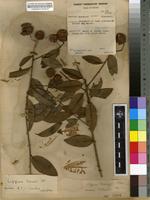
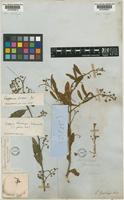
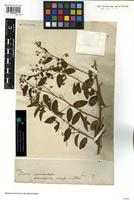
Filed as Capparis brassii DC. [family CAPPARACEAE]
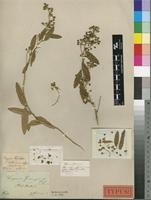
Syntype of Capparis thonningii Schumach. [family CAPPARACEAE]
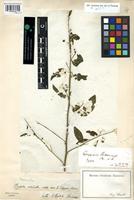
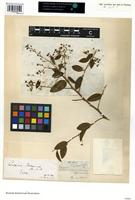
Capparis brassii DC. [family CAPPARACEAE]
Syntype of Capparis thonningii Schumach. [family CAPPARACEAE]
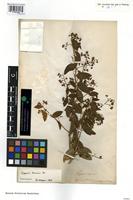
Isotype of Capparis brassii DC. [family CAPPARACEAE]
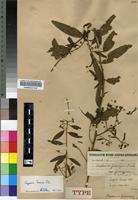
Type of Capparis brassii DC. [family CAPPARIDACEAE]
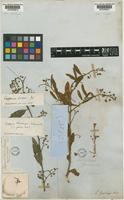
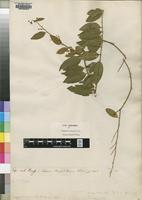
Syntype of Capparis thonningii Schumach. [family CAPPARACEAE]
Type of Capparis gueinzii Sond. [family CAPPARIDACEAE]
Previous
Next

Name

Identification
Capparis brassii DC. [family CAPPARIDACEAE ] (stored under name); Capparis brassii DC. [family CAPPARIDACEAE ]
Related name
  • Capparis citrifolia
  • Capparis thonningii
  • Jatropha aculeata
  • Capparis gueinzii
  • Capparis brassii
  • Capparis gueinezii

Flora

Entry for Capparis brassii [family CAPPARACEAE]
Herbarium
South African National Biodiversity Institute, Compton Herbarium, Cape Town (SAM)
Collection
Flora of Southern Africa
Resource Type
Reference Sources
Entry From
Flora of South Africa, (2003) Author: Dr J.P. Roux
Names
Capparis brassii [family CAPPARACEAE]
Common names
C. thonningii Schumach., Beskr. Guin. PI. 236 (1827); Oliv., F.T.A. 1 : 97 (1868); Gilg & Ben. in Bot. Jahrb. 53 : 190 (1915); Hutch. & Dalziel, F.W.T.A. 1,1 : 85 (1927). Type: Guinea, Thonning (C, holo.) C. gueinzii Sond. in F.C. 1 : 62 (1860); Gilg & Ben. in Bot. Jahrb. 53 : 191 (1915). Type: Natal, Durban, Gueinzius (S, holo.; SAM!).
Information
Scrambler or climber with long slender branches. Branches with glabrous recurved spines, pubescent, becoming glabrous. Leaves alternate, spirally arranged; lamina nar­rowly elliptic or elliptic-lanceolate, bluntly pointed, often emarginate, cuneate at the base, 3-5-6(-9) cm long, 0-7-1-5 cm broad, puberulous to glabrous, with numerous secondary veins joining the primary vein at almost right angles, with margin undulate or crisped; petiole 2-6 mm long, pubescent. Inflorescence consisting of axillary corymbs with slender peduncles 1-2 cm long; pedicels 5-8 mm long, pubescent. Sepals broadly obovate, outer and inner pair similar, 3-4 mm long, glabrous. Petals obovate to oblong, often slightly falcate, 3-5 mm long. Stamens 20-30 in male flowers, c. 10 in bisexual flowers; filaments often with long hairs. Gynophore 4-5 mm long, with white spreading hairs mainly towards the base. Ovary ovoid with 4-6 ovules; stigma papillose, capitate, almost sessile. Berry spherical 1-1-5 cm in diameter, ora
Habitat
The disjunct distribution of this species from tropical West Africa to south-east Africa is peculiar. Plants from the two areas are morphologically very similar.
Use
4. Capparis brassii DC, Prodr. 1 : 248 (1824); Wild in F.Z. 1 : 237 (1960). Type: Ghana, Brass (BM, holo.; PRE, photo.!).
Range
Occurs in coastal forests and bushveld in nor­thern Natal, Mozambique and tropical West Africa.

Related Materials

  • Terms and Conditions
  • Privacy Policy
  • Cookie Policy
  • Cookie Settings
  • Accessibility
  • Help
  • Contact Us
  • Facebook
  • Twitter
ITHAKA

JSTOR is part of ITHAKA, a not-for-profit organization helping the academic community use digital technologies to preserve the scholarly record and to advance research and teaching in sustainable ways.

©2000-2026 ITHAKA. All Rights Reserved. JSTOR®, the JSTOR logo, JPASS®, Aluka®, and ITHAKA® are registered trademarks of ITHAKA.

╳