JSTOR Global Plants Home
  • Home
  • Browse
  • About
  • Access
  • Account
    • Saved Items
    • Profile
  • Log in

Global Plants

Skip to Main Content
  • JSTOR Global Plants Home
  • Global Plants

    • Browse
    • About
    • Access
    • Account
      • Saved Items
      • Profile
Log in
  • Browse
  • About
  • Access
  • Account
    • Saved Items
    • Profile
Advanced Search

Compilation
Canthium pseudorandii

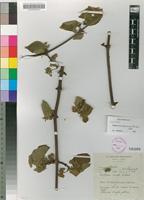
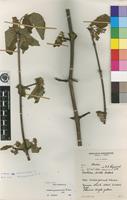
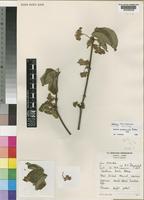
3 Images see all

Isotype of Canthium pseudorandii Bridson [family RUBIACEAE]
Holotype of Canthium pseudorandii Bridson [family RUBIACEAE]
Previous
Next

Name

Identification
Canthium pseudorandii Bridson [family RUBIACEAE ] (stored under name); Verified by Bridson, D., Canthium burttii Bullock [family RUBIACEAE ]
Related name
  • Canthium burttii
  • Canthium pseudorandii

Flora

Entry for Canthium pseudorandii Bridson [family RUBIACEAE]
Herbarium
Royal Botanic Gardens, Kew (K)
Collection
Flora Zambesiaca
Resource Type
Reference Sources
Entry From
FZ, Vol 5, Part 2, (1998) Author: D. Bridson
Names
Canthium pseudorandii Bridson [family RUBIACEAE], in Kew Bull. 47: 385, fig. 12 (1992). Type: Zimbabwe, Hwange, near cricket ground, Raymond 229 (K, holotype; PRE; SRGH).
Canthium randii [family RUBIACEAE], sensu Miller in J. S. African Bot. 18: 83 (1952), non S. Moore.
Canthium burttii [family RUBIACEAE], sensu F. White, F.F.N.R.: 404 (1962), pro parte, quoad Fanshawe 4115 & Morze 101 (not seen). —sensu Drummond in Kirkia 10: 276 (1975), sensu. K. Coates Palgrave, Trees Southern Africa, ed. 3, rev.: 879 (1988), non Bullock.
Information
Small tree 3–8.5 m tall; green stems pubescent; older stems with dark red-brown or purplish bark, sometimes lenticellate.Leaves paired at apex of main and lateral branches, sometimes immature at time of flowering; blades 4.5–13 × 2.5–12.5 cm, elliptic to broadly elliptic when young, broadly to very broadly ovate when mature, distinctly acuminate at apex, acute (when young) or rounded to subcordate at base; papery, sparsely pubescent to pubescent above, pubescent beneath; lateral nerves in 6–8 main pairs, acutely angled; tertiary nerves very finely reticulate; domatia inconspicuous; petioles 5–13 mm long, pubescent; stipules 8–11 mm long, triangular-ovate, acuminate with marginal area rather membranous and shiny, scarcely hairy within, soon caducous, seldom persisting beyond second node.Flowers 5-merous, in 10–30-flowered cymes; cymes restricted to apical node of mature stem, pedunculate; peduncles 5–25 mm long, pubescent; pedicels 0–2 mm long, pubescent; bracteoles small.Calyx tube c. 1 mm long, densely pubescent; calyx limb not exceeding disk.Corolla bright yellow or greenish; tube 2–3 mm long, pubescent at throat; lobes 2 × 1.25 mm, triangular or oblong-lanceolate, acute and thickened at apex.Style slightly exserted; pollen presenter 1 × 0.75 mm, ribbed.Fruit 7–9 × 8–9 mm, ± square in lateral view, slightly tapered towards the base and slightly indented at apex, sparsely pubescent; pedicel lengthening to 2–4 mm long.Pyrene 7–8 × 4–5 mm, oblong-ovoid, with a well or poorly defined apical crest, rugulose.
Habitat
Mixed deciduous woodland on rocky hills and outcrops, and on Kalahari Sands and sandy soils, also in thickets (jesse bush and pemba thickets, floodplain thickets and Kalahari Sand mutemwa)
Range
Not known outside the Flora Zambesiaca area
Altitude range
450–1000 m.
1000
450
Distribution
Zambia N North Luangwa National Park, 11°47’, 32°21’, fl. 19.xi.1993, P.P. Smith 1440 (K).Botswana N Chobe, 13 km west of Serondela, fl. xi.1950, Miller 1122 (K).Zimbabwe S Bikita Distr., Save (Sabi) Valley, Umkondo Hills, fr. 9.ii.1966, Wild 7526 (K; LISC; PRE; SRGH).Zimbabwe W Victoria Falls Village, fr. 6.iii.1974, Gonde 48/74 (K; SRGH).Zambia S Livingstone Distr., Katambora, fl. 2.xii.1955, Gilges 494 (K; PRE; SRGH).Zambia E Chipata Distr., Machinje Hills, corolla fallen 15.v.1965, B.L.Mitchell 2964 (K; SRGH).Zambia C Kapiri Mposhi, corolla fallen 5.xii.1957, Fanshawe 4115 (K; LISC).Malawi S Mangoche Distr., Namaso Bay, 12 km SE of Monkey Bay, corolla fallen 11.xii.1986, Brummitt 18301 (BR; K; MAL; SRGH).Zimbabwe N Murewa Distr., Pfungwe Tribal Trust Land, 5 km north of Nyadire Bridge, fl. 5.xii.1968, Müller & Burrows 961 (K; SRGH).
Notes
This species has been often confused with pubescent forms of C. lactescens (as represented by C. randii) and with C. burttii. It may be distinguished from C. lactescens by the more slender branches, the readily caducous stipules with a membranous margin, the finer reticulum of tertiary nerves and the fruit which is only slightly though discernibly indented at the apex. From C. burttii it may be distinguished by its longer petioles and fruit which is discernibly bilobed and indented at the apex; furthermore the distribution of the pubescent subspecies, C. burttii subsp. burttii, is quite distinct from that of C. pseudorandii.

Related Materials

  • Terms and Conditions
  • Privacy Policy
  • Cookie Policy
  • Cookie Settings
  • Accessibility
  • Help
  • Contact Us
  • Facebook
  • Twitter
ITHAKA

JSTOR is part of ITHAKA, a not-for-profit organization helping the academic community use digital technologies to preserve the scholarly record and to advance research and teaching in sustainable ways.

©2000-2026 ITHAKA. All Rights Reserved. JSTOR®, the JSTOR logo, JPASS®, Aluka®, and ITHAKA® are registered trademarks of ITHAKA.

╳