JSTOR Global Plants Home
  • Home
  • Browse
  • About
  • Access
  • Account
    • Saved Items
    • Profile
  • Log in

Global Plants

Skip to Main Content
  • JSTOR Global Plants Home
  • Global Plants

    • Browse
    • About
    • Access
    • Account
      • Saved Items
      • Profile
Log in
  • Browse
  • About
  • Access
  • Account
    • Saved Items
    • Profile
Advanced Search

Compilation
Canna coccinea

10 Images see all

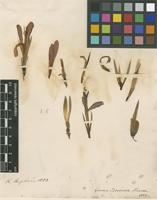
Filed as Canna coccinea Mill. [family CANNACEAE]
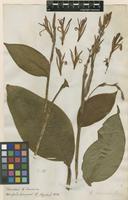
Filed as Canna indica L. [family CANNACEAE]
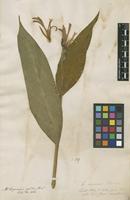
Canna indica L. [family CANNACEAE]
Neotype of Canna coccinea Mill. [family CANNACEAE]
Syntype of Canna coccinea Mill. var. bicolor Kraenzl. [family CANNACEAE]
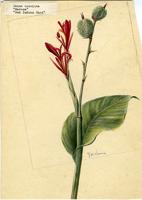
Canna coccinea
Filed as Canna coccinea Mill. [family CANNACEAE]
Filed as Canna indica L. [family CANNACEAE]
Filed as Canna coccinea Mill. [family CANNACEAE]
Previous
Next

Name

Identification
Canna coccinea Mill. [family CANNACEAE ]
Related name
  • Canna coccinea
Common name
  • platanillo, Flora of North America Vol. 22
  • Indian-shot, Flora of North America Vol. 22

Flora

Entry for Canna indica Linnaeus [family CANNACEAE]
Herbarium
Flora of North America (FNA)
Collection
Flora of North America
Resource Type
Reference Sources
Entry From
Flora of North America, Vol 22,
Names
Canna indica Linnaeus [family CANNACEAE], Sp. Pl., 1: 1. 1753
Canna coccinea Miller [family CANNACEAE]
Canna discolor Lindley [family CANNACEAE]
Canna edulis Ker Gawler [family CANNACEAE]
Canna lutea Miller [family CANNACEAE]
Canna warscewiczii Dietrich [family CANNACEAE]
Information
Rhizomes fleshy. Leaves: sheath glabrous; blade narrowly ovate to ovate, 20--60 ´ 10--30 cm, base obtuse to narrowly cuneate, apex shortly acuminate to acute, abaxially and adaxially glabrous. Inflorescences racemes, sometimes branched, bearing 1- to 2-flowered cincinni, 6--20 per inflorescence; primary bracts to 15 cm; secondary bracts to 9 cm; floral bracts persistent, broadly obovate to narrowly (ob)ovate(-triangular), 0.5--3 ´ 0.5--1.5 cm, apex entire, often glaucous; bracteoles (ovate-)triangular, 0.5--2 ´ 0.3--0.8 cm, apex entire. Flowers red to yellow-orange, never pure yellow (except in some hybrid cultivars), 4.5--7.5 cm; pedicels 0.2--1 cm, to 1.5 cm in fruit; sepals narrowly triangular, 0.9--1.7 ´ 0.2--0.5 cm; petals erect, 4--6.5 cm, tube 0.5--1.5 cm, lobes lanceolate to narrowly oblong, 3.5--5 ´ 0.4--0.7 cm; staminodes 3--4, narrowly obovate to spatulate, 4.5--7.5 cm, free part 0.3--0.5 cm wide, apex rounded, acute, or cleft; labellum reflexed, narrowly oblong, approximately equal to other staminodes. Capsules ellipsoid to nearly globose, 1.5--3 ´ 1.5--2 cm. Seeds black, globose to nearly globose, 5--8 ´ 4--6.7 mm diam. 2n = 18.
Phenology
Flowering primarily spring--summer
fruiting summer--early fall
Altitude range
0--100 m
Distribution
USA Fla.USA La.USA S.C.USA Tex.
Discussion
Canna indica is probably native to neotropics and is now common throughout tropics and subtropics.
Native/Introduced
apparently introduced

Related Materials

  • Terms and Conditions
  • Privacy Policy
  • Cookie Policy
  • Cookie Settings
  • Accessibility
  • Help
  • Contact Us
  • Facebook
  • Twitter
ITHAKA

JSTOR is part of ITHAKA, a not-for-profit organization helping the academic community use digital technologies to preserve the scholarly record and to advance research and teaching in sustainable ways.

©2000-2026 ITHAKA. All Rights Reserved. JSTOR®, the JSTOR logo, JPASS®, Aluka®, and ITHAKA® are registered trademarks of ITHAKA.

╳